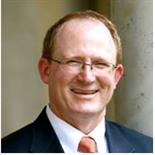
Kevin Patrick Yeary
Republican | Texas




Candidate Profile*

Proven Originalist

BIOGRAPHY
EDUCATION
St. Augustine High School, Laredo, Diploma, 1984
St. Mary's University, San Antonio, BA, 1988
St. Mary's University, San Antonio, JD, 1991
WORK & MILITARY
Law Clerk to Judge Bill White on the Court of Criminal Appeals, Law Clerk, 1991-1992
Hedges & Walsh - Law Firm, Associate Attorney, 1992-1995
Dallas County District Attorney's Office- Dallas, Appellate Attorney, 1995-1996
Harris County District Attorney's Office- Houston, Appellate Attorney, 1997-1998
Bexar County District Attorney's Office - San Antonio, Appellate Attorney, 1998-2014
Texas Court of Criminal Appeals, Judge, 2014-2026
AFFILIATIONS
St. Mary Catholic Church, Wimberley, Texas, Member, 2016-2026
St. Padre Pio Catholic Church, Former Lector, Eucharistic Minister, ACTS Team, 2001-2016
St. Padre Pio Catholic Church, Former Director of High School Confirmation
Knights of Columbus, Member
Catholic Lawyer's Guild, Former Member
San Antonio Bar Appellate Section, Former Secretary
Encino Park Swim Team, Former Board Member, Referee
Encino Park Elementary School, Former Watch DOGS Volunteer
POLITICAL OFFICES HELD
Judge, Texas Court of Criminal Appeals, Place 4, 2015-Present
POLITICAL OFFICES SOUGHT
Judge, Texas Court of Criminal Appeal, Place 4, 2026-
ENDORSEMENTS*
CONSERVATIVE (5)
Texas Eagle Forum
Life PAC
*Texas Young Republicans
Leander Area Republican Women
Texas College Republicans
LIBERAL (1)
Houston Police Officers Union PAC
OTHER (3)
Greg Abbott
Texas Alliance for Life TAL PAC
Houston Region Business Coalition HRBC
REPORTED BY CANDIDATE (5)
Governor Greg Abbott
Texas Eagle Forum
The "C" Club of Houston
Texas Aliance For Life
Mexican American Bar Association of Houston
SELECTED CONTRIBUTIONS
CONSERVATIVE
GIVEN BY CANDIDATE (12)
Local, County, and District Republican Organizations (2026)
Local, County, District Republican Organizations (2026)
True Texas Project (2026)
Kevin Yeary (2025)
Republican Womens Organizations (2025)
RECEIVED BY CANDIDATE (9)
Republican Womens Organizations (2026)
Kevin Yeary (2025)
Alamo City Republican Women PAC (2020)
Julie Dahlberg (2020)
Local, County, and District Republican Organizations (2020)
OTHER INFORMATION
In Finley v. State (2024), Judge Yeary dissented from the Texas Court of Criminal Appeals’ decision reversing Finley’s conviction because a witness wore a mask while testifying during COVID-19. The majority held that the mask interfered with Finley’s Sixth Amendment right to face to face confrontation. Yeary disagreed, arguing that the mask did not prevent the jury from seeing the witness’s face enough to violate the Constitution. He also criticized the Court for reaching constitutional questions beyond what was necessary to decide the case. Yeary would have sent the case back to the lower court for further proceedings rather than reverse the conviction.
In Ex parte Stafford (2024), Judge Yeary dissented from the Texas Court of Criminal Appeals’ decision striking down the “True Source” provision of the Texas Election Code. The law prohibited knowingly making a campaign communication appear to come from someone else with the intent to influence an election. Yeary argued that the Court read the law too broadly and then struck it down based on that overly broad reading. He believed the statute could reasonably be interpreted more narrowly to prohibit only falsely claiming that a political message came from another person or group. Yeary emphasized that courts should interpret statutes to avoid constitutional problems when the statutory text allows it, rather than unnecessarily declaring a law unconstitutional.
In Ex parte Powell (2024), Judge Yeary dissented from the Texas Court of Criminal Appeals’ decision overturning Powell’s guilty plea because a police officer used false statements to obtain a search warrant. Yeary’s concern was that the Court was applying rules from cases where false evidence directly proved the defendant’s guilt. Here, Powell did not claim the cocaine was planted or that the evidence of his guilt was false; he argued that false statements were used to obtain the warrant. Yeary would have first reviewed whether those legal rules actually applied to this different situation before granting relief.
In Ex parte Reeder (2024), Judge Yeary dissented from the Texas Court of Criminal Appeals’ decision overturning a man’s conviction for possessing a firearm as a felon. The Court held that deferred adjudication does not count as a felony conviction for this offense. Yeary agreed with that legal conclusion but disagreed with overturning the conviction without first confirming that Reeder had no other felony conviction. He also objected to the Court granting relief based on an involuntary-plea claim that Reeder never raised. Yeary would have sent the case back to the trial court to determine whether another felony conviction supported the firearm conviction.
In State v. Stephens (2021), Judge Yeary dissented from the Texas Court of Criminal Appeals’ decision striking down a law allowing the Attorney General to prosecute election-law violations. The majority held that giving the executive-branch Attorney General this power violated separation of powers. Yeary disagreed, arguing that the Legislature had authority to give the Attorney General this additional duty. He also argued that the majority’s interpretation of the Texas Constitution was too restrictive and that the law should have been upheld.
QUESTIONNAIRE
RIGHT TO LIFE
Was Dobbs v. Jackson rightly decided according to the text of the Constitution? Please explain. (Holding: In Dobbs, the U.S. Supreme Court held that the federal constitution does not confer a right to abortion.)
Yes. In my opinion, Dobbs was decided correctly. Our United States Constitution does not speak to abortion at all. It leaves that matter to the states to regulate or not at their option.
Does the federal Constitution support the right to physician assisted suicide? Please explain in light of Washington v. Glucksberg (1997).
In Glucksberg, the U.S. Supreme Court decided that the due process clause did not provide a right to physician assisted suicide. Thus, the states remain free to regulate that conduct.
Human life deserves legal protection from conception until natural death.
Strongly Agree
The moment a human is conceived, it begins to live its own unique life, established by the Creator of the Universe. The dignity of every human person, endowed with life by their Creator, deserves recognition and protection.
How do you view the judiciary’s role in matters of abortion regulation following Dobbs?
The judiciary's role is always simply to enforce the laws that the people write and adopt.
RELIGIOUS LIBERTY
Do you believe religious liberty is at risk in the United States. If so, what is the judiciary's proper role in addressing this issue?
Religious liberty is always at risk. That is why we have specifically included the right to free exercise in our Constitution, and that is why the establishment clause was included in our Constitution. The judiciary's role is to decide cases brought to it properly, according to the words written in our constitution and laws.
Does the Establishment Clause of the First Amendment require government to be strictly secular or does it allow for the nation's religious heritage?
The establishment clause provides: "Congress shall make no law respecting an establishment of religion."
Was Masterpiece Cakeshop, Ltd. v. Colorado Civil Rights Commission rightly decided according to the text of the Constitution? Please explain. (Holding: The U.S. Supreme Court held tha the state may not show religious hostility when enforcing anti-discrimination laws against a business owner.)
As I understand the Masterpiece Cakeshop decision, the United States Supreme Court decided that the Colorado Civil Rights Commission improperly displayed hostility to a cakeshop owner's attempt to freely exercise his religious beliefs, in violation of the free exercise clause of the First Amendment of the United States Constitution.
VALUES
Briefly describe your spiritual beliefs and values.
I am Catholic.
What is your understanding of parental rights under the Constitution regarding the upbringing of children, particularly regarding choices about education and sexual identity?
Some truths about life and the world pre-exist the Constitution. One of those truths is that parents are primarily responsible for the upbringing of their children. They are responsible to provide them with subsistence and to protect them from danger, and they are the first and primary educators of children.
Is gender identity a protected class under the Constitution? Please explain the constitutional basis for your view.
I have not seen that language in the Constitution. I welcome anyone who cares to do so to show me where it might say that.
ABOUT YOU
Have you ever been convicted of a felony? If so, please explain.
No.
Have you ever been penalized for sexual misconduct in either civil or criminal court? If so, please explain.
No.
I voted in these primaries and general elections:
2016 Republican Primary 2016 General Election 2018 Republican Primary 2018 General Election 2020 Republican Primary 2020 General Election 2022 Republican Primary 2022 General Election 2024 Republican Primary 2024 General Election
JUDICIAL PHILOSOPHY
Describe your judicial philosophy.
I believe a judges first obligation in our government of separated powers is to understand what those powers are and how they are separated. Judges in our system do not make the law or policy. That is the job of the Legislative and Executive departments of government. Opinions that judges write are not the law. They are important to the parties because they explain why the judges made the decision they made, and they are important to the lower courts because they bind them on future decisions.
Do you believe judges should primarily apply the law according to its original public meaning, or do you believe the law evolves over time to reflect contemporary values?
Original public meaning.
Which current or past U.S. Supreme Court justice best reflects your judicial philosophy?
Justice Clarence Thomas
Was Obergefell v. Hodges rightly decided according to the text of the Constitution? Please explain. (Holding: The U.S. Supreme Court held Due Process and Equal Protection Clauses create a right for same-sex couples to marry.)
The question before the Court in Obergefell was whether the Constitution protects the right of same-sex couples to marry. The Supreme Court decided that it does.
A. How should a judge approach a case where the constitutional or statutory text is clear on its face? B. Conversely, how should a judge proceed when the text is ambiguous or silent on a disputed issue?
When the text of the constitution or laws is clear, it should be applied exactly as it is written, according to its original public meaning. When text is ambiguous, judges should endeavor to understand its meaning by applying well accepted canons of construction. And when a law is silent on a disputed issue, judges should simply recognize that the law does not provide an answer.
What is your view of judicial restraint versus judicial activism? How do you define each?
I am a strong believer in judicial restraint. Judicial restraint is when judges do their best to decide cases according to the text of the constitution and laws, according to the original and correct public meaning of the words used. Judicial activism is when judges decide cases in conflict with the original and correct public meaning of the constitution and laws, and when judges supply answers to questions that the law does not answer.
What is the proper role of a judge?
To decide cases and controversies properly presented to them, in accordance with the constitution and laws of the United States and the state where the judge serves. Judges properly do so by exercising mere judgment.
When applying or interpreting the text of a statute or constitutional provision, is it ever proper for a judge to consider present day public opinion or consequences?
I do not think so.
If precedent departs from the Constitution’s text or original meaning, should a judge follow it or correct the error? Please explain.
Correct the error. I can hardly imagine a more corrupting influence on a judge than to tell him or her that, no matter how badly they misconstrue the Constitution, every judge who comes after them will defend and apply that misconstruction and treat it as if it were the actual Constitutional law of the land. Judges are not all-powerful dictators. And judges have not been given the power or the right to put new things into the Constitution. And if they try to, they should be promptly corrected.
CRIMINAL JUSTICE & PUBLIC SAFETY
The burden of proof in a criminal case is generally that the state must provide proof beyond a reasonable doubt. Some say the reason the burden of proof is so high is because we greatly value ensuring that the innocent are not unjustly imprisoned. Please comment on this topic.
I generally agree. The State's high burden in a criminal case--beyond a reasonable doubt--is to protect liberty, reduce errors, and to impress the judge and the jury with the level of certainty that should be required before imposing criminal penalties.
When reviewing wrongful conviction claims, what role, if any, should judges play in determining remedies?
Our system is designed to allow all three branches of government to help shape remedies for "wrongful convictions." The courts may overturn convictions and sentences. The Legislature can establish remedies in the law. And the Executive can exercise clemency and the power of pardon.
2ND AMENDMENT
What is your understanding of the Second Amendment’s right to keep and bear arms?
The Second Amendment says: "A well regulated militia, being necessary to the security of a free state, the right of the people to keep and bear arms, shall not be infringed."
OTHER IMPORTANT ISSUES
Which branch of government do you believe was intended to wield the most authority?
No branch of government is intended or entitled to wield "the most" authority. Each branch of government is vested with the authority to exercise different authorities.