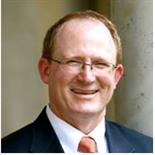

Kevin Yeary
Republican | Texas




Candidate Profile*

Conservative

BIOGRAPHY
EDUCATION
St. Augustine High School, Laredo, Diploma, 1984
St. Mary's University, San Antonio, BA, 1988
St. Mary's University, San Antonio, JD, 1991
WORK & MILITARY
(Candidate did not provide)
AFFILIATIONS
St. Mary Catholic Church - Wimberley, Tx, Member, St. Padre Pio Catholic Church
Former Lector, Eucharistic Minister, ACTS Team, St. Padre Pio Catholic Church, Former Director of High School Confirmation
Knights of Columbus, Member, Catholic Lawyer's Guild
Former Member, San Antonio Bar Appellate Section, Former Secretary
Encino Park Swim Team, Former Board Member, Referee, Encino Park Elementary School
POLITICAL OFFICES HELD
Judge - Texas Court of Criminal Appeals, 5
POLITICAL OFFICES SOUGHT
N/A
ENDORSEMENTS*
CONSERVATIVE (3)
Texas Leadership Institute for Public Advocacy
Texas Patriots PAC
Texas Values Action
OTHER (5)
C Club of Houston
HRBC, Houston's Premier Business Coalition
Texans for Lawsuit Reform PAC
*Texas Alliance for Life PAC (TAL)
Texas Civil Justice League
REPORTED BY CANDIDATE (6)
"C" Club of Houston
Houston Business Realty Coalition
Texas Alliance for Life
Conservatives in Action Family Voter's Guide
The Dallas Morning News
SELECTED CONTRIBUTIONS
CONSERVATIVE
GIVEN BY CANDIDATE (4)
Donna Campbell (2012)
Local, County, and District Republican Organizations (2019)
Republican Women's Organizations (2020)
State Republican Party Organizations (2020)
RECEIVED BY CANDIDATE (8)
Conservative Coalition of Harris County (2014)
DFW Conservative Voters (2014)
Grassroots America - We the People PAC (2015)
Local, County, and District Republican Organizations (2020)
Republican Women's Organizations (2020)
OTHER INFORMATION
QUESTIONNAIRE
RELIGIOUS LIBERTY
Religious liberty is at risk in the United States and deserves the highest level of protection in the law.
Strongly Agree
The Ten Commandments should not be displayed in public school buildings or court houses.
No Answer
What does "separation of church and state" mean to you?
"Separation of church and state" is an often mischaracterized quote from a letter written by Thomas Jefferson.
VALUES
Judeo-Christian values established a framework of morality which is necessary for our system of limited government.
Strongly Agree
George Washington's comment that “Religion and morality are the essential pillars of civil society” is still true today.
Strongly Agree
Briefly describe your spiritual beliefs and values.
Catholic.
In light of the U.S. Supreme Court decision Bostock v. Clayton County, which justice’s opinion most closely aligns with your opinion of whether the protections of the Civil Rights Act of 1964 should be extended to the LGBTQ community?
Did not answer
What types of pro bono work have you done?
Before becoming a judge I helped some family members and some friends with legal matters. I also performed court appointed work on behalf of indigent persons charged with crimes between 1992 and 1995.
ABOUT YOU
I voted in these primaries and general elections:
2012 Republican Primary, 2012 General Election, 2014 Republican Primary, 2014 General Election, 2016 Republican Primary, 2016 General Election, 2018 Republican Primary, 2018 General Election
When you consider your views on a wide range of issues from economic and social matters to foreign policy and immigration, which of the following best describes you overall?
Very Conservative
Please provide publicly available information validating your answer to the previous question.
Voting records
What education or experience qualifies you to hold the office for which you seek election?
I obtained a BA in English Communication Arts from St. Mary's University in 1988. I obtained a JD in Law from St. Mary's University Law School in 1991. I am licensed to practice law in Texas, in the US District Court for the Western District of Texas, in the US Fifth Circuit Court of Appeals, and in the United States Supreme Court. I practiced law for at least 10 years before becoming a Judge. I am over 35 years of age I served as a law clerk to a Judge on the Court of Criminal Appeals from 1991 to 1992 I practiced law as a criminal defense attorney and civil litigator from 1992 to 1995 I practiced law as an appellate prosecutor from 1995 to 2014 I have served as a Judge on the Texas Court of Criminal Appeals for nearly six years
In what areas of law have you practiced?
Criminal Prosecution Criminal Defense Civil Litigation Civil and Criminal Appellate Litigation
Have you ever been convicted of a felony or been penalized for sexual misconduct? If so, please explain.
No
Why should the voters choose you?
I have been blessed to have had a life, and a career, that has prepared me like few others to serve as a Judge on the Texas Court of Criminal Appeals. As a result, and out of fidelity to the rule of law and to the Great State that I call home, I feel called to seek re-election. I am willing to serve and I do sincerely ask for all of your votes! I hope to serve again, and I pledge to do so with great respect for, and deference to, the written constitutions and laws of the U.S. and of this State.
Is there anything else you would like voters to know about you?
The law should be written by the Legislature, not by the Courts. Our US Constitution literally says: "ALL legislative power shall be vested in a Congress of the united states..." (emphasis added to the word "All"). I strongly believe that our Country's and our State's constitutions are best served by adherence to the principle of separated powers. The legislative and executive powers of government are delegated to other departments. The judicial department would violate the principle of separated powers if it were to engage in decision making that resembled an exercise of those powers not delegated to it. The best way to avoid that, in my view, is to be committed to interpreting the constitutions and laws according to meaning of the words that those documents contain, as those words would have been understood by ordinary people at the time that they were written. In simple terms, this kind of judicial decision making is known as Originalism.
JUDICIAL PHILOSOPHY
The U.S. Constitution and my state constitution should be interpreted as living documents, rather than using a strict constructionist or originalist approach in judicial decisions.
Strongly Disagree
There are times when American judges should alter U.S. case law in order to comply with foreign case law.
Strongly Disagree
Which current U.S. Supreme Court justice best reflects your judicial philosophy?
Justice Clarence Thomas
What is the proper use of legislative history in interpreting statutory law?
Words in a statute should be understood to have the meaning that would have been assigned to them by ordinary people at the time that the words were written. Court should not attempt to discern "legislative intent." Legislators may well have intended something other than what they accomplished. It is what they accomplished that is the law, and only the law (not the intent of the legislators) should be enforced. "Legislative history" should only be referenced to the degree that it might aid a court to understand the meaning that ordinary people would have assigned to the words in statute at the time that those words were written.
What possibilities should a judge exhaust before departing from precedent?
Judicial decision making must be guided by the words in the constitutions and laws that apply to and control a legal dispute. Judges swear an oath to preserve, protect and defend the "Constitution and laws..." The oath does not reference "precedent." Precedent IS entitled to respect and deference, especially when it is a decision made by a higher court. This is so because: (1) the good faith of Judges who addressed a provision first should be presumed, and (2) lower courts must accept their place in the judicial decision making hierarchy. But precedent is found in opinions; is not "the law." When a court perceives that a precedent decided by a former panel of the same court or a lower court incorrectly interpreted the constitution or laws, the court should not hesitate to ignore the incorrectly decided precedent and to decide the case according to a proper understanding of the constitution and laws. Doing otherwise is a disregard of our oath.
How should a judge determine which rights are protected by the Constitution even though they are not specifically mentioned?
I decline to answer this question on the ground that it relates to matters that could conceivably come before the Court where I serve in future litigation.