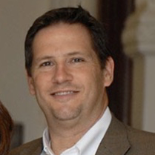

Jeffrey Boyd
Republican | Texas


Candidate Profile

Conservative

BIOGRAPHY
EDUCATION
Pepperdine School of Law, Malibu CA, J.D., 1991
Abilene Christian Univ., Abilene TX, BA in Bible, 1983
WORK & MILITARY
Supreme Court of Texas, Justice, Place 7, 2012-present
Office of the Governor of Texas, Chief of Staff/ General Counsel, 2011-2012
Thompson & Knight, Senior Partner, 1992-2000; 2003-2010
Office of the Attorney General of Texas, Deputy AG for Civil Litigation, 2000-2003
AFFILIATIONS
Goodwill Industries of Central Texas, Board Chair & Member, Volunteer Legal Services of Central Texas
Board President & Member, American Inns of Court, Calvert Inn, President, Executive Committee, & Member
Brentwood Oaks Church of Christ, Youth & Family Minister, Member, Brentwood Christian School
Board member, Freedom of Information Foundation of Texas, Board member
Tex Supreme Court Rules Advisory Committee, Member, Abilene Christian University
POLITICAL OFFICES HELD
Supreme Court Justice, Place 7, 2012-present
POLITICAL OFFICES SOUGHT
(Candidate did not provide)
ENDORSEMENTS
CONSERVATIVE (2)
Cathie Adams
Texas Right to Life
REPORTED BY CANDIDATE (6)
Texas Right to Life
Texas Alliance for Life
Texas Bipartisan Justice Committee
Texas Civil Justice League
Texans for Lawsuit Reform
OTHER INFORMATION
QUESTIONNAIRE
OTHER IMPORTANT ISSUES
1. Election of judges by the people for a definite term of office is the best way to select judges.
Neutral
2. The U.S. Constitution is a living document and should be interpreted according to the circumstances of each generation.
Strongly Disagree
3. Foreign laws should be used in American courts even where those laws conflict with constitutional rights.
Strongly Disagree
4. Free enterprise and the right to private property turn mankind's natural self interest into the fairest and most productive economic system there is, and are the key to national prosperity.
Strongly Agree
5. Which current Justice of the U.S. Supreme Court best reflects your judicial philosophy?
Antonin Scalia
6. Which U.S. president elected to that office in 1960 or thereafter best reflects your political philosophy?
Ronald Reagan
7. Which U.S. Supreme Court decision do you think has most impacted society? Please explain your answer.
Meyer v. Nebraska (1923), in which the Court first held that the 14th Amendment's protection of individual "liberty" encompasses a broad and undefined privacy right, laying the foundation for the Court's most controversial subsequent decisions.
8. Based on the Declaration of Independence and the U.S. Constitution, please arrange the following entities, starting with the highest source of authority, and continue the list in descending order of authority, skipping any that do not apply: Academia, Congress, Constitution, God, Industry, Media, Professional Sports, Supreme Court, Voters.
God, Voters, Constitution, Supreme Court, Congress
9. What in the nature of mankind caused America’s Founders to carefully define, separate, and limit powers within the Constitution?
The tendency of those who have power to exercise it in a self-serving and unjust manner.
10. Please give an example of a judicial decision where strict constructionist policy was violated. Explain.
Roe v. Wade (1973), in which the Court looked to a combination of external factors (medical science, political preferences, "traditions" of society) to identify a right that the Constitution does not expressly protect.
11. What is the proper use of legislative history in interpreting statutory law?
It depends on what "legislative history" the question refers to. If the language of the statute is ambiguous, courts may properly consider such historical considerations as when the statute was enacted relative to other enactments, previous and subsequent amendments and enactments that relate to the subject matter, and statutorily-expressed purposes related to the historical circumstances. It is rarely if ever proper to consider purposes expressed by individual legislators during the legislative process.
12. What specific text in the Declaration of Independence provides the critical basis for individual rights and the form of government guaranteed in the United States Constitution?
Governments "derive their just powers from the consent of the governed."
13. Briefly describe your spiritual beliefs and values.
I am a Christian who believes that the Bible is the inspired word of God for mankind.