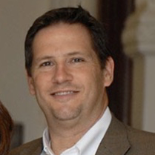

Jeffrey Boyd
Republican | Texas





Candidate Profile*

Conservative

BIOGRAPHY
EDUCATION
Pepperdine School of Law, Malibu CA, J.D., 1991
Abilene Christian Univ., Abilene TX, BA in Bible, 1983
WORK & MILITARY
Supreme Court of Texas, Justice, Place 7, 2012-present
Office of the Governor of Texas, Chief of Staff/ General Counsel, 2011-2012
Thompson & Knight, Senior Partner, 1992-2000; 2003-2010
Office of the Attorney General of Texas, Deputy AG for Civil Litigation, 2000-2003
AFFILIATIONS
Goodwill Industries of Central Texas, Board Chair & Member, Volunteer Legal Services of Central Texas
Board President & Member, American Inns of Court, Calvert Inn, President, Executive Committee, & Member
Brentwood Oaks Church of Christ, Youth & Family Minister, Member, Brentwood Christian School
Board member, Freedom of Information Foundation of Texas, Board member
Tex Supreme Court Rules Advisory Committee, Member, Abilene Christian University
POLITICAL OFFICES HELD
Supreme Court Justice, Place 7, 2012-present
POLITICAL OFFICES SOUGHT
(Candidate did not provide)
ENDORSEMENTS*
CONSERVATIVE (3)
Pastors PAC
Texas Leadership Institute for Public Advocacy
Texas Patriots PAC
OTHER (10)
C Club of Houston
HRBC, Houston's Premier Business Coalition
Texans for Lawsuit Reform PAC
*Texas Alliance for Life PAC (TAL)
Texas Association of Business (TAB) BACPAC
REPORTED BY CANDIDATE (6)
Texas Civil Justice League
Texas Association of Realtors
Texas Apartment Association PAC
Houston Region Business Coalition
All former Texas Supreme Court justices
SELECTED CONTRIBUTIONS
CONSERVATIVE
GIVEN BY CANDIDATE (7)
Don Willett (2006)
Local, County, and District Republican Organizations (2019)
Nathan Hecht (2014)
Red State Women PAC (2014)
Republican Women's Organizations (2019)
RECEIVED BY CANDIDATE (15)
David Simpson (2014)
DFW Conservative Voters (2014)
Good Government Fund Ft. Worth (2014)
Grassroots America - We the People PAC (2015)
John T. Gill (2014)
LIBERAL
GIVEN BY CANDIDATE (0)
RECEIVED BY CANDIDATE (1)
Balance PAC (2014)
OTHER INFORMATION
QUESTIONNAIRE
RELIGIOUS LIBERTY
Religious liberty is at risk in the United States and deserves the highest level of protection in the law.
Agree
The Ten Commandments should not be displayed in public school buildings or court houses.
No Answer
What does "separation of church and state" mean to you?
The government shall make no law respecting an establishment of religion, or prohibiting the free exercise thereof.
VALUES
Judeo-Christian values established a framework of morality which is necessary for our system of limited government.
Strongly Agree
George Washington's comment that “Religion and morality are the essential pillars of civil society” is still true today.
Strongly Agree
Briefly describe your spiritual beliefs and values.
I am a Christian who believes the Bible is God's inspired word for mankind.
In light of the U.S. Supreme Court decision Bostock v. Clayton County, which justice’s opinion most closely aligns with your opinion of whether the protections of the Civil Rights Act of 1964 should be extended to the LGBTQ community?
I must decline to answer
What types of pro bono work have you done?
During my 16 years in private practice, I maintained a commitment to always have at least one active pro bono case, referred to me by Volunteer Legal Services of Central Texas, on my docket. I also served on the board of VLSCT for many years, including as its president. Although I am not permitted to take on pro-bono cases as a judge, I have actively supported the Court’s numerous access-to-justice efforts.
ABOUT YOU
I voted in these primaries and general elections:
2012 Republican Primary, 2012 General Election, 2014 Republican Primary, 2014 General Election, 2016 Republican Primary, 2016 General Election, 2018 Republican Primary, 2018 General Election
When you consider your views on a wide range of issues from economic and social matters to foreign policy and immigration, which of the following best describes you overall?
Conservative
Please provide publicly available information validating your answer to the previous question.
My voting record
What education or experience qualifies you to hold the office for which you seek election?
Law school performance, judicial clerkship, sixteen years of private practice in both trial and appellate courts, three years as head of civil litigation for the state of Texas, two years as general counsel and chief of staff for the Texas Governor, and seven years as Supreme Court justice.
In what areas of law have you practiced?
Civil litigation and appeals; government litigation
Have you ever been convicted of a felony or been penalized for sexual misconduct? If so, please explain.
No
Why should the voters choose you?
My consistently demonstrated and broadly recognized commitment to fairly applying the law without regard to personal, policy, or political preferences sets me apart from my opponents. (See www.justicejeffboyd.org/supporters/)
Is there anything else you would like voters to know about you?
For more information visit justicejeffboyd.org
JUDICIAL PHILOSOPHY
The U.S. Constitution and my state constitution should be interpreted as living documents, rather than using a strict constructionist or originalist approach in judicial decisions.
Strongly Disagree
There are times when American judges should alter U.S. case law in order to comply with foreign case law.
No Answer
Which current U.S. Supreme Court justice best reflects your judicial philosophy?
I cant select 1 that “best” reflects my philosophy
What is the proper use of legislative history in interpreting statutory law?
It depends on what "legislative history" the question refers to. If a statute's language is ambiguous, courts may properly consider such historical considerations as when the statute was enacted relative to other enactments that relate to the same subject matter, and statutorily-expressed purposes related to the historical circumstances. It is rarely, if ever, appropriate to consider purposes or understandings expressed by individual legislators during the legislative process.
What possibilities should a judge exhaust before departing from precedent?
As I explained in a recent opinion: “Stare decisis is a sound policy because it promotes certainty and finality. . . . [But if] a prior decision is wrong, our duty to uphold the law compels us to correct the decision unless it has provided the governing rule for ‘so long,’ and citizens have relied on it so extensively, that ‘greater injustice would be done to individuals, and more injury result to society by a reversal of such decision, though erroneous, than to follow and observe it.’ But when ‘adherence to a judicially-created rule of law no longer furthers’ the interests of efficiency, fairness, and legitimacy, ‘and “the general interest will suffer less by such departure, than from a strict adherence,” we should not hesitate to depart from a prior holding.’” City of San Antonio v. Tenorio, 543 S.W.3d 772, 792–93 (Tex. 2018) (Boyd, J., dissenting) (quoting Lehmann v. Har-Con Corp., 39 S.W.3d 191, 215 (Tex. 2001), and P.J. Willis & Bro. v. Owen, 43 Tex. 41, 48 (1875)).
How should a judge determine which rights are protected by the Constitution even though they are not specifically mentioned?
I generally disagree with the analysis that led to the Supreme Court’s recognition of constitutionally protected yet unspecified and unexpressed “penumbral" rights. Because that approach now serves as well-settled law, however, I believe the Court’s analysis must focus on our society's historical practices and traditions to evaluate whether any particular “right” falls within a very narrow category or those qualifying as “fundamental” to individual liberties. This analysis cannot be merely theoretical or conducted in a vacuum.