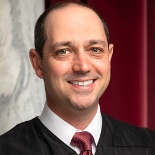
Gerald Titus
Non-Partisan | West Virginia


Candidate Profile*

Leans Conservative

BIOGRAPHY
EDUCATION
Candidate did not provide
WORK & MILITARY
Candidate did not provide
AFFILIATIONS
Candidate did not provide
POLITICAL OFFICES HELD
Candidate did not provide
POLITICAL OFFICES SOUGHT
Candidate did not provide
ENDORSEMENTS*
OTHER (1)
*West Virginia Medical PAC
SELECTED CONTRIBUTIONS
CONSERVATIVE
GIVEN BY CANDIDATE (1)
Shelley Moore Capito (2024)
RECEIVED BY CANDIDATE (0)
OTHER INFORMATION
In re M.B. (2026). The Court held that M.B. (child) should remain with his Amish foster parents and affirmed the circuit court’s decision to deny his removal. The guardian ad litem argued that the placement was inappropriate because it might limit his education, medical care, and exposure to modern life, and could prevent a permanent adoptive future. The court rejected these arguments, explaining that West Virginia law requires judges to decide custody and placement based on the best interests of the child, not any single factor. It found that M.B. was in a safe, loving home with his biological siblings and receiving appropriate care, so removal was not justified.
In re A.E. (2026) Case was before Justice Titus III. The West Virginia Supreme Court of Appeals (Court) ruled that the circuit court could not require DHS to pay transportation costs for post-permanency visits between A.E. and his psychological parents. The Court said there was no law allowing the state to fund travel for a disabled child over 18. It rejected fairness arguments from the psychological parents, emphasizing that courts cannot expand DHS obligations beyond what the law allows.
In re S.S. and L.S. (2026). Justice Titus III dissented, disagreeing with the Court’s quick decision. He argued the father’s concerns that the mother might take the children to the Philippines deserved oral argument and a full written opinion, not a short memorandum. Titus said the issues were serious enough to require more thorough review, including careful consideration of the father’s requests about passports, international travel, and control over the children. He believed the Court should give these concerns more attention rather than simply affirming the lower court’s ruling.
State v. Thompson (2026) Case was before Justice Titus III. The Court decided that statements Thompson made to the police could be used at trial because they were not “testimonial,” so the Confrontation Clause did not prevent them. After getting upset over drugs hr bought, Thompson had struck returns the drug dealers home and struck them with a pistol, shot Salaam Jr., claiming self-defense. The jury heard evidence including a tattoo, a 911 call, and officer testimony, and was instructed on murder and felony murder. The Court said trial courts have wide control over evidence and followed rules about relevance, fairness, and excited utterances. Thompson’s conviction for felony murder and life without parole was upheld.
State ex rel. West Virginia v. Cuomo (2026). Case was before Justice Titus III. The Court reversed the circuit court’s dismissal of the indictment against Smogonovich for failing to register as a sex offender. The Supreme Court found that the lower court used the wrong procedure by weighing evidence before trial, which is the jury’s job, not the judge’s. The circuit court improperly looked at the defendant’s prior Ohio juvenile adjudication and decided it was not a “conviction” under SORA. Because the State would lose its ability to prosecute, the Court issued a writ of prohibition, stopping the dismissal.
In re X.R. (2026) The case was before Justice Titus III. The Court ruled that the biological father’s right to care for and make decisions about his child cannot be replaced by a psychological parent. The lower court had given equal custody and decision making to the father and the child’s aunt, who was found to be a psychological parent. The Court said this was wrong because the father had completed his improvement period and was fit. While the child can still see and spend time with the aunt, the court must make a proper visitation plan. The case was sent back for the lower court to fix the custody and visitation orders.
During a press conference, Justice Titus III stated he is “committed to the rule of law in applying the law as it is written” and emphasized that he believes “it’s critical that the court remain impartial and ensure fairness for all parties.” Titus also expressed that he looks forward to “applying [his] full legal abilities and training to reach the right result under the law” and described his appointment as a solemn duty and opportunity to serve the people of West Virginia.
In announcing his appointment to the West Virginia Supreme Court of Appeals, Gerald M. Titus III said, “The Supreme Court plays an essential role in safeguarding the rule of law and upholding the rights of West Virginians,” and expressed that he looks forward to serving “with integrity and unwavering respect for our state’s judicial institutions.” Titus also stated, “The significance of this appointment is profound. It is a privilege to have the opportunity to contribute to the fair and impartial administration of justice in our state.”
QUESTIONNAIRE
RIGHT TO LIFE
Was Dobbs v. Jackson rightly decided according to the text of the Constitution? Please explain. (Holding: In Dobbs, the U.S. Supreme Court held that the federal constitution does not confer a right to abortion.)
Did not answer
Does the federal Constitution support the right to physician assisted suicide? Please explain in light of Washington v. Glucksberg (1997).
Did not answer
Human life deserves legal protection from conception until natural death.
Did not answer
How do you view the judiciary’s role in matters of abortion regulation following Dobbs?
Did not answer
RELIGIOUS LIBERTY
Do you believe religious liberty is at risk in the United States. If so, what is the judiciary's proper role in addressing this issue?
Did not answer
Does the Establishment Clause of the First Amendment require government to be strictly secular or does it allow for the nation's religious heritage?
Did not answer
Was Masterpiece Cakeshop, Ltd. v. Colorado Civil Rights Commission rightly decided according to the text of the Constitution? Please explain. (Holding: The U.S. Supreme Court held tha the state may not show religious hostility when enforcing anti-discrimination laws against a business owner.)
Did not answer
VALUES
Briefly describe your spiritual beliefs and values.
Did not answer
What is your understanding of parental rights under the Constitution regarding the upbringing of children, particularly regarding choices about education and sexual identity?
Did not answer
Is gender identity a protected class under the Constitution? Please explain the constitutional basis for your view.
Did not answer
ABOUT YOU
Have you ever been convicted of a felony? If so, please explain.
Did not answer
Have you ever been penalized for sexual misconduct in either civil or criminal court? If so, please explain.
Did not answer
I voted in these primaries and general elections:
Did not answer
JUDICIAL PHILOSOPHY
Describe your judicial philosophy.
Did not answer
Do you believe judges should primarily apply the law according to its original public meaning, or do you believe the law evolves over time to reflect contemporary values?
Did not answer
Which current or past U.S. Supreme Court justice best reflects your judicial philosophy?
Did not answer
Was Obergefell v. Hodges rightly decided according to the text of the Constitution? Please explain. (Holding: The U.S. Supreme Court held Due Process and Equal Protection Clauses create a right for same-sex couples to marry.)
Did not answer
A. How should a judge approach a case where the constitutional or statutory text is clear on its face? B. Conversely, how should a judge proceed when the text is ambiguous or silent on a disputed issue?
Did not answer
What is your view of judicial restraint versus judicial activism? How do you define each?
Did not answer
What is the proper role of a judge?
Did not answer
When applying or interpreting the text of a statute or constitutional provision, is it ever proper for a judge to consider present day public opinion or consequences?
Did not answer
If precedent departs from the Constitution’s text or original meaning, should a judge follow it or correct the error? Please explain.
Did not answer
CRIMINAL JUSTICE & PUBLIC SAFETY
The burden of proof in a criminal case is generally that the state must provide proof beyond a reasonable doubt. Some say the reason the burden of proof is so high is because we greatly value ensuring that the innocent are not unjustly imprisoned. Please comment on this topic.
Did not answer
When reviewing wrongful conviction claims, what role, if any, should judges play in determining remedies?
Did not answer
2ND AMENDMENT
What is your understanding of the Second Amendment’s right to keep and bear arms?
Did not answer
OTHER IMPORTANT ISSUES
Which branch of government do you believe was intended to wield the most authority?
Did not answer