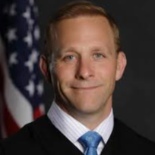
George Cooper Bell
Republican | North Carolina


Candidate Profile

Leans Originalist

BIOGRAPHY
EDUCATION
Cornell University, Ithaca, NY, B.S., Business Management, 2000-
Regent University School of Law, Virginia Beach, VA, J.D., 2003-
WORK & MILITARY
State of NC, Superior Court Judge, 2019-2026
Bell and Bell Law Firm, Partner, 2006-2018
AFFILIATIONS
Ambassador Christian Academy, Volunteer Wrestling Coach, 2024-2026
Liberty Preparatory Christian Academy, Volunteer Substitute Teacher, 2024-2026
Current Church, Member, 2026
POLITICAL OFFICES HELD
Superior Court Judge, 2018-2026
POLITICAL OFFICES SOUGHT
NC Court of Appeals, 2026-2034
ENDORSEMENTS
CONSERVATIVE (1)
North Carolina Values Coalition
SELECTED CONTRIBUTIONS
CONSERVATIVE
GIVEN BY CANDIDATE (4)
Republican Womens Organizations (2024)
Mark Harris (2018)
State Republican Party Organizations (2018)
George Cooper Bell (2016)
RECEIVED BY CANDIDATE (4)
John Aneralla (2018)
Melinda Bales (2018)
George Cooper Bell (2016)
Republican Womens Organizations (2016)
OTHER INFORMATION
Bell stated in an interview, regarding emerging artificial intelligence, that courts should “not abandon traditional judicial principles like going directly to the text of the statute and determining the legislative intent using trusted methods of research and making sure that our own judicial system is protected from technological error..”
On his campaign Facebook page pictured with “Return America” he stated his appreciation for Dr. Ron Baity for “the chance to discuss my faith and candidacy for the NC Court of Appeals.” Additionally, he stated that leaders “should express themselves truthfully yet lovingly, standing firm on the nation's foundational principles. America has strayed from its ideals, and it's evident.”
While running for Mecklenburg District Court judge in 2016, Bell stated that regarding implicit bias in the juvenile justice system that “the first thing we need to do is first of all realize that implicit bias is a real thing” and that “implicit bias is in our system, in our criminal justice system,” stating that education, communication, and taking action are the methods in which to address the issue in the court system.
QUESTIONNAIRE
RIGHT TO LIFE
Was Dobbs v. Jackson rightly decided according to the text of the Constitution? Please explain. (Holding: In Dobbs, the U.S. Supreme Court held that the federal constitution does not confer a right to abortion.)
As a judge, I am bound by the rules of judicial ethics which does not allow me to publicly comment on a decision when the type of case or issue may be in front of me. With that being said, my understanding of Dobbs v. Jackson is that the Supreme Court ruled based on the 10th Amendment to the US Constitution which gives the states the rights to decide for the general welfare of its citizens. For example, a state legislature writes the murder statute for its state and gets to define the terms of what constitutes murder and what exceptions, if any, apply. The US Supreme Court failed to apply the US Constitution to determine that unborn babies are human life, which would have decided the issue of abortion substantively. The Supreme Court punted to the states and never made a robust Constitutional ruling on abortion. For me, I am a Christian that believes that all humans have the right to life and that our laws and government should protect the rights of innocent humans.
Does the federal Constitution support the right to physician assisted suicide? Please explain in light of Washington v. Glucksberg (1997).
The US Supreme Court, in Washington v. Glucksberg, held that the US Constitution does not prohibit a state from banning physician-assisted suicide and there is no constitutionally protected fundamental right to assistance in committing suicide. The Court used reasoning that based on centuries of our tradition and history, the right to assisted suicide has been rejected time and time again. As a Christian, I believe that every life has value.
Human life deserves legal protection from conception until natural death.
Choose not to answer
As a judge, the rules of ethics do not allow me to answer this specific question. As a Christian, I can state that I respect the right to all life.
How do you view the judiciary’s role in matters of abortion regulation following Dobbs?
Judges must interpret the law as written by the legislature. Right now, the federal government has not acted to enforce a broader interpretation of the Comstock Act, allowing "day after pills" to be distributed freely via the US mail, without restraint. Additionally, under Dobbs, NC has the right to determine the parameters of abortion. As a judge, I follow the law and understand that our NC state legislature has the authority to make stricter laws protecting life.
RELIGIOUS LIBERTY
Do you believe religious liberty is at risk in the United States. If so, what is the judiciary's proper role in addressing this issue?
Yes, the First Amendment protects the freedom to practice religion, meet with other believers, and worship God. Any laws against this may violate the First Amendment and a judge may find restrictions like those discussed as unconstitutional. For example, during COVID, our governor issued executive orders that placed restrictions on indoor worship. A judge would have the ability to determine the constitutionality of any law or order that restricts religious liberty.
Does the Establishment Clause of the First Amendment require government to be strictly secular or does it allow for the nation's religious heritage?
Our First Amendment allows our government to express views that are both secular and religious which present the accurate history of our nation's religious heritage. The United States was founded on Christian principles, and our religious history may be preserved.
Was Masterpiece Cakeshop, Ltd. v. Colorado Civil Rights Commission rightly decided according to the text of the Constitution? Please explain. (Holding: The U.S. Supreme Court held tha the state may not show religious hostility when enforcing anti-discrimination laws against a business owner.)
In the Masterpiece Cakeshop, Ltd. case, the US Supreme Court ruled that the State cannot force a private business or private business owner to comply with anti-discrimination laws unless it involves a protected class like race. Here, the Court ruled to protect the cake owner’s religious freedom rights to respectfully decline baking a cake in this context. The rules of judicial ethics prohibit me from commenting on whether a decision is "right" or "wrong." If elected, I would consider all cases, follow the law, and interpret the Constitution strictly. As a Christian and former business owner, I respect the right of a person to make decisions based on his or her deeply held religious beliefs. Judges must consider a person's freedom of speech and rights to practice their religion under the First Amendment.
VALUES
Briefly describe your spiritual beliefs and values.
I am a Christian first, a husband next, a Dad, and then a judge. As a Christian, I believe in proportional justice such as an eye for an eye, a tooth for a tooth. Exodus 21:23-25. In other words, if people make bad decisions, then there are consequences that should be proportional to the crimes committed. As a Superior Court Judge, I have had to sentence multiple people to life in prison without parole that have committed serious criminal offenses like murder, rape, and incest. I am tough on crime, but fair. I have a duty to apply the law to ensure that our communities are safe and that violent, repeat offenders are held responsible.
What is your understanding of parental rights under the Constitution regarding the upbringing of children, particularly regarding choices about education and sexual identity?
The U.S. Supreme Court has touched on the idea of whether a child has the right to make decisions without parental consent under the umbrella of "privacy rights" as first indicated in the seminole case of Griswold v. Connecticut, 381 U.S. 479 (1965). Since Griswold, our current Supreme Court has indicated that it may revisit some of these issues and follow the reasoning of Dobbs which would allow states to decide the privacy rights of its citizens. Each state is different. The State of North Carolina, through its legislature, has the ability to pass laws that would grant greater rights to parents on issues like education and sexual identity. As a judge, I would follow and interpret the law as passed by our state legislature. Additionally, I would consider any constitutional issues that may arise regarding parental rights over their minor children.
Is gender identity a protected class under the Constitution? Please explain the constitutional basis for your view.
The United States Supreme Court held recently in 2025 in a case called United States v. Skrmetti, 605 U.S. 495 (2025), that the State of Tennessee could pass a law prohibiting puberty blockers and hormones for minors when used for gender transition. The Skrmetti court held that the Tennessee law was not subject to heightened scrutiny under the Equal Protection Clause and therefore the law survived rational-basis review. While the majority of the Court ultimately did not decide substantively whether gender identity is a protected class, Supreme Court Justice Samuel Alito did say separately that he would hold that it is not. If elected to the North Carolina Court of Appeals, I would follow the law, uphold the Constitution, and not legislate from the bench.
ABOUT YOU
Have you ever been convicted of a felony? If so, please explain.
No.
Have you ever been penalized for sexual misconduct in either civil or criminal court? If so, please explain.
No.
I voted in these primaries and general elections:
2016 Republican Primary 2016 General Election 2018 Republican Primary 2018 General Election 2020 Republican Primary 2020 General Election 2024 Republican Primary 2024 General Election
I had some threats in 2021 as a judge and we moved to a new house. The NCSBE rules prohibited me from concealing my home address. Since I had little kids at the time, I decided to not vote in 2022 to make sure that potential threatening people could not see my new home address. As a judge, I have had death threats multiple times being a judge in Charlotte. My kids are much older now, so I have no need to conceal my home address.
JUDICIAL PHILOSOPHY
Describe your judicial philosophy.
I believe that words have meaning. When interpreting the law, I am a strict constructionist/textualist of the law. I do not make rulings based on personal feelings or emotions; rather, I follow the law. As a Superior Court Judge, I am tough on crime, but fair to all. I uphold our laws and protect our God-given rights to freedom.
Do you believe judges should primarily apply the law according to its original public meaning, or do you believe the law evolves over time to reflect contemporary values?
The conservation of law occurs when judges apply its original public meaning. As a judge, I am a textualist of the law and do not believe the law is a living, breathing document. Yes, laws change over time, but the proper method to change a law is through the legislature, not through an activist judge.
Which current or past U.S. Supreme Court justice best reflects your judicial philosophy?
Clarence Thomas.
Was Obergefell v. Hodges rightly decided according to the text of the Constitution? Please explain. (Holding: The U.S. Supreme Court held Due Process and Equal Protection Clauses create a right for same-sex couples to marry.)
The rules of judicial ethics prohibit judges from publicly stating an opinion on a case on an issue that will likely be in front of a judge in the future. I am very familiar with Obergefell v. Hodges, and my understanding is that the current Supreme Court will likely review the Obergefell decision. The State of North Carolina, through legislation, also has the power to make laws that define or redefine marriage. I will follow the law and uphold the Constitution.
A. How should a judge approach a case where the constitutional or statutory text is clear on its face? B. Conversely, how should a judge proceed when the text is ambiguous or silent on a disputed issue?
For cases where the text is clear, the plain meaning language controls. If there is an ambiguity of a statute or law, I always pull the legislative minutes to determine the legislative intent behind the law.
What is your view of judicial restraint versus judicial activism? How do you define each?
Judicial restraint is when a judge uses caution and deference, in deciding legal issues in an attempt to not create new law, realizing the separation of power between the judiciary and legislative branches. Judicial activism is using mental gymnastics to bend and alter the law to comport with a judge’s personal feelings and emotions.
What is the proper role of a judge?
A judge must follow the law, uphold the Constitution, and treat people fairly, making decisions without partiality.
When applying or interpreting the text of a statute or constitutional provision, is it ever proper for a judge to consider present day public opinion or consequences?
Yes, but not dispositive.
If precedent departs from the Constitution’s text or original meaning, should a judge follow it or correct the error? Please explain.
The judge should follow precedent, but not to the exclusion of our Constitution. The Constitution matters and it should be upheld.
CRIMINAL JUSTICE & PUBLIC SAFETY
The burden of proof in a criminal case is generally that the state must provide proof beyond a reasonable doubt. Some say the reason the burden of proof is so high is because we greatly value ensuring that the innocent are not unjustly imprisoned. Please comment on this topic.
The law defines reasonable doubt being applied as a person’s view that he or she is “fully convinced” or “entirely satisfied” of the defendant’s guilt. That is the highest standard of proof in our system. It is not “all doubt” and has been deemed as a fair and reasonable standard.
When reviewing wrongful conviction claims, what role, if any, should judges play in determining remedies?
A judge should determine if the law was applied correctly and if a person was wrongly convicted, then a judge must articulate that properly in an appellate opinion and be able to back his or her opinion with the law clearly.
2ND AMENDMENT
What is your understanding of the Second Amendment’s right to keep and bear arms?
All US citizens have the right to bear arms so long as they are not felons or otherwise limited by disability or other restrictions that aim to protect the public. The general rule should allow people to carry, and the restrictions should be few and backed by sound public policy.
OTHER IMPORTANT ISSUES
Which branch of government do you believe was intended to wield the most authority?
Our US Constitution was originally intended to give the legislative branch the most power. Article I establishes Congress and gives it extensive enumerated powers which include the power to tax, spend, regulate, conduct interstate commerce, declare war, raise armies, and ultimately make the law. On the other hand, as Alexander Hamilton stated so poignantly, "the judiciary is beyond comparison the weakest of the three departments of power."