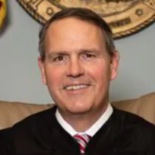

Michael C. Byrne
Republican | North Carolina


Candidate Profile

Leans Originalist

BIOGRAPHY
EDUCATION
North Carolina State University, Raleigh, NC, B.A., English, 1989-1991
Campbell University School of Law, Buies Creek, NC, J.D., 1993-1996
WORK & MILITARY
Candidate did not provide
AFFILIATIONS
Candidate did not provide
POLITICAL OFFICES HELD
Candidate did not provide
POLITICAL OFFICES SOUGHT
North Carolina Court of Appeals, Seat 1 - current election, 2025-2025
ENDORSEMENTS
OTHER (1)
National Association of Police Organizations NAPO
REPORTED BY CANDIDATE (6)
National Association of Police Organizations (NAPO)
Law Enforcement Group
2025-2025
Sheriff Anthony Coats, Harnett County
Law Enforcement
SELECTED CONTRIBUTIONS
CONSERVATIVE
GIVEN BY CANDIDATE (4)
Phil Berger Jr. (2019)
Bob Steinburg (2018)
Tim Moore (NC) (2017)
Paul Stam (2014)
RECEIVED BY CANDIDATE (0)
LIBERAL
GIVEN BY CANDIDATE (8)
Mark A Davis (2020)
Chris Brook (2019)
Lucy Inman (2019)
Reuben F. Young (2019)
Allegra Collins (2018)
RECEIVED BY CANDIDATE (0)
OTHER INFORMATION
Has stated that he is running for the Court of Appeals because he believes “the law must be applied fairly, consistently, and exactly as written.”
Litigated more than 20 cases in the North Carolina Court of Appeals, including cases involving law enforcement and correctional officers who were “wrongfully fired or otherwise disciplined.” Several cases he won are “now regularly cited.” He has also submitted amicus briefs in Court of Appeals and Supreme Court cases for public employee and law enforcement groups.
Stated he has shown “protection of due process and fairness for law enforcement officers.” He noted that he Court of Appeals’ affirmed his ruling in O’Sullivan v. Hyde County Health Department, stating that “obscuring this [appeal rights] information… fails to implement the legislature’s intent.”
Described his philosophy as "strictly based on the law, without fear or favor" and is guided to "get it right," believing in due process, fairness, and "giving all sides a chance to be heard."
Cited Bayard v. Singleton (1787) as an example of a judicial approach he admires. In the case, a North Carolina court ruled that a law seizing Loyalist property was unconstitutional because it violated the state constitution, making clear that the Constitution is higher than the legislature. The court acted only within its proper role and did not claim ultimate authority over the legislature, demonstrating judicial restraint rather than judicial supremacy.
QUESTIONNAIRE
RIGHT TO LIFE
Was Dobbs v. Jackson rightly decided according to the text of the Constitution? Please explain. (Holding: In Dobbs, the U.S. Supreme Court held that the federal constitution does not confer a right to abortion.)
As a North Carolina Administrative Law Judge I am subject to the Model Code of Judicial Ethics for Administrative Law Judges per N.C.G.S. 7A-754. As such, I "must interpret and apply the law without regard to whether the ALJ approves or disapproves of the law in question." (Rule 2.2, Comment). Further, a comment on the alleged correctness or incorrectness of a ruling would require my disqualification if the issue arose before me (Rule 2.11(A)(4) and would also violate Rule 2.10(A) and (B). Therefore, I must respectfully decline to comment on this issue.
Does the federal Constitution support the right to physician assisted suicide? Please explain in light of Washington v. Glucksberg (1997).
As a North Carolina Administrative Law Judge I am subject to the Model Code of Judicial Ethics for Administrative Law Judges per N.C.G.S. 7A-754. As such, I "must interpret and apply the law without regard to whether the ALJ approves or disapproves of the law in question." (Rule 2.2, Comment). Further, a comment on the alleged correctness or incorrectness of a ruling would require my disqualification if the issue arose before me (Rule 2.11(A)(4) and would also violate Rule 2.10(A) and (B). Therefore, I must respectfully decline to comment on this issue.
Human life deserves legal protection from conception until natural death.
Choose not to answer
As a North Carolina Administrative Law Judge I am subject to the Model Code of Judicial Ethics for Administrative Law Judges per N.C.G.S. 7A-754. As such, I "must interpret and apply the law without regard to whether the ALJ approves or disapproves of the law in question." (Rule 2.2, Comment). Further, a comment on the alleged correctness or incorrectness of a ruling would require my disqualification if the issue arose before me (Rule 2.11(A)(4). Thus, I cannot comment.
How do you view the judiciary’s role in matters of abortion regulation following Dobbs?
As a North Carolina Administrative Law Judge I am subject to the Model Code of Judicial Ethics for Administrative Law Judges per N.C.G.S. 7A-754. As such, I "must interpret and apply the law without regard to whether the ALJ approves or disapproves of the law in question." (Rule 2.2, Comment). Further, a comment on the alleged correctness or incorrectness of a ruling would require my disqualification if the issue arose before me (Rule 2.11(A)(4) and would also violate Rule 2.10(A) and (B). Therefore, I must respectfully decline to comment on this issue.
RELIGIOUS LIBERTY
Do you believe religious liberty is at risk in the United States. If so, what is the judiciary's proper role in addressing this issue?
As a North Carolina Administrative Law Judge I am subject to the Model Code of Judicial Ethics for Administrative Law Judges per N.C.G.S. 7A-754. As such, I "must interpret and apply the law without regard to whether the ALJ approves or disapproves of the law in question." (Rule 2.2, Comment). Further, a comment on the alleged correctness or incorrectness of a ruling would require my disqualification if the issue arose before me (Rule 2.11(A)(4). Thus, I cannot comment.
Does the Establishment Clause of the First Amendment require government to be strictly secular or does it allow for the nation's religious heritage?
For the reasons stated above I cannot comment on Federal Constitutional issues. However, as an Administrative Law Judge and as a judge on the Court of Appeals of North Carolina I am (and would be) sworn to uphold the Constitution and laws of this state, including Article 1, Section 13: "All persons have a natural and inalienable right to worship Almighty God according to the dictates of their own consciences, and no human authority shall, in any case whatever, control or interfere with the rights of conscience."
Was Masterpiece Cakeshop, Ltd. v. Colorado Civil Rights Commission rightly decided according to the text of the Constitution? Please explain. (Holding: The U.S. Supreme Court held tha the state may not show religious hostility when enforcing anti-discrimination laws against a business owner.)
For the reasons stated above I cannot comment on Federal Constitutional issues. However, as an Administrative Law Judge and as a judge on the Court of Appeals of North Carolina I am (and would be) sworn to uphold the Constitution and laws of this state, including Article 1, Section 13: "All persons have a natural and inalienable right to worship Almighty God according to the dictates of their own consciences, and no human authority shall, in any case whatever, control or interfere with the rights of conscience."
VALUES
Briefly describe your spiritual beliefs and values.
I am a strong constitutional conservative; the Preamble of our State Constitution acknowledges that the people of this state are "grateful to Almighty God, the Sovereign Ruler of Nations, for the preservation of the American Union and the existence of our civil, political, and religious liberties, and acknowledging our dependence upon Him for the continuance of those blessings to us and our posterity."
What is your understanding of parental rights under the Constitution regarding the upbringing of children, particularly regarding choices about education and sexual identity?
For the reasons stated above I cannot comment on Federal Constitutional issues. However, as an Administrative Law Judge and as a judge on the Court of Appeals of North Carolina I am (and would be) sworn to uphold the Constitution and laws of this state, including Article 1, Section 13: "All persons have a natural and inalienable right to worship Almighty God according to the dictates of their own consciences, and no human authority shall, in any case whatever, control or interfere with the rights of conscience."
Is gender identity a protected class under the Constitution? Please explain the constitutional basis for your view.
For the reasons stated above I cannot comment on Federal Constitutional issues. I am as an Administrative Law Judge sworn to uphold the Constitution of the State of North Carolina, as written.
ABOUT YOU
Have you ever been convicted of a felony? If so, please explain.
No.
Have you ever been penalized for sexual misconduct in either civil or criminal court? If so, please explain.
No.
I voted in these primaries and general elections:
Choose not to answer
I would very much like to answer this question but cannot state with certainty the number of Republican primaries I voted in during those dates. I have never voted in a Democratic primary as I have been a registered NC Republican voter since age 18. I believe I voted in every general election barring 2022, when we were out of the country.
JUDICIAL PHILOSOPHY
Describe your judicial philosophy.
First, while as stated I cannot comment on the merits or demerits of any specific case or controversy or predict future rulings, my general philosophy is to follow the Constitution and laws of North Carolina as written, no matter who or what is involved. Second, I have an equally strong commitment to legal consistency and correctness, as demonstrated by my being unanimously affirmed by the Court of Appeals nine straight times on appeal; they have never reversed one of my decisions.
Do you believe judges should primarily apply the law according to its original public meaning, or do you believe the law evolves over time to reflect contemporary values?
While I cannot comment on the merits or demerits of any specific case or controversy, or predict any ruling, my duty is to follow the Constitution and laws of North Carolina (as enacted by the General Assembly), no matter who or what is involved. The Constitution includes Article 1, Section 35: "A frequent recurrence to fundamental principles is absolutely necessary to secure the blessings of liberty." This is a direct instruction to consider the intent of our founders.
Which current or past U.S. Supreme Court justice best reflects your judicial philosophy?
Justice Antonin Scalia. However, I would be remiss in not mentioning North Carolina Supreme (then Superior) court judges Ashe, Spencer, and Williams, who in Bayard v. Singleton, 1 N.C. (Mart.) 5, 3 N.C. 42, 1 Martin 48 emphasized the Constitution as "standing in full force as the fundamental law of the land" - and did so six years before the U.S. Supreme Court's 1803 decision in Marbury v. Madison.
Was Obergefell v. Hodges rightly decided according to the text of the Constitution? Please explain. (Holding: The U.S. Supreme Court held Due Process and Equal Protection Clauses create a right for same-sex couples to marry.)
As stated, I am subject to the Model Code of Judicial Conduct for State Administrative Law Judges and therefore cannot make public comment about the perceived correctness or incorrectness of a federal court ruling as discussed here.
A. How should a judge approach a case where the constitutional or statutory text is clear on its face? B. Conversely, how should a judge proceed when the text is ambiguous or silent on a disputed issue?
As stated, I cannot comment on any pending case or controversy nor may I make predictive comments about how I might decide any future matter before me. I can say that I am sworn to follow the Constitution and laws of the State of North Carolina and the Supreme Court of our state has published precedent on statutory interpretation. In O'Sullivan v. Hyde County Health Dept., 2024 OAH LEXIS 477, I wrote (quoting): "It the duty of this Court to give effect to the plain meaning of the statute, and judicial construction of legislative intent is not required." The Court of Appeals unanimously affirmed my decision in O'Sullivan in a published opinion filed October 15, 2025.
What is your view of judicial restraint versus judicial activism? How do you define each?
As stated, I cannot comment on any pending case or controversy nor may I make predictive comments about how I might decide any future matter before me. I can say that I am sworn to follow the Constitution and laws of North Carolina. In James Hawhee v. Wake County, 2023 NC OAH LEXIS 294, I wrote: "Our Supreme Court recognized that '[i]t is our province to declare the law, but not to make it.' That is equally true, indeed more so, with the Office of Administrative Hearings" (citations omitted). The Court of Appeals unanimously affirmed my decision in Hawhee in a published opinion dated November 5, 2024.
What is the proper role of a judge?
"An independent administrative law judiciary requires that judges decide cases according to the law and the facts, without regard to whether particular laws or litigants are popular or unpopular." Model Code, Rule 2.4 (Comment) "An ALJ shall accord to every person who has a legal interest in a proceeding, or that person's lawyer or lay representative, the right to be heard according to law." Model Code, Rule 2.6
When applying or interpreting the text of a statute or constitutional provision, is it ever proper for a judge to consider present day public opinion or consequences?
No. Model Code 2.4(A).
If precedent departs from the Constitution’s text or original meaning, should a judge follow it or correct the error? Please explain.
In my current office and the one I am running for I cannot disregard precedent of the Court of Appeals or Supreme Court. In Jailall v. DPI, 196 N.C. App. 90, 675 S.E.2d 79 (2009), the Court held: "While we recognize that a panel of the Court of Appeals may disagree with, or even find error in, an opinion by a prior panel ... the panel is bound by that decision until it is overturned by a higher court." Jailall was one of more than 20 appellate cases I litigated as an attorney.
CRIMINAL JUSTICE & PUBLIC SAFETY
The burden of proof in a criminal case is generally that the state must provide proof beyond a reasonable doubt. Some say the reason the burden of proof is so high is because we greatly value ensuring that the innocent are not unjustly imprisoned. Please comment on this topic.
For reasons previously stated, it is not my province to comment on laws enacted by our General Assembly, including without limitation N.C.G.S. 15A-1221 and N.C.G.S. 15A-1340.16. It is my duty to follow them, consistently and correctly. "A judge must interpret and apply the law without regard to whether the ALJ approves or disapproves of the law in question." Model Code, Rule 2.2 (Comment)
When reviewing wrongful conviction claims, what role, if any, should judges play in determining remedies?
While I cannot comment on any pending case or controversy or make predictive comments about future rulings, a judge's function in any case is to follow the law as enacted by the General Assembly, at all times.
2ND AMENDMENT
What is your understanding of the Second Amendment’s right to keep and bear arms?
My understanding is that it states as written, "A well regulated Militia, being necessary to the security of a free State, the right of the people to keep and bear Arms, shall not be infringed."
OTHER IMPORTANT ISSUES
Which branch of government do you believe was intended to wield the most authority?
In North Carolina, which is my concern as a State Administrative Law Judge and would also be so as a judge on the Court of Appeals, the answer is unquestionably: the General Assembly.