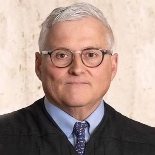
Ronald Lewis
Republican | Ohio


Candidate Profile

Moderate

BIOGRAPHY
EDUCATION
Candidate did not provide
WORK & MILITARY
Candidate did not provide
AFFILIATIONS
Candidate did not provide
POLITICAL OFFICES HELD
Candidate did not provide
POLITICAL OFFICES SOUGHT
Candidate did not provide
SELECTED CONTRIBUTIONS
CONSERVATIVE
GIVEN BY CANDIDATE (4)
Kyle Koehler (2024)
Dave Yost (2019)
Pat DeWine (2016)
Chris Widener (2007)
RECEIVED BY CANDIDATE (0)
OTHER INFORMATION
2026 Strongsville GOP VIDEO - Candidate Presentation. Judge Ron Lewis said he tries to "leave [his] personal opinions at the door," comparing his approach to Justice Scalia’s practice of writing decisions consistent with the law even when he personally disagrees and described his judicial philosophy as originalist, saying judges should follow the law "how it was written, what it meant when it was written," rather than rewriting it, and leave changes to the legislature.
State v. Clutter (2026). Authored. The court agreed with revoking Clutter’s community control and giving him a 12-month prison sentence. They found that his repeated violations—especially traveling out of state without permission, using drugs, and not reporting police contacts—showed he wasn’t participating in the program, so the usual 90-day limit for minor violations didn’t apply. Previously, the trial court had revoked community control and imposed the sentence, finding that Clutter had abandoned the objectives of community control for same reasons stated above.
State v. Little (2025). Authored. The court vacated the convictions of Little and ordered him released because his right to a speedy trial was violated. Little faced multiple cases for weapons and drug charges over several years. There were long delays between his arrest and trials, some caused by motions, some by the court, and some by a mistrial. The court found that the delays, especially for his last case, went beyond what is reasonable under the law, so his constitutional and statutory rights to a speedy trial were not protected. The court also confirmed that his no-contest plea was entered knowingly, meaning he understood that he was giving up his right to a jury trial.
State v. Hix (2025). Authored. This court held that the children should remain in the grandmother’s custody, with the mother allowed supervised visits. This Court agreed with the juvenile court that circumstances had changed since the last custody order (grandmother divorced) and that the mother could not provide a safe and stable home. The Court was concerned about the mother’s mental health and her boyfriend’s history of child abuse. This Court found that the juvenile court did not make a serious mistake and had enough evidence to support its decision, so it affirmed the juvenile court’s custody order.
In re A.J.W. (2024). Authored. The court of appeals decided that the grandparents could adopt the child without the father’s consent. Ohio law says a parent’s consent is not required if the parent has little contact with the child and does not provide support for at least one year, without a good reason. The court found the father had very little contact with the child and did not give financial support. The court found the father's excuses, like being in jail or not knowing where the child was, were supported by limited evidence. Because of this, the court agreed that the grandparents could adopt the child without the father’s permission.
In re M.J.S. (2022). Authored. The court decided that the trial court was correct to give legal custody of two children, M.J.S. and M.N., to their respective fathers instead of their mother. The mother had a history of violence, including stabbing the father of M.N., and had not completed her case plan objectives, such as securing stable housing, getting mental health treatment, and cooperating with the children services agency. The fathers had followed the case plans, provided stable homes, and were more likely to honor parenting time. The court found that the children were doing better in school, were safer, and had stronger bonds with their fathers. The Appeals Court concluded that placing the children with their fathers was in their best interest.
QUESTIONNAIRE
RIGHT TO LIFE
Was Dobbs v. Jackson rightly decided according to the text of the Constitution? Please explain. (Holding: In Dobbs, the U.S. Supreme Court held that the federal constitution does not confer a right to abortion.)
Did not answer
Does the federal Constitution support the right to physician assisted suicide? Please explain in light of Washington v. Glucksberg (1997).
Did not answer
Human life deserves legal protection from conception until natural death.
Did not answer
How do you view the judiciary’s role in matters of abortion regulation following Dobbs?
Did not answer
RELIGIOUS LIBERTY
Do you believe religious liberty is at risk in the United States. If so, what is the judiciary's proper role in addressing this issue?
Did not answer
Does the Establishment Clause of the First Amendment require government to be strictly secular or does it allow for the nation's religious heritage?
Did not answer
Was Masterpiece Cakeshop, Ltd. v. Colorado Civil Rights Commission rightly decided according to the text of the Constitution? Please explain. (Holding: The U.S. Supreme Court held tha the state may not show religious hostility when enforcing anti-discrimination laws against a business owner.)
Did not answer
VALUES
Briefly describe your spiritual beliefs and values.
Did not answer
What is your understanding of parental rights under the Constitution regarding the upbringing of children, particularly regarding choices about education and sexual identity?
Did not answer
Is gender identity a protected class under the Constitution? Please explain the constitutional basis for your view.
Did not answer
ABOUT YOU
Have you ever been convicted of a felony? If so, please explain.
Did not answer
Have you ever been penalized for sexual misconduct in either civil or criminal court? If so, please explain.
Did not answer
I voted in these primaries and general elections:
Did not answer
JUDICIAL PHILOSOPHY
Describe your judicial philosophy.
Did not answer
Do you believe judges should primarily apply the law according to its original public meaning, or do you believe the law evolves over time to reflect contemporary values?
Did not answer
Which current or past U.S. Supreme Court justice best reflects your judicial philosophy?
Did not answer
Was Obergefell v. Hodges rightly decided according to the text of the Constitution? Please explain. (Holding: The U.S. Supreme Court held Due Process and Equal Protection Clauses create a right for same-sex couples to marry.)
Did not answer
A. How should a judge approach a case where the constitutional or statutory text is clear on its face? B. Conversely, how should a judge proceed when the text is ambiguous or silent on a disputed issue?
Did not answer
What is your view of judicial restraint versus judicial activism? How do you define each?
Did not answer
What is the proper role of a judge?
Did not answer
When applying or interpreting the text of a statute or constitutional provision, is it ever proper for a judge to consider present day public opinion or consequences?
Did not answer
If precedent departs from the Constitution’s text or original meaning, should a judge follow it or correct the error? Please explain.
Did not answer
CRIMINAL JUSTICE & PUBLIC SAFETY
The burden of proof in a criminal case is generally that the state must provide proof beyond a reasonable doubt. Some say the reason the burden of proof is so high is because we greatly value ensuring that the innocent are not unjustly imprisoned. Please comment on this topic.
Did not answer
When reviewing wrongful conviction claims, what role, if any, should judges play in determining remedies?
Did not answer
2ND AMENDMENT
What is your understanding of the Second Amendment’s right to keep and bear arms?
Did not answer
OTHER IMPORTANT ISSUES
Which branch of government do you believe was intended to wield the most authority?
Did not answer