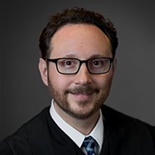

Karl Procaccini
Non-Partisan | Minnesota


Candidate Profile

Activist

BIOGRAPHY
EDUCATION
Candidate did not provide
WORK & MILITARY
Candidate did not provide
AFFILIATIONS
Candidate did not provide
POLITICAL OFFICES HELD
Candidate did not provide
POLITICAL OFFICES SOUGHT
Candidate did not provide
SELECTED CONTRIBUTIONS
LIBERAL
GIVEN BY CANDIDATE (7)
Minnesota Democratic-Farmer-Labor Party (2021)
Tina Smith Christina Flint (2020)
Amy Klobuchar (2017)
Dean Phillips (2017)
Terrie Bonoff (2016)
RECEIVED BY CANDIDATE (2)
Dorsey Political Fund (2024)
Mah Mah Wi No (2024)
OTHER INFORMATION
When asked what three keys issues of his campaign were, Procaccini wrote:
- "Fairness and equal justice. Our courts are legitimate and respected when they are fair to everyone appearing before them. And upholding the rule of law requires even-handed evaluation of each case that reaches the Minnesota Supreme Court. From the moment I swore my oath to uphold the United States and Minnesota Constitutions, I have put aside my personal preferences, beliefs, and interests. My commitment to that oath has been reflected in the opinions I have written and the decisions from which I have recused myself."
- "Experience and hard work. Before becoming a Justice, I had a varied legal career, working as a law firm partner representing private clients, serving the people of Minnesota as a government lawyer, and teaching law students. These experiences prepared me for the work of the Supreme Court. Of course, experience is not the only important quality for a Justice. Being a good Justice also means being prepared every day. I have worked hard in every job that I have had. My work as a Justice is no different. I spend many hours preparing for every case and many more on our opinions. I owe that to every Minnesotan, and Minnesotans should expect nothing less."
- "Empathy and collaboration. People appear in court during some of the most difficult times in their lives. We must listen respectfully to everyone appearing before us. My hundreds of hours of pro bono service while in private practice, followed by my years of public service, showed me the impact of empathy in the legal profession and the important role judges play in ensuring everyone’s voice is heard. I bring the same commitment to my relationships with my colleagues. Even when we disagree, the Supreme Court is a team that collaboratively serves the people of Minnesota. We each bring different views to the table, and we disagree without being disagreeable."
(See Karl Procaccini completed Ballotpedia's Candidate Connection survey in 2024.)
11/27/23 MPR News Article: Two justices mark historic firsts with their installations to Minnesota's Supreme Court. " Procaccini helped orchestrate the state’s response to the COVID-19 pandemic, which was a large part of why Walz chose to appoint him."
State v. Abdus-Salam, 1 N.W.3d 871 (Minn. 2024). Participant.
Holding: The Court affirmed the court of appeals. The Court concluded that, “A reasonable juror could conclude that death or great bodily harm is a probable or reasonably expected result when a vehicle spins ‘donuts’ mere inches from dozens of excited onlookers. The facts in the record could support a jury finding that the vehicles were likely to produce death or great bodily harm based on the manner in which they were being used. As a result, the district court erred when it granted Abdus-Salam’s pretrial motion to dismiss the two second-degree riot charges for lack of probable cause.” (13)
Analysis: The Court stated that under the definition of dangerous weapon, “an everyday object not traditionally considered a weapon may nevertheless become a dangerous weapon if the object is used in a manner calculated or likely to produce death or great bodily harm.” (5) The Court “first ask[ed] whether we have defined ‘likely’ in the manner-of-use definition of a dangerous weapon.” (5)
The Court first examined whether it had defined "likely" within the context of the manner-of-use definition for a dangerous weapon. The Court looked to Gebremarian and concluded that “Because dictionaries uniformly define ‘likely’ as having at least a better chance of occurring than not, see discussion infra Section I.B, using the phrase ‘known to be capable of’ arguably creates a lower threshold for the State to meet when asserting that a device or instrumentality is a “dangerous weapon.
Next the Court “determined what ‘likely’ does mean[t] in the context of the manner-of-use definition of a dangerous weapon.” (8) The Court said, ‘[t]he object of statutory interpretation is ‘to effectuate the intent of the Legislature.’ State v. Powers, 962 N.W.2d 853, 858 (Minn. 2021) (citing Minn. Stat. § 645.16 (2020)). The first step is to determine whether the statute’s language is ambiguous. State v. Loveless, 987 N.W.2d 224, 250 (Minn. 2023). Statutory language is ambiguous if it is subject to more than one reasonable interpretation. State v. Culver, 941 N.W.2d 134, 139 (Minn. 2020). When the statutory language has only one reasonable interpretation, it is unambiguous, and [the Court] appl[ies] its plain meaning. Id.” (8) Ultimately, the Court concluded that "likely" should be interpreted as "probable or reasonably expected" within the context of defining a dangerous weapon by its manner of use.
Background: Ayyoob Dawood Abdus-Salam was charged with two counts of second-degree riot, which requires either being armed with a dangerous weapon or knowing another participant is armed. Abdus-Salam allegedly organized two intersection “takeovers” where crowds blocked streets while drivers performed stunts. The State argued that the vehicles used in the riots were dangerous weapons due to how they were employed. The district court initially dismissed the charges, citing a lack of probable cause regarding the vehicles' classification. However, the court of appeals reversed this decision, finding enough evidence to suggest the vehicles could be seen as dangerous weapons. The Court’s analysis focused interpreting “dangerous weapon” under Minnesota law.
The Court was asked to determine: 1) how to interpret "likely" within the statutory definition of a dangerous weapon, and 2) whether the district court erred in dismissing the criminal complaints for lack of probable cause.
Applicable Law: “Under Minnesota’s criminal code, ‘dangerous weapon’ means: [A]ny firearm, whether loaded or unloaded, or any device designed as a weapon and capable of producing death or great bodily harm, any combustible or flammable liquid or other device or instrumentality that, in the manner it is used or intended to be used, is calculated or likely to produce death or great bodily harm, or any fire that is used to produce death or great bodily harm. Minn. Stat. § 609.02, subd. 6 (emphasis added).” (4-5)
Concerning element: the Court looked to precedent first to define “likely” mean in the context of the manner-of-use statutory definition for a dangerous weapon, then looked to whether the statute was clear or ambigious before looking to dictionary definitions
State v. Cummings, 2 N.W.3d 528 (Minn. 2024). Participant. Chief Justice Hudson authored.
Quick synopsis: The Court concluded that the term "resources" in Minnesota Statutes section 611A.045, subdivision 1(a)(2), refers to useful and valuable possessions. In this case, it determined that Baion's home equity qualified as a resource for restitution, even though it was co-owned with his spouse. The Court affirmed the court of appeals' ruling, which held that home equity can be monetized and leveraged for financial support, making it relevant in assessing Baion's ability to pay restitution. The Court upheld the district court's decision.
Holding(s): Affirmed the court of appeals. The Court “conclude[d] that the term ‘resources’ unambiguously means useful and valuable possessions.” (2) The Court further held that “Home equity, even when the home is co-owned with a non- defendant spouse, may be a useful and valuable possession.” (2)
Analysis: The court reviewed statutory language de novo, affirming that if a statute's intent is clear, it should be interpreted based on its plain meaning without additional construction. The court considered whether "resources" was ambiguous and looked to dictionary definitions for context, noting that the plain meaning would prevail if the term could not be reasonably interpreted in multiple ways. The Court found “resource” had no statutory definition.
Baion argued that the term "resources" in section 611A.045 refers to a measure of the defendant’s ability to financially compensate the victim, defining it narrowly as “an available supply that can be drawn on when needed” (The American Heritage Dictionary 1495 (5th ed. 2011)). In contrast, the State advocated for a broader definition, noting that a "resource" could also mean “something that is available for use or that can be used for support or help” and “a useful or valuable quality or possession” (Black’s Law Dictionary 1568 (11th ed. 2019)).
The Court held that, despite the differing definitions, they ultimately converged on a single interpretation: "resources" meant useful and valuable possessions. The Court found the different proposes definitions did not lead to conflicting outcomes and accurately reflected the term's plain meaning in the context of the restitution statute. The court of appeals noted that the statute does not differentiate among types of resources and imposes no limitations on what a district court may consider when determining a defendant's ability to pay restitution.
The Court clarified that while it adopted a broad definition of "resources," this definition is not without limits. In the context of determining restitution amounts, "valuable possession" refers strictly to monetary value, excluding sentimental value. Additionally, to be "useful," a resource must be monetizable; it should enable the defendant to access money for restitution without needing to transfer ownership of assets. Finally, the Court noted that the resource must be a possession of the defendant, allowing for partial ownership interests to qualify as resources for restitution under Minnesota Statutes section 611A.045, subdivision 1.
The Court held that Baion’s home equity qualified as a "resource" for restitution purposes. It defined home equity as the difference between the property's value and any encumbrances, noting that it could be leveraged to obtain loans, making it both useful and valuable. The Court determined that home equity remained a resource even if Baion did not have exclusive ownership, as shared ownership could still yield valuable interests for each owner. Furthermore, the statute did not limit consideration to resources accessible solely by the defendant. Although Baion needed his spouse's consent to access this equity, he did not demonstrate an inability to do so. Therefore, the Court concluded that the district court correctly included Baion's home equity in its restitution calculations.
Background: In October 2020, Joshua Henry Baion Cummings was charged with theft after submitting fraudulent personal care assistant records. He entered an Alford plea to one count of theft while reserving the right to challenge restitution. At sentencing, the district court included his home equity as a resource for restitution, ordering him to pay $14,579.62. Baion appealed, arguing that home equity shouldn't count as a resource. The court of appeals upheld the decision, affirming that home equity qualifies as a resource under Minnesota law. This court later granted further review of the case.
Applicable Law:
- “Minnesota Statutes section 611A.045, subdivision 1(a) provides: “The court, in determining whether to order restitution and the amount of the restitution, shall consider the following factors: (1) the amount of economic loss sustained by the victim as a result of the offense; and (2) the income, resources, and obligations of the defendant.” This case requires us to interpret the term ‘resources’ in section 611A.045, subdivision 1(a)(2). ‘We review issues of statutory interpretation de novo.’ Hagen v. Steven Scott Mgmt., Inc., 963 N.W.2d 164, 169 (Minn. 2021).” (4-5)
- In interpreting statutes, Minnesota courts adhere to the principle that when the legislative intent is clear from the statute's plain and unambiguous language, the statute should be applied according to its plain meaning without resorting to further construction (State v. Serbus, 957 N.W.2d 84, 87 (Minn. 2021)). To assess whether a word is ambiguous, courts consider if it can be subject to more than one reasonable interpretation; if it cannot, the plain meaning controls (State v. Bowen, 921 N.W.2d 763, 765 (Minn. 2019); State v. Pakhnyuk, 926 N.W.2d 914, 920 (Minn. 2019)). Furthermore, the interpretation of words and phrases is guided by rules of grammar and their common usage, with courts permitted to consult dictionary definitions when legislative definitions are absent (Minn. Stat. § 645.08 (2022); State v. Powers, 962 N.W.2d 853, 858 (Minn. 2021)). Finally, the relevant definition of a term is context-dependent, emphasizing that the application of statutory language can vary based on its specific use (State v. Alarcon, 932 N.W.2d 641, 646 (Minn. 2019)). (6-7)
Procaccini's campaign website states, "Values. Justice Procaccini is committed to ensuring fairness, integrity, and equal justice for all. He has been repeatedly recognized for his public service and leadership in the legal community."
"Karl left private practice to pursue public service, becoming General Counsel in the Office of the Governor and Lt. Governor in 2019. As Governor Walz remarked upon Karl's appointment, “With steadiness, humility, and an exceptional legal mind, Karl Procaccini navigated Minnesota through one of the most difficult periods in our history.” Karl won recognition from Minnesota Lawyer and the Minnesota State Bar Association for his work during the COVID-19 pandemic and the civil unrest that followed the murder of George Floyd."
Minnesota Voters All. v. Hunt, 10 N.W.3d 163 (Minn. 2024). Participated. Chief Justice Hudson Authored.
Holding(s): The Court affirmed the district court’s decision denying the “petition for write of quo warranto or declaratory judgement.” (13) The Court held the individual taxpayers didn’t meet the requirements for taxpayer standing. (8) Further the Court held that Minnesota Voter’s Alliance lacked associational standing because its members, the taxpayers, did not have standing to sue.
Analysis: The court found that the taxpayers lacked taxpayer standing for several reasons. The court reviewed its history with taxpayer standing, noting that in Regan v. Babcock, it affirmed that taxpayers have standing to challenge illegal expenditures of public funds. In McKee v. Likins, the court reiterated that taxpayer standing exists primarily to challenge unlawful use of public funds. Additionally the Court found the holding In re Sandy Pappas Senate Committee, underscored the necessity of a direct challenge to expenditures of public funds for taxpayer standing to apply.
Ultimately, the court concluded that the taxpayers in this case were not alleging a specific illegal expenditure but rather sought to restrain general actions of public officials, which did not meet the threshold for taxpayer standing.
In this case, the expenditures related to educating individuals about their voting rights were not central to the statute's enforcement and did not require legislative funding. The Court found that granting taxpayer standing based on incidental expenses would undermine the very concept of taxpayer standing, potentially allowing any law involving some public expenditure to be challenged. Thus, the court concluded that the taxpayers could not manufacture standing through incidental costs and reaffirmed their lack of standing in this matter. The Court held “that when standing would not otherwise exist to challenge a substantive law, a taxpayer cannot manufacture standing by pointing to expenditures that are incidental to implementing the law.” (12)
Background: The case centers on the Re-Enfranchisement Act, which affects the voting rights of individuals convicted of felonies, as outlined in Article VII of the Minnesota Constitution. This article stipulates that while citizens aged 18 and older generally have the right to vote, those convicted of felonies cannot do so unless their rights are restored. The Minnesota Supreme Court clarified that restoration must occur through an affirmative governmental act, such as a pardon or legislative action. Following this, the Re-Enfranchisement Act was enacted, allowing individuals not incarcerated for a felony to have their voting rights restored. It included provisions for educating voters about their rights, funded by a $200,000 appropriation for an educational campaign.
In 2023, individual taxpayers Mary Amlaw, Ken Wendling, and Tim Kirk, along with the Minnesota Voters Alliance, petitioned against state officials implementing the Act, arguing it unlawfully allowed the restoration of only the right to vote, contrary to the requirement for restoring all civil rights. They also argued that public funds should not be used to educate the public about this provision if found to violate the Constitution. The district court denied the petition, ruling that they lacked legal standing to bring the case.
The district court dismissed their petition, ruling they lacked standing because their challenge did not involve a specific misuse of public funds, and they could not establish that any member of their association had standing. The court emphasized that granting taxpayer standing in such a case would undermine the concept of standing itself, as virtually every law involves some public expenditure.
Applicable Laws:
- “Article VII of the Minnesota Constitution broadly protects the right to vote: ‘Every person 18 years of age or more who has been a citizen of the United States for three months and who has resided in the precinct for 30 days next preceding an election shall be entitled to vote in that precinct.’ Minn. Const. art. VII, § 1.” (3-4)
- “In discussing the constitutional restriction on a person convicted of a felony’s right to vote, [the Court] ha[s] said, [T]he rule under Article VII, Section 1, of the Minnesota Constitution is as follows: a person convicted of a felony cannot vote in Minnesota unless the person’s right to vote is restored by some affirmative act of, or mechanism established by, the government. For instance, the affirmative act could be an absolute pardon that nullifies that felony conviction upon which the constitutional deprivation of the right to vote is based or a legislative act that generally restores the right to vote upon the occurrence of certain events. Schroeder v. Simon, 985 N.W.2d 529, 545 (Minn. 2023) (emphasis added).”
- (Following Schroeder) “The new voting provision of the Re-Enfranchisement Act amended Minnesota Statutes section 201.014 (2022) by adding the following language: An individual who is ineligible to vote because of a felony conviction has the civil right to vote restored during any period when the individual is not incarcerated for the offense. If the individual is later incarcerated for the offense, the individual’s civil right to vote is lost only during that period of incarceration. Act of Mar. 3, 2023, ch. 12, § 1, 2023 Minn. Laws at 64. ” (4)
- “To have standing, a party must have a sufficient stake in a justiciable controversy to seek relief from a court,’ meaning it has ‘suffered some injury in fact’ or ‘is the beneficiary of some legislative enactment granting standing.’ State ex rel. Humphrey v. Philip Morris Inc., 551 N.W.2d 490, 493 (Minn. 1996)” (7)
- “Taxpayers without a direct or personal injury may still have standing to bring an action to restrain the unlawful use of public funds. McKee v. Likins, 261 N.W.2d 566, 570 (Minn. 1977).” (7)
- “Associational standing cannot be invoked unless a member of the association has standing. State ex rel. Humphrey, 551 N.W.2d at 497–98.” (7)
Rygwall as Tr. for Rygwall v. ACR Homes, Inc., No. A22-1376, 2024 WL 2164658 (Minn. May 10, 2024). Hudson joined dissent. Procaccini participated
Holding(s): The Court “reverse[d] the decision of the court of appeals and remand[ed] to the district court for further proceedings consistent with this opinion.” (39)
The Court first held that “ACR forfeited neither its causation argument nor its right to rely on cases citing section 145.682 in making that argument.” (17) The Court noted that ACR did not move to dismiss the claims under section 145.682, but instead moved for summary judgement. Next, the Court held that Section 145.682 did not modify the common-law standard for medical malpractice to cases. The Court stated, “[r]ather than abrogating the common law, the statute instead incorporates it by reference.” (23) Additionally, th Court found “the statute [] purely procedural[.]” (23)
Overall the Court held that “Rygwall raised a genuine issue of material fact as to whether ACR caused her daughter’s death. Based on this record, a reasonable jury could find in Rygwall’s favor on the issue of causation, and therefore summary judgment for ACR is inappropriate.” (39) The Court found “that Rygwall created a genuine issue of material fact as to whether Amy would have received antibiotics had she sought emergency medical treatment earlier.” Additionally, the Court held “that there [wa]s sufficient evidence in the record to allow a reasonable jury to conclude, without speculation, that had ACR taken Amy for emergency treatment immediately after ACR learned about the aspiration event at Rise, she would have been timely treated with antibiotics, and her condition would not have deteriorated into the sepsis, organ failure, and ARDS that resulted in her death.” (38-39)
Dissent: “Although I agree with the court’s holding that Minn. Stat. § 145.682 (2022)—and the cases interpreting it—did not create a higher bar for causation in medical malpractice cases, I disagree that the expert affidavit here was sufficient to establish causation. Accordingly, [Anderson] concur[red] as to Part I of the court’s opinion but otherwise respectfully dissent[ed].” (40) Anderson disagreed a jury would find in favor or Rygwall as “ACR found two gaps in the chain of causation: would Amy have received earlier treatment had ACR called 911, and would that treatment have prevented Amy’s death?” (40) Anderson emphasized that the significant change in Amy's symptoms over time made it speculative to conclude that earlier intervention would have altered her outcome. Additionally he argued that without expert testimony clearly connecting ACR's alleged negligence to Amy's injuries, the claim could not survive summary judgment.
Background: The case involved an appeal from a district court's summary judgment in favor of ACR regarding the death of Amy, who had severe disabilities and required constant care of ACR Homes, Inc. In 2015, she aspirated food, leading to respiratory distress.. An ACR staff member, aware of these symptoms, did not to call 91, instead searched for an urgent care clinic covered by Amy's insurance. After transporting Amy over an hour to an urgent care clinic in St. Paul, her condition worsened, necessitating hospital care where she received antibiotics and treatment for aspiration pneumonia. Amy died 13 days later from related complications.
Judith Rygwall, Amy's mother, filed a wrongful-death lawsuit claiming ACR's failure to seek immediate emergency care contributed to Amy's death. After discovery, ACR sought summary judgment on causation, which the district court granted, and the court of appeals affirmed. The case raises questions about the burden of proof for causation in medical malpractice versus general negligence and the correctness of the summary judgment ruling.
ACR argued that medical malpractice claims required a more stringent burden of proof for causation than typical negligence cases, citing Minn. Stat. § 145.682 (2022). This statute, applicable to health care providers, mandates that plaintiffs submit two expert-related affidavits: one with the complaint and another within 180 days of starting discovery. ACR contended that this statute fundamentally altered the common-law standard for negligence in medicine. They referenced precedents, like Maudsley v. Pederson, which emphasized the need for a detailed chain of causation to illustrate the heightened requirements established by the statute. “Rygwall argued that ACR cannot rely on section 145.682 because it forfeited any reliance on the statute by not raising it below.” (17)
Applicable Law:
- “Section 145.682, subdivision 6(c) provides: Failure to comply with subdivision 4 because of deficiencies in the affidavit or answers to interrogatories results, upon motion, in mandatory dismissal with prejudice of each action as to which expert testimony is necessary to establish a prima facie case, provided that: (1) the motion to dismiss the action identifies the claimed deficiencies in the affidavit or answers to interrogatories; (2) the time for hearing the motion is at least 45 days from the date of service of the motion; and (3) before the hearing on the motion, the plaintiff does not serve upon the defendant an amended affidavit or answers to interrogatories that correct the claimed deficiencies. Minn. Stat. § 145.682, subd. 6(c) (2022).” (See footnote 4)
- “For medical malpractice claims...a plaintiff must show that it is ‘more likely than not that the defendant’s conduct was a substantial factor in bringing about the result.’ Walton v. Jones, 286 N.W.2d 710, 715 (Minn. 1979) (quoting Walstad v. Univ. Of Minn. Hosps., 442 F.2d 634 (8th Cir. 1971)).” (20)
- “As long as the jury can reasonably infer from the evidence, without speculation, that the defendant caused the plaintiff’s injury (including death), summary judgment is not appropriate.”
Muslim. "Procaccini is the first person of Muslim faith — he converted to Islam before marriage — to sit on the court"
See: Ferguson, Ana. "Two Justices Mark Historic Firsts with Their Installations to Minnesota's Supreme Court." MPR News, 27 Nov. 2023,
Filed amicus bried on behalf of the ACLU in Walker v. Jesson, A13-0986 (Minn. Ct. App. May. 5, 2014). **Procaccini represented a group in support DHS who allegedly used funds to pay for non therapeutic abortions.**
Holding: Affirmed
Background: In November 2012, Denise and Brian Walker sued the Minnesota Department of Human Services (DHS), claiming it unlawfully used state funds to pay for nontherapeutic abortions for low-income women. They argued that DHS lacked a proper process to review the medical necessity of these abortions, violating a 1995 Supreme Court ruling that permitted public funding only for therapeutic abortions. The Walkers contended that abortion providers had inflated the number of medically necessary abortions and presented evidence suggesting that DHS had funded over 37,000 non-therapeutic abortions since 1999. The DHS Commissioner moved to dismiss the case, and the district court agreed, stating that DHS's reliance on physicians' judgments regarding the legitimacy of therapeutic reasons for abortions was not illegal.
State v. Moore, No. A23-0395, 2024 WL 687799 (Minn. Ct. App. Feb. 12, 2024), review denied (May 29, 2024). Participated. Procaccini authored.
Holding(s): The court held that "within immediate reach" does not require instant accessibility. The Court said "Whether a firearm is 'within immediate reach' is a question of fact, and we therefore leave it to juries and fact finders to apply that phrase to the specific circumstances of future cases." (10) The court concluded that the jury could reasonably find the firearm was "within immediate reach," as the statute does not require instant access. Thus, the evidence was deemed sufficient to support Moore's conviction under Minnesota law.
Analysis: Using dictionary definitions, the court noted that "immediate" can mean instant or simply close at hand. The court of appeals had similarly concluded the term was ambiguous and interpreted it to include both components. The court emphasized that the statute purpose is to deter drug offenses involving readily accessible firearms. The court assessed whether there was sufficient evidence to support Moore's conviction by viewing the evidence in the light most favorable to the verdict. Officer Jelen testified that the glove compartment, where the gun was stored, was within reach of someone in the driver's seat. Since Moore was sitting there and had access to the key in the ignition, he could unlock the glove compartment and access the firearm in a reasonable timeframe.
Background: On January 24, 2022, Officer Kyler Jelen stopped Brandon Moore for driving with expired registration. After a short pursuit, Moore pulled over but did not fully comply with commands. He was arrested, and officers found over six grams of methamphetamine on him. A search of the car revealed about $3,400 in cash and, using a key found inside, officers unlocked the glove compartment, discovering a handgun and over 110 grams of methamphetamine. Moore was charged and convicted of aggravated first-degree controlled substance crimes and ineligible possession of a firearm, receiving a 98-month sentence. He appealed, arguing insufficient evidence that the firearm was "within immediate reach," but the court of appeals upheld the conviction. Moore later petitioned for further review.
QUESTIONNAIRE
RIGHT TO LIFE
Was Dobbs v. Jackson rightly decided according to the text of the Constitution? Please explain.
Did not answer
I support a right to accelerate ending a human life.
Did not answer
Human life deserves legal protection from conception until natural death.
Did not answer
RELIGIOUS LIBERTY
Religious liberty is at risk in the United States.
Did not answer
VALUES
Briefly describe your spiritual beliefs and values.
Did not answer
What is your view of parental rights regarding the upbringing of children, specifically education and sexual "identity"?
Did not answer
I support "gender identity" as a specially protected class. Please explain.
Did not answer
What do you believe to be true about the human condition?
Did not answer
EQUALITY
I agree with Critical Race Theory (CRT).
Did not answer
ABOUT YOU
What, if any, church or organizations do you belong to?
Did not answer
I voted in these primaries and general elections:
Did not answer
Have you ever been convicted of a felony? If so, please explain.
Did not answer
Have you ever been penalized for sexual misconduct in either civil or criminal court? If so, please explain.
Did not answer
Would you describe your judicial philosophy as originalist, living constitutionalist, or something else? Please explain.
Did not answer
JUDICIAL PHILOSOPHY
Which current or past U.S. Supreme Court justice best reflects your judicial philosophy?
Did not answer
Is there a separation of church and state in the Constitution? Please explain.
Did not answer
Should courts address threats to religious liberty in the United States? If so, how?
Did not answer
Was Obergefell v. Hodges rightly decided according to the text of the Constitution? Please explain.
Did not answer
Was Bostock v. Clayton County rightly decided under the law? Please explain.
Did not answer
I agree that “the custody, care and nurture of the child reside first in the parents, whose primary function and freedom include preparation for obligations the state can neither supply nor hinder.” (Troxel v. Granville, 530 U.S. 57, 65-66 (2000); quoting Prince v. Massachusetts, 321 U.S. 158, 166 (1944).
Did not answer
What should a judge do when legislative texts and court precedents dictate different results?
Did not answer
When should a judge overturn past court decisions?
Did not answer
When, if ever, should a judge take popular opinion or the social views of the majority into consideration?
Did not answer
Do you believe the meaning of the Constitution changes over time, absent changes through the amendment process of Article V?
Did not answer
What do you believe is the single most important quality a judge should possess?
Did not answer
If you are an incumbent judge, describe a recent instance in which you acted to preserve your judicial independence. If you are an aspiring judge, how do you plan to remain independent if elected to the bench?
Did not answer
2ND AMENDMENT
The right to bear arms is fundamental and must be protected.
Did not answer
OTHER IMPORTANT ISSUES
Which branch of government do you believe was intended to wield the most authority?
Did not answer
How should the court address public health and individual freedoms in the time of a public health emergency?
Did not answer