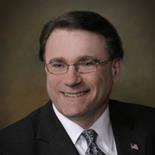

Vic Stabile
Republican | Pennsylvania

Candidate Profile

Originalist

BIOGRAPHY
EDUCATION
Candidate did not provide
WORK & MILITARY
Candidate did not provide
AFFILIATIONS
Candidate did not provide
POLITICAL OFFICES HELD
Candidate did not provide
POLITICAL OFFICES SOUGHT
Candidate did not provide
ENDORSEMENTS
CONSERVATIVE (1)
Pennsylvania Republican Party
OTHER (1)
Pennsylvania State Lodge Fraternal Order Of Police (PA FOP)
SELECTED CONTRIBUTIONS
CONSERVATIVE
GIVEN BY CANDIDATE (9)
Jim Gerlach (2013)
Local, County, and District Republican Organizations (2013)
Mitt Romney (2013)
State Republican Party Organizations (2013)
David Freed (2012)
RECEIVED BY CANDIDATE (21)
Citizens for Prosperity in America (2013)
Joe Scarnati (2013)
Pennsylvania Future Fund (2013)
State Republican Party Organizations (2013)
Bill Shuster (2011)
LIBERAL
GIVEN BY CANDIDATE (0)
RECEIVED BY CANDIDATE (3)
Philidelphia Trial Lawyers Association (2013)
United Brotherhood of Carpenters and Joiners of America (2013)
Big Tent PAC (2011)
OTHER INFORMATION
Judge Victor P. Stabile (R) was elected to “the Superior Court of Pennsylvania [in] 2013[.]”
Prior, Judge Stabile “was a partner and the managing member of Dilworth Paxson LLP. “His practice at Dilworth principally involved complex commercial and business litigation.” Stabile “practiced law in all of the state and federal courts in Pennsylvania[.]” “He says much of his volunteer legal work has been devoted to protecting individual rights from what he sees as ‘egregious government action.’” (pennlive.com)
As a practicing attorney, Stabile dedicated a lot of time to pro bono work. His "pro bono work included representations of individuals, community organizations, political candidates, and disabled individuals.” (superiorcourthistory.org)
Stabile graduated from Pennsylvania State University, Dickinson School of Law, J.D., in 1982.
Judicial Recusal
- "What Conflict, Judge Says" In 2018, Judge Stabile "denied a petition by Spanier's lawyers for recusal." "Stabile concluded that he doesn't have a conflict of interest with former Penn State President Graham Spanier." Stabile "explained his decision, saying the case where he testified against Spanier and Penn State was 'a completely unrelated matter' from a dozen years earlier." He "conceded that 'an appearance of impropriety may itself be enough to warrant judicial recusal.' But, he wrote, the party seeking recusal 'bears the burden of producing evidence to establish bias, prejudice or unfairness which raises a substantial doubt' as to a judge's ability to 'preside impartially.'" "Judge Stabile was the author of a 2-1 Superior Court decision that upheld Spanier's conviction last year on one count of child endangerment in connection with the Jerry Sandusky sex abuse scandal." Additionally, "Stabile had testified in a civil case filed against Spanier and Penn State over the fate of the Dickinson School of Law. At the time, Stabile was a graduate of DSL and a member of its alumni association who was opposed to Spanier and Penn State's plan in 2003 to relocate the law school from Carlisle to State College."
Notable Cases
- Joined Panella's majority in Commonwealth v. Lopez in which the Court "conclude[d] that the trial court did not err in denying Appellant's Motion for Ability-to-Pay Hearing. Although the court had the discretion to consider that motion at sentencing, it was not required to do so by Rule 706 because Appellant had not yet been threatened with incarceration as a result of a default. Should that occur, Appellant will be entitled to an Ability-to-Pay Hearing pursuant to Rule 706 at that time." [12] The court found that "[w]hen the sections of Rule 706 are read sequentially and as a whole, as the rules of statutory construction direct, it becomes clear that Section C only requires a trial court to determine a defendant's ability to pay at a hearing that occurs prior to incarceration, as referenced in Sections A and B." [5] The court found support from Commonwealth v. Ciptak, 441 Pa.Super. 534, 657 A.2d 1296 (1995) which "reject[ed] the defendant's claim that Pa.R.Crim.P. 1407(c), the predecessor to [page number omitted] Rule 706, required the sentencing court to determine his ability to pay prior to imposing costs at sentencing[.]" [5-6] Additionally, "[t]he Supreme Court had the opportunity to explicitly repudiate the interpretation of Rule 1407 by our Court in Ciptak when renumbering Rule 1407 as Rule 706 and it did not do so. Instead, it left the Rule materially unchanged without any reference to the issue raised in Ciptak. Our Supreme Court, in fact, recently indicated its agreement with Ciptak's interpretation[.]" [7] Additionally, this interpretation "most closely aligns with the case that is cited by the Comment to Rule 706 as a general reference point for the Rule. In that case, Commonwealth ex. rel. Benedict v. Cliff, 451 Pa. 427, 304 A.2d 158 (1973), our Supreme Court held that a defendant has the constitutional right to an opportunity to show that he cannot afford the fine or costs that have been imposed on him prior to being incarcerated for failure to pay the fine or costs." [9] Issue1: Did "the court err[] by denying [appellant's] Motion for Ability-to-Pay Hearing because Section C of Rule 706 obliges a sentencing court to conduct an Ability-to-Pay Hearing before imposing court costs on a defendant at sentencing." [4] Appellant argues that ". . . Section C ... unambiguously requires that a court consider a defendant's ability to pay when it imposes costs." [4]
- Joined Bowes's majority opinion in Commonwealth v. Stevenson, affirming the trial court's decision. The court found "that Appellant's decision to offer his own prior conviction precludes the challenge he raises in this appeal." [4] "It is well-established that the first prerequisite for a party to challenge an evidentiary ruling is to make a timely objection, motion to strike, or a motion in limine." [4] [rule of evidence–text included] "However, a properly preserved issue may be forfeited when a defendant introduces the evidence at trial." [5] The Pennsylvania Supreme Court states in Commonwealth v. Conner that because "[the defendant] introduced his past criminal record as a matter of trial strategy, to support his credibility and soften the anticipated blow in the eyes of the jurors. . . [Thus] [defendant] cannot now be heard to complain that his own act of offering such evidence violated his constitutional rights." [5] Additionally, "[o]ther Pennsylvania cases have also found that a defendant forfeits claims of trial court error concerning the admission of objectionable evidence when he 'opens the door' to the evidence." [6] [cites with explanation Commonwealth v. Lewis & Commonwealth v. Stakley] Additionally, the court found, "[t]his forfeiture analysis is consistent with well-established federal law, which provides that a defendant cannot later challenge an adverse motion in limine ruling on appeal if he testifies and admits the at-issue prior conviction on direct examination." [7] [citing Ohler v. United States] Preliminary issue: "[W]hether the claim has been properly preserved for appellate review." [4] Issue: "Did the trial court abuse its discretion when it denied [Appellant's] motion in limine to preclude his 2005 burglary conviction, from which he was released from confinement thirteen years before trial[.]." [3] Facts: "Raheem Stevenson appeals from the judgment of sentence of eight to sixteen years of imprisonment followed by ten years of probation that was imposed after a jury convicted him of two counts of robbery and one count each of burglary and criminal conspiracy." [1]
- Dissented from Kunselman's opinion in Commonwealth v. Santana finding that "[a]lthough SORNA's registration requirements were applied retroactively to sustain Appellant's conviction, there was no ex post facto violation because the burden upon Appellant under SORNA did not further disadvantage him from the registration requirements to which he was already subject under New York's SORA law." [16] Thus, Justice Stabile found the Appellant was subject to SORNA requirements and had violated "Section 4715.1(a)(3) for failure to provide accurate information to the PSP with regard to his phone numbers, Internet identifiers, and [page number omitted] employment[.]" [16] Analysis: Justice Stabile first disagreed with the majority's understanding of the issue stating, "[i]n my opinion, the relevant inquiry is not whether SORNA's registration provisions as a whole were improperly applied retroactively to Appellant" but "whether SORNA change[d] or inflict[ed] a greater punishment than SORA to the disadvantage of Appellant." (citing Muniz) [16] Stabile distinguished Muniz from the case here stating "the Appellant [Muniz] was not lawfully subject to any prior registration requirements imposed under Pennsylvania law or elsewhere. In this case, there is no dispute Appellant was lawfully subject to offender registration under SORA before he came to Pennsylvania." [11] Citing Muniz and agreeing with the majority, Judge Stabile found "two critical [page number omitted] elements must be met for a criminal law to be deemed ex post facto: 'it must be retrospective, that is, it must apply to events occurring before its enactment, and it must disadvantage the offender affected by it." [6-7] "[O]nly those laws that disadvantage a defendant and fall within one of these categories are ex post facto laws and constitutionally infirm. (Muniz)." [7] Thus "[a] proper inquiry must compare New York's SORA registration requirements with those under SORNA to determine whether subjecting Appellant to SORNA's relevant registration requirements places him at a greater disadvantage than the registration requirements imposed upon him under New York's SORA law." [15] Applicable law: Section 9799.13(7) "The following individuals shall register with the Pennsylvania State Police as provided in sections 9799.15 (relating to period of registration), 9799.19 (relating to initial registration) and 9799.25 (relating to verification by sexual offenders and Pennsylvania State Police) and otherwise comply with the provisions of this subchapter: *** (7) A sexual offender required to register in a sexual offender registry in another jurisdiction or in a foreign country based upon a conviction for a sexually violent offense or under a sexual offender [page number omitted] statute in the jurisdiction where the individual is convicted and: (i) has a residence in this Commonwealth or is a transient[.]" [12]
Notable Cases (continued)
- Judge Stabile authored MacMiles, LLC v. Erie Insurance Exchange, where the court “conclude[d] the trial court erred in granting partial summary judgment in favor of MacMiles and in denying Erie’s motion for judgment on the pleadings.” The court first held that “[t]he trial court’s reading of the Policy is strained, and f[ound] [they were] constrained to reject that holding.” [16] The court stated, “[u]ltimately, our analysis, aided by persuasive authority from numerous other federal and state jurisdictions, leads us to conclude the trial court erred in finding that MacMiles established a valid claim for coverage under the business income provisions of the Policy.” [17] This Court found “[c]ourt decisions from across the country overwhelmingly and persuasively support a conclusion that MacMiles’ loss of income claim is not covered.” [8] The court found the policy required “physical damage” or “physical loss or damage” that “render[s] the building ‘uninhabitable and unusable.’” [2] The court found the “physical damage … necessary, especially in light of language in the policy contemplating a period of restoration during which physical repairs take place.” [10-11] The court found “pure economic loss is not property damage.” [13] And that the “policy language covering ‘direct physical loss or damage’ unambiguously requires that the ‘claimed loss or damage must be physical in nature.’” [13] Here, “the prohibition on in-person dining had nothing to do with any condition, visible or invisible[.]” The court further found the trial court erred in finding a “material issues of fact exist[ed] under the civil authority provisions of the Policy.” They stated, “...where the alleged property damage is invisible (as is the possible presence of Covid-19 on surfaces), it does not qualify as physical damage for purposes of a commercial property insurance policy.” [18] Issue 1: “Did the trial court commit an error of law in granting MacMiles’ motion for summary judgment in part, and denying Erie’s motion for judgment on the pleadings on this record, concluding that MacMiles has shown direct physical loss of or damage to covered property where there was an alleged mere loss of use, absent any harm to the property.” [4] Did “material issues of fact exist under the civil authority provisions of the Policy.” The court next held “[b]ecause we have concluded that MacMiles has failed to establish the existence of coverage, we need not assess the applicability of any exclusion.” [19] Issue 2: “Erie challenge[d] the trial court’s finding that the Policy’s governmental authority exclusion was inapplicable.”
- Authored Commonwealth v. Bostian (2019) where the court "conclude[d] that Judge McDermott violated the coordinate jurisdiction rule. Judge Lewis’ prior determination that the Commonwealth presented prima facie evidence for all charges was not clearly erroneous, manifestly unjust, or plainly intolerable. In overruling Judge Lewis, Judge McDermott further erred by weighing the evidence and engaging in credibility determinations. The Commonwealth is entitled to try this case before an impartial jury. We, therefore, reverse the trial court’s July 23, 2019 order and remand this case to the trial court for further proceedings consistent with this opinion." [29]
- Dissented in Commonwealth v. Edwards holding, "[g]iven the record and our standard of review, I conclude that Appellant failed to meet his burden of proving the Commonwealth engaged in purposeful discrimination in striking Juror 67. Further, recognizing the trial court had the opportunity to observe the voir dire process whereas we are limited to a review of a cold record, and further recognizing the deference due the trial court's evaluation, I find no basis for disturbing the trial court's denial of Appellant's Batson challenge." [26] Moreover, "Because [Stabile] disagree[d] with the learned Majority's analysis of the Batson test, its rejection of the trial court's factual determinations, and [found] other of our precedent persuasive, [he] respectfully dissent[ed]." [13] "Batson set forth a three-part test for examining a criminal defendant's claim that a prosecutor exercised peremptory challenges in a racially discriminatory manner: first, the defendant must make a prima facie showing that the circumstances give rise to an inference that the prosecutor struck one or more prospective jurors on account of race; second, if the prima facie showing is made, the burden shifts to the prosecutor to articulate a race-neutral explanation for striking the juror(s) at issue; and third, the trial court must then make the ultimate determination of whether the defense has carried its burden of proving purposeful discrimination." [14] "Pennsylvania law further requires the defendant, in his or her prima facie case, to make a record specifically identifying a) the race or gender of all venirepersons in the jury pools, b) the race or gender of all venirepersons remaining after challenges for cause, c) the race or gender of those removed by the prosecutor, and d) the race or gender of the jurors who served and the race or gender of jurors acceptable to the Commonwealth who were stricken by the defense." [14] Stabile disagreed with the majority that the trial court found the Appellant satisfied the first prong. He agreed with the majority that the trial court had determined that the prosecutors' explanation was race-neutral. Stabile, however, found the majority erred when finding "that three factors were strongly indicative of the prosecution's discriminatory intent[.]" Stabile cites Roney, where the Court stated that "[g]reat deference is appropriate and warranted because the trial court, having viewed the demeanor and heard the tone of voice of the attorney exercising the challenge, is uniquely positioned to make credibility determinations." [18] Stabile took issue with the majority's "reliance upon statistics" as they "le[ft] a false impression as to why these strikes were exercised." He "[f]urther, [] disagree[d] with the Majority's conclusion that 'Appellant met his burden in demonstrating that the Commonwealth struck Juror 67 with discriminatory intent.'" [19] "As the record reflects, once the Commonwealth disclosed its reasons for striking Juror 67, the trial court did not hesitate to grant the strike. . . .It would appear, therefore, the trial court agreed with the Commonwealth's description of Juror 67's attitude, body language, and demeanor. It is not for this Court to speculate otherwise." [20] "Further, the Majority, substituting its judgment for that of the trial court, finds that the Commonwealth's explanation for striking Juror 67 is "wholly unpersuasive," the third factor it cites as evidencing discriminatory intent." [20] Stabile notes, "[o]ur role is to determine whether the credibility determination was clearly erroneous, not to make the credibility determination itself." [21] Stabile found "Commonwealth v. Jackson … instructive with respect to Juror 67." And found "the proposition for which the Majority cites Snyder was expressly rejected by the United States Supreme Court in Thaler v. Haynes [ ]." [24]
QUESTIONNAIRE
VALUES
I agree with Critical Race Theory (CRT) which asserts that the institutions in the United States are fundamentally racist.
Did not answer
Judeo-Christian values established a framework of morality that is necessary for our system of limited government.
Did not answer
Briefly describe your spiritual beliefs and values.
Did not answer
What types of pro bono work have you done?
Did not answer
ABOUT YOU
Have you ever been convicted of a felony or been penalized in either civil or criminal court for sexual misconduct? If so, please explain.
Did not answer
What education or experience qualifies you to hold the office for which you seek election?
Did not answer
Why should the voters choose you?
Did not answer
I voted in these primaries and general elections:
Did not answer
JUDICIAL PHILOSOPHY
Justices should not interpret the federal and state constitutions as living documents, but should use a textualist and originalist approach to interpretation.
Did not answer
What is the proper use of legislative history in interpreting statutory law?
Did not answer
Which current or past U.S. Supreme Court justice best reflects your judicial philosophy?
Did not answer
How should a court address the balance between public health and individual freedoms in the time of a pandemic?
Did not answer
In light of the case Bostock v. Clayton County, in which the U.S. Supreme Court interpreted the 1964 Civil Rights Act to include a prohibition on sexual-orientation discrimination, which justice’s opinion most closely aligns with your own opinion?
Did not answer
What role (if any) does a judge have in maintaining the separation of church and state?
Did not answer
Religious liberty is at risk in the United States and deserves the highest level of protection in the law.
Did not answer
When should a judge overturn past court decisions?
Did not answer
How should a judge determine which rights are protected by the Constitution even though they are not specifically mentioned?
Did not answer
What legal principles should a court consider when evaluating parents’ objection to their child obtaining medical procedures or drugs designed to affirm the child’s desired gender?
Did not answer
What principles should guide a court’s analysis of whether your state’s constitution gives terminally ill patients a right to assisted suicide?
Did not answer
Would you describe your judicial philosophy as originalist, living constitutionalist, or something else?
Did not answer