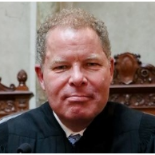

Daniel Kelly
Non-Partisan | Wisconsin


Candidate Profile*

Proven Originalist

BIOGRAPHY
EDUCATION
Candidate did not provide
WORK & MILITARY
Candidate did not provide
AFFILIATIONS
Candidate did not provide
POLITICAL OFFICES HELD
Candidate did not provide
POLITICAL OFFICES SOUGHT
Candidate did not provide
ENDORSEMENTS*
CONSERVATIVE (7)
*Susan B. Anthony List
Wisconsin Family Action PAC
*Pro-Life Wisconsin Victory Fund PAC
Wisconsin Right to Life PAC
Rebecca Bradley
SELECTED CONTRIBUTIONS
CONSERVATIVE
GIVEN BY CANDIDATE (2)
Local, County, and District Republican Organizations (2021)
Ron Johnson (2010)
RECEIVED BY CANDIDATE (3)
John Murtha (2019)
Local, County, and District Republican Organizations (2020)
Nik Rettinger (2019)
OTHER INFORMATION
Justice Daniel Kelly served on the Wisconsin Supreme Court from 2016 to 2020 describing himself as a “judicial constitutionalist.” He received his juris doctorate from Regent University. Currently Justice Kelly is a Senior Fellow at the Institute for Reforming Government in Wisconsin.
His campaign website states that “Justice Daniel Kelly will preserve constitutional rights, uphold the rule of law, and prevent judicial activism. He’s an experienced and trustworthy judicial conservative who will apply the law as it is written, rather than legislate from the bench. His opponents are judicial activists who seek to impose their own political agenda on our state.”
As a “judicial constitutionalist” his goals are to (1) “Defend Constitutional Rights; (2) “Uphold the Rule of Law” and (3) “Prevent Judicial Activism.[.]”
Additional Information:
Kelly regarded President Obama’s second win as a win for “socialism/same sex marriage/recreational marijuana/tax increase crowd.”
He opposes social security
Opposes same sex marriage: Opposed Obergefell “[]Kelly said that one of the best legal opinions in the past 30 years was United States Supreme Court Justice Antonin Scalia's dissent in Obergefell v. Hodges, the landmark case that legalized same-sex marriage in all 50 states. Kelly said, ‘This will probably always stand as one of the best opinions for the courage it took to speak the truth, the ability to do it in clear and compelling terms, and the sheer power of its prose. If an activist were to win next April, Wisconsin's public policy would be imposed by four lawyers sitting in Madison instead of being adopted through our constitutional processes. I won’t let that happen on my watch.’" [21]
Cases:
In McAdams v. Marquette Univ. the court ultimately held that the school breached its contract with McAdams when they suspended him without cause. The court found the school had no “discretionary cause” to suspend McAdams as his blog post was protected by the doctrine of academic freedom. The court found he should be reinstated with “ unimpaired rank, tenure, compensation and benefits” per the schools policy (Faculty Statute § 307.09) following judicial action. (22) The court held they were not obligated to defer to the university’s decision to suspend McAdams. The court held the employment contract did not contain an agreement prohibiting judicial action and that the schools discipline procedures were not akin to arbitration. The court held his post was “extramural” thus protected under academic freedom. Standard of review is de novo. (Issue) Did the school breach McAdams employment contract? Faculty Statute § 307.07(2) “A faculty member who has been awarded tenure at . . . may only be dismissed upon a showing of absolute or discretionary cause, ....” [background] A tenured professor at a Wisconsin university was suspended after posting a blog that named and criticized other professors including a link to the other professors website. McAdams’ post criticized a statement made by the other professor to a student that “‘everybody agrees on … [gay rights], and there is no need to discuss it.” (3) The professor later told a student that “in this class, homophobic comments, racist comments, will not be tolerated” and that “some opinions are not appropriate, such as racist opinions, sexist opinions,” that “[they] d[id]n't have a right in this class to make homophobic comments[.]” (3) Professor McAdams called the other professors approach a “tactic typical among liberals now.” (3) He wrote “[o]pinions with which they disagree are not merely wrong, and are not to be argued against on their merits, but are deemed ‘offensive’ and need to be shut up.” (3) Professor McAdams was later suspended with intent to revoke his tenure for violating Faculty Statute § 306.03. The school said the “conduct clearly and substantially fails to meet the standards of personal and professional excellence that generally characterizes University faculties.” (20) A Faculty Hearing Committee (FHC) composed of faculty members convened including faculty that had openly disagreed with McAdams already. The committee “recommende[ed] that the University suspend Dr. McAdams, without pay but with benefits, for a period of one to two semesters.”(20) The school later suspended McAdams.
In State v. G.L.K. (In re S.M.H) the Supreme Court of Wisconsin found the circuit court having determined a father unfit without giving him the opportunity to present his case was structural error because the adversarial system requires both parties are able to have their day in court to present their cases. Background: the state filed a petition to terminate a fathers parental rights of two children for allegedly abandoning his children under Wis. Stat. sec 48.415(1)(a) and for failing to fulfill parental responsibility under Wis. Stat. sec 48.415 (6). Analysis– Termination requires a two-phase trial procedure–the ground phase and the dispositional phase. This case only covers the ground phase. Prior to the father “putting on his case” the court granted a directed verdict finding against the father. The father appealed arguing determining he is an unfit parent before had the option of presenting his case violated due process and was a structural error warranting reversal. The state argues the error was subject to ‘harmless-error’ review.” issue: “Whether a particular error is structural and therefore not subject to a harmless error review is a question of law for our independent review.” Analysis: harmless error “occur[] during presentation of the case to the jury and their effect may be quantitatively assessed in the context of other evidence presented in order to determine whether [they were] harmless beyond a reasonable doubt.” (3) “A ‘ structural error,’ on the other hand, is not discrete. It is something that either affects the entire proceedings, or affects it in a quantifiable way [.]” “[T]hey ‘are structural defects in the constitution of the trial mechanism, which defy analysis by “harmless error” standards.’ Structural defects affect ‘[t]he entire conduct of the trial from beginning to end.’ An error also may be structural because of the difficulty of determining how the error affects the trial.” (3) Court found the error to be structural because the adversarial system requires each to get their day in court to present their defense. The court held it was not a harmless error because precedent in Nelson held “that ‘[a] criminal defendant has a personal, fundamental right to testify and present his own version of events in his own words.” (5) Since the error “affect[ed] the framework of the trial” it is structural and cannot be a harmless error. (6)
In Wisconsin Carry, Inc. v. City of Madison the court held the City of Madison's rule prohibiting possessing concealed weapons on public transportation unenforceable. The court found under Wis. Stat. § 66.0409, Wisconsin's Local Regulation Statute, the city nor its "political subdivisions" may enforce regulation "more stringent than analogous state statutes." (3-4, 13) Further, the court found that Wis. Stat. § 175.60 preempts the city's ordinance as it provides for concealed carry of weapons in the state as long as the resident obtains proper licensure. (13) The court found the city's rule was more stringent; thus, it conflicted with the state statute and could not be enforced. The court found that the transit commission may accomplish its goals through regulation; any regulation must "coordinate" with "the overall adopted transportation policy," and under Wisconsin's Local Regulation Statute, no local regulation may be "more stringent than analogous state statutes." (3) The city rule entirely forbids concealed carry on public transportation whereas the 2011 Wisconsin Act 35 authorized residents to conceal carry weapons if proper licensure is obtained.
Information on pro-life organization support for this candidate.
QUESTIONNAIRE
VALUES
I agree with Critical Race Theory (CRT) which asserts that the institutions in the United States are fundamentally racist.
Did not answer
Judeo-Christian values established a framework of morality that is necessary for our system of limited government.
Did not answer
Briefly describe your spiritual beliefs and values.
Did not answer
What types of pro bono work have you done?
Did not answer
ABOUT YOU
Have you ever been convicted of a felony or been penalized in either civil or criminal court for sexual misconduct? If so, please explain.
Did not answer
What education or experience qualifies you to hold the office for which you seek election?
Did not answer
Why should the voters choose you?
Did not answer
I voted in these primaries and general elections:
Did not answer
JUDICIAL PHILOSOPHY
Justices should not interpret the federal and state constitutions as living documents, but should use a textualist and originalist approach to interpretation.
Did not answer
What is the proper use of legislative history in interpreting statutory law?
Did not answer
Which current or past U.S. Supreme Court justice best reflects your judicial philosophy?
Did not answer
How should a court address the balance between public health and individual freedoms in the time of a pandemic?
Did not answer
In light of the case Bostock v. Clayton County, in which the U.S. Supreme Court interpreted the 1964 Civil Rights Act to include a prohibition on sexual-orientation discrimination, which justice’s opinion most closely aligns with your own opinion?
Did not answer
What role (if any) does a judge have in maintaining the separation of church and state?
Did not answer
Religious liberty is at risk in the United States and deserves the highest level of protection in the law.
Did not answer
When should a judge overturn past court decisions?
Did not answer
How should a judge determine which rights are protected by the Constitution even though they are not specifically mentioned?
Did not answer
What legal principles should a court consider when evaluating parents’ objection to their child obtaining medical procedures or drugs designed to affirm the child’s desired gender?
Did not answer
What principles should guide a court’s analysis of whether your state’s constitution gives terminally ill patients a right to assisted suicide?
Did not answer
Would you describe your judicial philosophy as originalist, living constitutionalist, or something else?
Did not answer