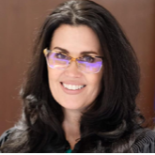
Jennifer Dorow
Non-Partisan | Wisconsin




Candidate Profile

Originalist

BIOGRAPHY
EDUCATION
Regent University School of Law, Virginia Beach, VA, JD, 1996
Marquette University, Milwaukee, WI, BA, 1992
WORK & MILITARY
Candidate did not provide
AFFILIATIONS
Candidate did not provide
POLITICAL OFFICES HELD
Waukesha County Circuit Court Branch 2, 2012-present
POLITICAL OFFICES SOUGHT
(Candidate did not provide)
ENDORSEMENTS
CONSERVATIVE (3)
Wisconsin Right to Life PAC
Pat Roggensack
Eric Toney
OTHER (2)
Milwaukee Police Association
Waukesha County Sheriffs Association
REPORTED BY CANDIDATE (10)
Justice Patience Drake Roggensack
Justice John Wilcox
Milwaukee Police Association
Waukesha Police Chief Association
33 Wisconsin Sheriffs
SELECTED CONTRIBUTIONS
CONSERVATIVE
GIVEN BY CANDIDATE (2)
Brad Schimel (2009)
Republican Women's Organizations (2013)
RECEIVED BY CANDIDATE (0)
OTHER INFORMATION
Judge Jennifer Dorow was appointed by Governor Walker in 2011 to the Wisconsin Waukesha County Circuit Court. In 2017 she was appointed chief judge of the Third Judicial Administrative District. She received her Juris Doctorate from Regent University School of Law.
Judicial Philosophy:
She describes herself as a judicial conservative stating she “hold[s] strong conservative values that will guide me as a judge and ensure that all litigants are treated fairly under the law. I do not believe in legislating from the bench, and subscribe to the principle of judicial restraint.”
Said “[t]he words of Chief Justice John Roberts...sum up the proper role of a judge: ‘[j]udges are like umpires. Umpires don't make the rules; they apply them ....’”
Further said "...in matters of statutory interpretation, a judge should first and foremost look to the text itself for the plain meaning of the statute. There is no need to examine the policy considerations behind a statute, especially in those circumstances where the constitutionality of the statute is at issue...a judge should not consider the wisdom, or lack thereof, of the policy considerations the legislature relied upon in enacting the statute. On the contrary, a judge should give deference to the legislative policy considerations so long as the policy makers have stayed within their limits as defined by the Wisconsin and U.S. Constitutions. In the words of Justice Antonin Scalia, a judge should interpret the text "reasonably, to contain all that it fairly means.”
Other Relevant Information:
Disagreed with the Supreme Court's ruling in Lawrence v. Texas stating that it was "a prime example of judicial activism at its worst" further stating that the cases “went beyond the four concerns of the U.S. Constitution to declare a new constitutional right. [Lawrence v. Texas overruled a prior case which found that anti-sodomy laws were constitutional, making sexual conduct between the same sexes legal.]
Agreed with the Wisconsin Supreme Court decision in Ozanne v. Fitzgerald stating “The decision in this case is rightly based on the doctrine of separation of powers, and serves as an excellent example on the limits of the judiciary. A judge should not impose her will on matters of legislative policy. In this case, the trial court did just that by blocking publication of the Governor's budget repair bill. The Wisconsin Supreme Court reversed the decision of the trial court, thereby allowing publication of the bill and the legislative process to continue.”
Judge Dorow is critical of the cash bail system previously calling for its elimination and stating “[w]e don't have workable preventative detention, and more importantly, cash bail is not a best practice any more.... And so if we are going to change anything, we should be looking at a system that eliminates cash bail with a robust preventative detention coupled with statewide pre-trial services because uniformity and funding need to be part of this solution as well.”
In 2022 she supported a bill that would not eliminate cash bail, but would give judges greater ability to determine bail.
Quotes:
"We must replace Justice Roggensack with a judicial conservative who will fairly and faithfully apply the law as written to the facts of the cases that come before the court." said Judge Dorow.
Further stated, "[w]e must restore confidence that judges aren’t just trying to reach their favored outcomes, but actually applying the law and the constitution. I’m running to restore integrity to the Wisconsin Supreme Court, and get politics out of the courtroom."
iVoter Questionare
Based on her responses to the iVoterGuide questionnaire, Judge Dorow believes the judges role is to interpret the law and apply it according to its plain meaning, not looking to intent of the author. She believed her judicial philosophy is best reflected by Justice Amy Coney Barret as well as Wisconsin Supreme Court Justice Roggensack whose term ended in 2022. She is openly Christian.
- Jennifer Dorow completed the League of Women Voters of Dane County Survey.
**Information discovered post-publish and not considered in evaluations.
QUESTIONNAIRE
VALUES
I agree with Critical Race Theory (CRT) which asserts that the institutions in the United States are fundamentally racist.
Choose not to answer
Judges are not to prejudge cases or offer their personal views on any matter that is likely to come before the court. The people whose cases come before the court deserve, and should expect, that the judge has not made a decision before the case even really begins. I’m going to honor this obligation when it comes to discussing any issue that is likely to come before the court. What I can say is that I will separate my personal views and opinions and let the law guide every decision I make.
Judeo-Christian values established a framework of morality that is necessary for our system of limited government.
Neutral
My favorite founder, George Washington, said it best: "religion and morality" are the "great pillars of human happiness, these firmest props of the duties of Men and Citizens." Although they don't necessarily need to be "Judeo-Christian", faith and traditional values are critical to a healthy culture and therefore a healthy democracy. That's part of why the founders protected religion under the First Amendment.
Briefly describe your spiritual beliefs and values.
I am a Christian who believes the Bible is the word of God. I regularly attend church, study the Bible through daily reading and consistently spend time in prayer. My faith in Jesus is a source of personal strength and through whom I find meaning, purpose and hope. Being a Christian is at the very core of who I am. I believe it was Abraham Lincoln who once said: "I would be the greatest fool on earth if I did not realize that I could never satisfy the demands of the high office without the help of One who is greater and stronger than I am."
What types of pro bono work have you done?
When I was a practicing attorney, I primarily provided pro bono work for indigent defendants and victims of domestic violence. I have been on the bench for 11 years and no longer provide legal representation for clients.
ABOUT YOU
Have you ever been convicted of a felony or been penalized in either civil or criminal court for sexual misconduct? If so, please explain.
No
What education or experience qualifies you to hold the office for which you seek election?
Over the course of my 26 year legal career, I have served as a prosecutor, private practice attorney, advocate for abused and neglected children, and for the last 11 years as a judge in Waukesha County. I have won election twice. I have a proven track record of fairly and faithfully applying the laws as written to the nearly 16,000 cases that have been assigned to me across civil, family and criminal cases. I believe in the rule of law, an independent judiciary, and that fairness and impartiality are essential qualities for a judge. I am a top trial court judge in the State of Wisconsin who has held key leadership positions over the course of my career, including as one of nine Chief Judges appointed by the Supreme Court - a position I've held for over five years. I am honored to have been selected in June of 2022 by my peers on the Committee of Chief Judges to serve as the Chair, or what we affectionately like to call the "Chief of the Chiefs." I have more judicial experience than any other candidate for the Supreme Court. The core of my judicial approach has always been fairness and impartiality. The people who appear before a judge expect and deserve this. Sometimes, judges are faced with difficult litigants. I recently had such an experience in a high profiled case I handled. Citizens like you got a unique opportunity to see my approach to fairness and justice in the face of extreme disrespect and disruption. Through it all, I protected the very rights of the person who engaged in this behavior, while also ensuring that the rights of the victims and the witnesses were also protected.
Why should the voters choose you?
I am running for Supreme Court because the people of Wisconsin deserve a justice who will uphold the rule of law, protect our constitutional rights, and not inject their political bias by legislating from the bench. I have a depth and breadth of experience unlike any other candidate and an unwavering commitment to a fair and impartial judiciary. I am also the choice of Law Enforcement for the Wisconsin Supreme Court, having earned more law enforcement endorsements than any other candidate, including 33 sheriffs, the Milwaukee Police Association, and the Waukesha Police Chiefs Association. Justice Patience Drake Roggensack has endorsed me, calling me the best candidate to fill the seat. I also love this State and care deeply for its future. I want to do my part to ensure that my children, my children’s children, and the families of Wisconsin have a safe and secure state in which to live, work and play. I’ve done that as a trial court judge for the last 11 years and now I’d be honored to do the same on the Wisconsin Supreme Court.
I voted in these primaries and general elections:
Choose not to answer
JUDICIAL PHILOSOPHY
Justices should not interpret the federal and state constitutions as living documents, but should use a textualist and originalist approach to interpretation.
Strongly Agree
When judges stay true to the original meaning, and what the words meant at the time, that leads to predictability, reliability, and stability. Each of us expect the words we use won't be twisted later on by giving them a meaning that didn't even exist when we used them, like in the contracts we enter into and the wills we write. Statutes and the Constitutions should be treated no differently. The alternative is unreliability and unpredictability - we would have no rule of law.
What is the proper use of legislative history in interpreting statutory law?
The plain meaning of the words actually used and not the intent of the drafters of the statute is what should guide a judge when interpreting the statute. The role of a judge is to apply the law, not to make it. Laws are written, and words have meaning. Everybody knows and understands this because in everyday life we use words intentionally when, for example, we enter into contracts and draft wills. We each expect the words we use won’t be twisted later on by giving them a meaning that didn’t even exist when we used them. Statutes should be treated no differently. While the Wisconsin Supreme Court has said that legislative history can help us understand the policy behind why a law was introduced, that policy is largely irrelevant to what the words mean because the words have often times been modified through compromise and the legislative process. The role of the judge is not to discern or even agree with the policy behind the statue, the role of the judge is to simply determine what the law means and then apply that law to the facts of the case at hand. With statutes and the Constitution, as with contracts and wills, a judge should discern the meaning of the words as understood when written and apply the meaning of those words to the case before her.
Which current or past U.S. Supreme Court justice best reflects your judicial philosophy?
Justice Amy Coney Barrett is a principled jurist dedicated to the rule of law. Her opinions are very clear and well written. I admire her commitment to her faith, family and work as a jurist. On the Wisconsin Supreme Court, I admire and often think along the same lines as Justices Roggensack and Ziegler.
How should a court address the balance between public health and individual freedoms in the time of a pandemic?
Judges and candidates for judicial office are not to prejudge cases or offer their personal views on any matter that will or is likely to come before the court. The people whose cases come before the court deserve, and should expect, even demand, that the judge has not made a decision before the case even really begins. I’m going to honor this obligation when it comes to discussing any issue that is likely to come before the court. What I can say is that I will separate my personal views and opinions, and instead let the law guide every decision I make. Every decision. Every time.
In light of the case Bostock v. Clayton County, in which the U.S. Supreme Court interpreted the 1964 Civil Rights Act to include a prohibition on sexual-orientation discrimination, which justice’s opinion most closely aligns with your own opinion?
Judges and candidates for judicial office are not to prejudge cases or offer their personal views on any matter that will or is likely to come before the court. The people whose cases come before the court deserve, and should expect, even demand, that the judge has not made a decision before the case even really begins. I’m going to honor this obligation when it comes to discussing any issue that is likely to come before the court. What I can say is that I will separate my personal views and opinions, and instead let the law guide every decision I make. Every decision. Every time.
What role (if any) does a judge have in maintaining the separation of church and state?
A judge has a duty to uphold the Constitution of the United States and the Constitution of the State of Wisconsin. The phase "separation of church and state" does not appear in the either of these documents. Religious liberty is protected by both Constitutions, and as a judge, it is important that this and all constitutional rights be protected.
Religious liberty is at risk in the United States and deserves the highest level of protection in the law.
Choose not to answer
A judge has a duty to uphold the Constitution of the United States and the Constitution of the State of Wisconsin. Religious liberty is protected by both Constitutions, and as a judge, it is important that this and all constitutional rights be protected.
When should a judge overturn past court decisions?
Precedent is important. It leads to predictability and reliability. But precedent is not absolute. Justices are human and sometimes make mistakes. Justices should be courageous to correct an error in those circumstances where the court got it wrong. When judges and justices take an oath to uphold the state and federal constitutions and the statutes passed by the people’s representatives, they promise to get it right.
How should a judge determine which rights are protected by the Constitution even though they are not specifically mentioned?
Judges and candidates for judicial office are not to prejudge cases or offer their personal views on any matter that will or is likely to come before the court. The people whose cases come before the court deserve, and should expect, even demand, that the judge has not made a decision before the case even really begins. I’m going to honor this obligation when it comes to discussing any issue that is likely to come before the court. What I can say is that I will separate my personal views and opinions, and instead let the law guide every decision I make. Every decision. Every time.
What legal principles should a court consider when evaluating parents’ objection to their child obtaining medical procedures or drugs designed to affirm the child’s desired gender?
Judges and candidates for judicial office are not to prejudge cases or offer their personal views on any matter that will or is likely to come before the court. The people whose cases come before the court deserve, and should expect, even demand, that the judge has not made a decision before the case even really begins. I’m going to honor this obligation when it comes to discussing any issue that is likely to come before the court. What I can say is that I will separate my personal views and opinions, and instead let the law guide every decision I make. Every decision. Every time.
What principles should guide a court’s analysis of whether your state’s constitution gives terminally ill patients a right to assisted suicide?
Judges and candidates for judicial office are not to prejudge cases or offer their personal views on any matter that will or is likely to come before the court. The people whose cases come before the court deserve, and should expect, even demand, that the judge has not made a decision before the case even really begins. I’m going to honor this obligation when it comes to discussing any issue that is likely to come before the court. What I can say is that I will separate my personal views and opinions, and instead let the law guide every decision I make. Every decision. Every time.
Would you describe your judicial philosophy as originalist, living constitutionalist, or something else?
Originalist and textualist. The role of a judge is to apply the law not to make it. Laws are written, and words have meaning. Everybody knows and understands this because in everyday life we use words intentionally when, for example, we enter into contracts and draft wills. We each expect the words we use won’t be twisted later on by giving them a meaning that didn’t even exist when we used them. Statutes and the constitution should be treated no differently. With statutes and the Constitution, as with contracts and wills, a judge should discern the meaning of the words as understood when written and apply the meaning of those words to the case before her.