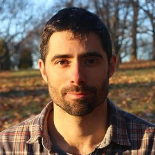
Liam Madden
Republican | Vermont





Candidate Profile

Leans Liberal

BIOGRAPHY
EDUCATION
Northeastern University, Boston, BS, 2012
WORK & MILITARY
USMC, Sergeant, 4
AFFILIATIONS
Iraq Veterans Against the War, Director, Echoing Green
Climate Fellow, M.I.T. Solve, Solver
POLITICAL OFFICES HELD
Candidate did not provide
POLITICAL OFFICES SOUGHT
U.S. Representative, 2
ENDORSEMENTS
REPORTED BY CANDIDATE (1)
Professor Joshua Farley - Ecological Economics Scholar -UVM
OTHER INFORMATION
QUESTIONNAIRE
RIGHT TO LIFE
Abortion providers, including Planned Parenthood, should not receive funds from federal, state, or local governments (including Title X grants).
Strongly Disagree
I consider this medical care that is part of private medical treatment. I am in favor of funding medical care, at least in part, with federal funds. I do not make strong distinctions between OBGYN and other forms of medical treatment.
Abortion providers, including Planned Parenthood, should not receive funds from federal, state, or local governments (including Title X grants).
Strongly Disagree
I consider this medical care that is part of private medical treatment. I am in favor of funding medical care, at least in part, with federal funds. I do not make strong distinctions between OBGYN and other forms of medical treatment.
I support 'aid in dying' laws which legalize assisted suicide and euthanasia.
Agree
Dying can be expensive and agonizing. I understand the ethical tension of wanting to provide no incentive for doctors to prefer their patients death, but I also believe people deserve the right to choose how their life ends. Having qualified medical care aide in making death a more graceful transition is a humane policy, to me.
I support 'aid in dying' laws which legalize assisted suicide and euthanasia.
Agree
Dying can be expensive and agonizing. I understand the ethical tension of wanting to provide no incentive for doctors to prefer their patients death, but I also believe people deserve the right to choose how their life ends. Having qualified medical care aide in making death a more graceful transition is a humane policy, to me.
Under what circumstances should abortion be allowed?
This is a private medical decision. I understand that fetal life becomes viable, especially so in the third trimester. I understand the logic that would prevent abortions after that point. I can be persuaded to see that as a reasonable position. However, it is also true that less than 1% of abortions happen in the very latest stages, and presumably, that is because something terrible has happened in the pregnancy, because no sane person carries a baby 7, 8 or 9 months, then in the last minute decide to kill their baby. Nearly every late term abortion is already almost always one determined necessary for the health of mothers. I see no compelling case to have government regulation intervene in what is already an incredibly tragic and private medical context. Finally, as the independent in this election, I have the unique responsibility to remind everyone that it’s very helpful to begin this question with the perspective that each side is driven by love. And when we do that, it’s much more difficult to make monsters, or caricatures of each other. I believe the vast majority of people on both sides want the best for everyone involved, we want women to have choice over their bodies, and they we babies to be welcomed in this world by families who choose them and love them and can take care of them. My first priority is to encourage us all to remember that we do share this common ground and that can help us disagree on this without polarizing so divisively.
Under what circumstances should abortion be allowed?
This is a private medical decision. I understand that fetal life becomes viable, especially so in the third trimester. I understand the logic that would prevent abortions after that point. I can be persuaded to see that as a reasonable position. However, it is also true that less than 1% of abortions happen in the very latest stages, and presumably, that is because something terrible has happened in the pregnancy, because no sane person carries a baby 7, 8 or 9 months, then in the last minute decide to kill their baby. Nearly every late term abortion is already almost always one determined necessary for the health of mothers. I see no compelling case to have government regulation intervene in what is already an incredibly tragic and private medical context. Finally, as the independent in this election, I have the unique responsibility to remind everyone that it’s very helpful to begin this question with the perspective that each side is driven by love. And when we do that, it’s much more difficult to make monsters, or caricatures of each other. I believe the vast majority of people on both sides want the best for everyone involved, we want women to have choice over their bodies, and they we babies to be welcomed in this world by families who choose them and love them and can take care of them. My first priority is to encourage us all to remember that we do share this common ground and that can help us disagree on this without polarizing so divisively.
ECONOMY
Redistribution of income is needed to lessen the gap between the wealthy and working classes.
Agree
I want to clarify that this is not just about what is an often arbitrary sense of what is fair... Hyper wealth inequality is a primary concern for me because it is a threat to democratic and open forms of government. When wealth accumulates to such an extent where individuals can compromise the functioning of public representation and policy making in the public interest, we must address the root of the problem, which is the unchecked concentration of (financial) power.
Redistribution of income is needed to lessen the gap between the wealthy and working classes.
Agree
I want to clarify that this is not just about what is an often arbitrary sense of what is fair... Hyper wealth inequality is a primary concern for me because it is a threat to democratic and open forms of government. When wealth accumulates to such an extent where individuals can compromise the functioning of public representation and policy making in the public interest, we must address the root of the problem, which is the unchecked concentration of (financial) power.
The government should cut spending in order to reduce the national debt.
Neutral
I don't support deficit spending. But I don't think cutting spending is our only option. We can, and should, raise revenue by taxing the wealthiest.
The government should cut spending in order to reduce the national debt.
Neutral
I don't support deficit spending. But I don't think cutting spending is our only option. We can, and should, raise revenue by taxing the wealthiest.
What changes, if any, should be made to the tax code?
They should be made dramatically simpler. There should be as many deductions and rules as can fit in 2-3 pages. 10 max. They should also be much higher tax rates for the wealthiest. In the world war 2 era, the wealthiest paid up to 90% of their income. I think we need open mindedness to that level of national mobilization of resources to rebuild our infrastructure and to respond to the economic and ecological dimensions of our sustainability challenges. Lastly, as Nobel Prize winning Economist, Thomas Piketty writings indicate, the simplest way to slow the accelerating inequality is to tax *wealth* and not just income.
What changes, if any, should be made to the tax code?
They should be made dramatically simpler. There should be as many deductions and rules as can fit in 2-3 pages. 10 max. They should also be much higher tax rates for the wealthiest. In the world war 2 era, the wealthiest paid up to 90% of their income. I think we need open mindedness to that level of national mobilization of resources to rebuild our infrastructure and to respond to the economic and ecological dimensions of our sustainability challenges. Lastly, as Nobel Prize winning Economist, Thomas Piketty writings indicate, the simplest way to slow the accelerating inequality is to tax *wealth* and not just income.
RELIGIOUS LIBERTY
Religious liberty is at risk in the United States and deserves the highest level of protection in the law.
Neutral
I thought some states extended the ban on religious gatherings far past when real emergency protocols were warranted. Rights are need to be protected, even during emergencies. Obviously some flexibility for crises should be expected. But we must be quick to take back rights temporarily ceded for emergency reasons. Other than this topic, I'm not sure what other threats to religious freedom are significant.
Religious liberty is at risk in the United States and deserves the highest level of protection in the law.
Neutral
I thought some states extended the ban on religious gatherings far past when real emergency protocols were warranted. Rights are need to be protected, even during emergencies. Obviously some flexibility for crises should be expected. But we must be quick to take back rights temporarily ceded for emergency reasons. Other than this topic, I'm not sure what other threats to religious freedom are significant.
Individuals and businesses should be required to provide services even if it would violate their moral and/or religious beliefs.
Disagree
A baker or florist choosing not to offer their services to a certain kind of wedding, does not qualify as discrimination that warrants government intervention, in my opinion. Individuals have every right to choose who they do business with, to be bigots even. Unless that business is publicly traded, acts as a geographical monopoly (a de-facto public utility), does business with public agencies, or received public funds, in which case the public has the right to set the terms of trade.
Individuals and businesses should be required to provide services even if it would violate their moral and/or religious beliefs.
Disagree
A baker or florist choosing not to offer their services to a certain kind of wedding, does not qualify as discrimination that warrants government intervention, in my opinion. Individuals have every right to choose who they do business with, to be bigots even. Unless that business is publicly traded, acts as a geographical monopoly (a de-facto public utility), does business with public agencies, or received public funds, in which case the public has the right to set the terms of trade.
What should be the relationship between the church and the state?
Separate.
What should be the relationship between the church and the state?
Separate.
HEALTHCARE
Under what circumstances (if any) should a government, school, or employer be allowed to require vaccinations?
I am consistent in my support for people to have autonomy over their bodies. Our private medical decisions are not to be regulated by governments, or employers. If for no other reason, that precedent can be abused by unscrupulous governments in the future. Furthermore, vaccinations protect those who receive them. I do not see compelling public health logic in forcing people to receive the protection (and risk) of any intervention against their will as long as those people accept the consequences of that decision. If there are times I would consider a mandatory vaccination, it must be for a situation when all of the following criteria are met well in advance of an outbreak: 1) The disease must meet a democratically deliberated high threshold of risk and transmisability. 2) The treatment must meet a democratically deliberated high threshold of safety and efficacy.
Under what circumstances (if any) should a government, school, or employer be allowed to require vaccinations?
I am consistent in my support for people to have autonomy over their bodies. Our private medical decisions are not to be regulated by governments, or employers. If for no other reason, that precedent can be abused by unscrupulous governments in the future. Furthermore, vaccinations protect those who receive them. I do not see compelling public health logic in forcing people to receive the protection (and risk) of any intervention against their will as long as those people accept the consequences of that decision. If there are times I would consider a mandatory vaccination, it must be for a situation when all of the following criteria are met well in advance of an outbreak: 1) The disease must meet a democratically deliberated high threshold of risk and transmisability. 2) The treatment must meet a democratically deliberated high threshold of safety and efficacy.
What most closely matches your view on healthcare: A) Healthcare for all should be guaranteed and funded by the government with no private healthcare option. (includes "universal healthcare," "medicare for all," etc.) B) Healthcare insurance funded by the government should be available for all who want it, along with private healthcare options. C) Medicaid and Medicare should remain available, but no other taxpayer-funded programs are necessary. D)Tax-payer funded health care should be abolished in all forms, and Medicaid and Medicare should be de-funded.
Federal funding of health insurance is far less preferable to me than federal funding of health care. Federally funding affordable healthcare clinics offers competition instead of subsidization to bloated private health care costs. I am not against private healthcare, or health insurance, (ie banning them); I just think it would be wise to make them be more competitive. The federally funded, locally controlled clinics I propose are not necessarily free. If there is ability to pay, people should help pay for the cost. Yet, there should also be a cap on what portion of a person's income should go to health insurance on a yearly basis- something like 10% for example. Then there should also be a cap on what the public pays for an individuals health care. something like $400,000. After that amount, you could have private insurance cover it. Preventative healthcare should be incentivized and free for most Americans because it will save the system significant costs. In short, I support paying more of our current tax revenue to pay for health care services if it helps people get better outcomes, more affordably, which I'm confident it would. I oppose banning private insurance or private practices. I support funding this program federally, but I would prefer local communities manage it so that centralized authorities do not dictate what health care options are covered.
What most closely matches your view on healthcare: A) Healthcare for all should be guaranteed and funded by the government with no private healthcare option. (includes "universal healthcare," "medicare for all," etc.) B) Healthcare insurance funded by the government should be available for all who want it, along with private healthcare options. C) Medicaid and Medicare should remain available, but no other taxpayer-funded programs are necessary. D)Tax-payer funded health care should be abolished in all forms, and Medicaid and Medicare should be de-funded.
Federal funding of health insurance is far less preferable to me than federal funding of health care. Federally funding affordable healthcare clinics offers competition instead of subsidization to bloated private health care costs. I am not against private healthcare, or health insurance, (ie banning them); I just think it would be wise to make them be more competitive. The federally funded, locally controlled clinics I propose are not necessarily free. If there is ability to pay, people should help pay for the cost. Yet, there should also be a cap on what portion of a person's income should go to health insurance on a yearly basis- something like 10% for example. Then there should also be a cap on what the public pays for an individuals health care. something like $400,000. After that amount, you could have private insurance cover it. Preventative healthcare should be incentivized and free for most Americans because it will save the system significant costs. In short, I support paying more of our current tax revenue to pay for health care services if it helps people get better outcomes, more affordably, which I'm confident it would. I oppose banning private insurance or private practices. I support funding this program federally, but I would prefer local communities manage it so that centralized authorities do not dictate what health care options are covered.
NATIONAL SECURITY
With regard to America's foreign policy, which view most closely resembles yours: A) The United States should intervene whenever freedom is threatened. B) The United States should selectively help countries trying to grow democracy and fight tyranny. C) The United States has become too involved in others' policies and should remain focused on issues regarding our own sovereignty unless in imminent danger. D) The United States should stay out of foreign conflicts completely.
I don't fit any of these options. I abhor war and think we should avoid it. The least we could do is not make up lies to start them. I am not a dogmatic pacifist. I will fight if threatened, or if our allies in ratified treaties are threatened. I also think the U.S. should be involved as an active leader in the world. Just not one using intimidation and coercion as the tool of leadership. I think intervening in other countries with military force is justified when a very tiny amount of force can do an enormous good (preventing the Rwandan genocide would have been a good example). Or, when there is a broad coalition of nations involved to protect innocent people from tyrannical governments. I don't think we should act alone or with a fig leaf of puppets we claim is a broad coalition.
With regard to America's foreign policy, which view most closely resembles yours: A) The United States should intervene whenever freedom is threatened. B) The United States should selectively help countries trying to grow democracy and fight tyranny. C) The United States has become too involved in others' policies and should remain focused on issues regarding our own sovereignty unless in imminent danger. D) The United States should stay out of foreign conflicts completely.
I don't fit any of these options. I abhor war and think we should avoid it. The least we could do is not make up lies to start them. I am not a dogmatic pacifist. I will fight if threatened, or if our allies in ratified treaties are threatened. I also think the U.S. should be involved as an active leader in the world. Just not one using intimidation and coercion as the tool of leadership. I think intervening in other countries with military force is justified when a very tiny amount of force can do an enormous good (preventing the Rwandan genocide would have been a good example). Or, when there is a broad coalition of nations involved to protect innocent people from tyrannical governments. I don't think we should act alone or with a fig leaf of puppets we claim is a broad coalition.
I support the Boycott, Divestment, Sanctions (BDS) movement to pressure Israel to withdraw from occupied territories, remove the separation barrier in the West Bank, allow full equality for Arab-Palestinian citizens of Israel, and promote the rights of Palestinian refugees.
Agree
Noam Chomsky, the world's most influential intellectual on U.S. foreign policy, at least the most prolific, and a jew, says that Israel is enacting Jewish supremacist policy over the native people of that land. We in the U.S. don't take too kindly to white supremacy, I don't see why we'd be any more friendly to Jewish supremacist policy. Jimmy Carter, America's least belligerent president in a century, wrote a book called Israel: Peace not Apartheid. I don't think we should condone apartheid.
I support the Boycott, Divestment, Sanctions (BDS) movement to pressure Israel to withdraw from occupied territories, remove the separation barrier in the West Bank, allow full equality for Arab-Palestinian citizens of Israel, and promote the rights of Palestinian refugees.
Agree
Noam Chomsky, the world's most influential intellectual on U.S. foreign policy, at least the most prolific, and a jew, says that Israel is enacting Jewish supremacist policy over the native people of that land. We in the U.S. don't take too kindly to white supremacy, I don't see why we'd be any more friendly to Jewish supremacist policy. Jimmy Carter, America's least belligerent president in a century, wrote a book called Israel: Peace not Apartheid. I don't think we should condone apartheid.
The Chinese Communist Party poses serious military, cyber security, intellectual property, and global economic threats to the United States.
Agree
Great powers do put pressure on each other. China will especially pressure us on cyber security, intellectual property and economics. And we likewise put the same if not greater pressure back. However, I take exception with the lumping in of their military threat. They are currently not an imposing military threat.
The Chinese Communist Party poses serious military, cyber security, intellectual property, and global economic threats to the United States.
Agree
Great powers do put pressure on each other. China will especially pressure us on cyber security, intellectual property and economics. And we likewise put the same if not greater pressure back. However, I take exception with the lumping in of their military threat. They are currently not an imposing military threat.
What should the United States do to help eradicate the threat of Islamic terrorism?
Islamic terrorism is undisputably a result of belligerent U.S. foreign policy. To eradicate it, we must have much less belligerent foreign policy, stop applying blatant double standards to Israel and Saudi Arabia, and offer more economic carrot and less military stick to the Islamic people of the world.
What should the United States do to help eradicate the threat of Islamic terrorism?
Islamic terrorism is undisputably a result of belligerent U.S. foreign policy. To eradicate it, we must have much less belligerent foreign policy, stop applying blatant double standards to Israel and Saudi Arabia, and offer more economic carrot and less military stick to the Islamic people of the world.
IMMIGRATION
The U.S. should do more to physically secure the southern border.
Agree
I am the son of an immigrant and the grandson of four immigrants. I deeply empathize with and support immigration. But I also think that must be managed and legal. A community, at the scale of a village, or a nation, is not even a defined community unless there are borders. Compassion and chaos need not be synonymous.
The U.S. should do more to physically secure the southern border.
Agree
I am the son of an immigrant and the grandson of four immigrants. I deeply empathize with and support immigration. But I also think that must be managed and legal. A community, at the scale of a village, or a nation, is not even a defined community unless there are borders. Compassion and chaos need not be synonymous.
State and federal funds shall be denied to any public or private entity, such as a sanctuary city, that is not in compliance with immigration laws.
Agree
If cities want to flout federal laws, it doesn't bother me if that has consequences.
State and federal funds shall be denied to any public or private entity, such as a sanctuary city, that is not in compliance with immigration laws.
Agree
If cities want to flout federal laws, it doesn't bother me if that has consequences.
Who should be allowed to immigrate to the U.S. and under what circumstances?
People who will have enough income to support themselves or are willing to work in needed fields that have under-employment. People in refugee status, especially from places where U.S. foreign policy destabilized their own governments. People who speak or will learn to adopt English as their primary language.
Who should be allowed to immigrate to the U.S. and under what circumstances?
People who will have enough income to support themselves or are willing to work in needed fields that have under-employment. People in refugee status, especially from places where U.S. foreign policy destabilized their own governments. People who speak or will learn to adopt English as their primary language.
VALUES
Sexual orientation and gender identity should be protected classes in non-discrimination laws.
Neutral
You've mixed two separate subjects. Sexual orientation is a genetically inherited trait that people do not choose. I believe therefore it must be protected. Gender identity is a much less clear term to me. Does protecting someones' gender identity mean allowing biologically male prisoners in female prisons? Or allowing biological males to compete in female sports? If so, I don't support protecting those classes in those ways. But I imagine there is more nuance that we can parse.
Sexual orientation and gender identity should be protected classes in non-discrimination laws.
Neutral
You've mixed two separate subjects. Sexual orientation is a genetically inherited trait that people do not choose. I believe therefore it must be protected. Gender identity is a much less clear term to me. Does protecting someones' gender identity mean allowing biologically male prisoners in female prisons? Or allowing biological males to compete in female sports? If so, I don't support protecting those classes in those ways. But I imagine there is more nuance that we can parse.
I agree with Critical Race Theory (CRT) which asserts that the institutions in the United States are fundamentally racist.
Disagree
Racism used to mean simply, to hold that one race was inherently superior to another. Those racists exist, and I oppose them. And I do believe that systemic racism exists, ie laws that made crack cocaine have dramatically longer sentences than powdered cocaine. However, to call the entirety of the United States "fundamentally racist" is too vague of a statement for me to agree. Racists exist. Systemic Racism exists. But are we "fundamentally racist?" Meaning irredeemably? Intentionally? No.
I agree with Critical Race Theory (CRT) which asserts that the institutions in the United States are fundamentally racist.
Disagree
Racism used to mean simply, to hold that one race was inherently superior to another. Those racists exist, and I oppose them. And I do believe that systemic racism exists, ie laws that made crack cocaine have dramatically longer sentences than powdered cocaine. However, to call the entirety of the United States "fundamentally racist" is too vague of a statement for me to agree. Racists exist. Systemic Racism exists. But are we "fundamentally racist?" Meaning irredeemably? Intentionally? No.
Briefly describe your spiritual beliefs and values.
I am not connected to any religion, yet I think it will help you quickly understand who I am by understanding what is sacred to me. If you are purely secular or an atheist, I want you to know that the word sacred need not have anything to do with spirituality. Sacred means, to me, that which is most important; that which is irreplaceably unique, yet a reflection of the whole. If you are alive, you are sacred to me, because Life is sacred. I am in service to that which enhances the diversity, vitality, beauty and stability of life as a Whole. Here is a short list of things that matter most to me: • Free speech and free expression. • The vitality of our natural places and communities. • Creating meaning in life through service to others, and sharing our gifts. Sharing the love of Life. • Embodying my soul -bearing the gifts that define me, and learning to share them with grace. • Seeing us all as integral parts of something mysterious and yet practical… finding the reverence inspiring in us all, and then acting accordingly. • Creating beauty, love, wisdom, and health through the harmony of opposites. • My family.
Briefly describe your spiritual beliefs and values.
I am not connected to any religion, yet I think it will help you quickly understand who I am by understanding what is sacred to me. If you are purely secular or an atheist, I want you to know that the word sacred need not have anything to do with spirituality. Sacred means, to me, that which is most important; that which is irreplaceably unique, yet a reflection of the whole. If you are alive, you are sacred to me, because Life is sacred. I am in service to that which enhances the diversity, vitality, beauty and stability of life as a Whole. Here is a short list of things that matter most to me: • Free speech and free expression. • The vitality of our natural places and communities. • Creating meaning in life through service to others, and sharing our gifts. Sharing the love of Life. • Embodying my soul -bearing the gifts that define me, and learning to share them with grace. • Seeing us all as integral parts of something mysterious and yet practical… finding the reverence inspiring in us all, and then acting accordingly. • Creating beauty, love, wisdom, and health through the harmony of opposites. • My family.
ELECTIONS AND VOTING
People should be able to vote without photo identification.
Strongly Agree
Voter fraud is an especially rare and insignificant problem statistically. That doesn't mean I think our election system is secure, but individuals trying to get wiat eight hours in line twice to double their vote from one to two is not where I'm most concerned.
People should be able to vote without photo identification.
Strongly Agree
Voter fraud is an especially rare and insignificant problem statistically. That doesn't mean I think our election system is secure, but individuals trying to get wiat eight hours in line twice to double their vote from one to two is not where I'm most concerned.
What laws would you propose to change present voting practices?
1. Oppose voter id laws that are often used as modernized Jim Crow. 2. Mandate physical paper trails and automatic hand counting using computerized counting only as a supplement. 3. Get rid of arcane voter registration rules, by allowing every citizen to register, at any post office, on his/her 18th birthday. Support same day registration and automatic registration after people graduate high school or receive a GED or get a drivers license. Either we believe in universal suffrage or we don’t. 4. Physical voter rolls must back up computerized databases and those databases must be secured better. Better yet, putting it all on a block chain (incorruptible digital ledger) instead of just a regular computer at all. 5. Make it illegal for news outlets to declare winners of elections UNTIL AFTER authoritative public reports and/or hand counts. 6. Keep privatized vendors out of election machines. Make block chain technology a part of keeping the programs both transparent and secure. Private party's manipulation of elections is a real threat, see Cliff Curtis' testimony to Congress on the ease with which voting machines can be manipulated. https://www.youtube.com/watch?v=DzBI33kOiKc 7. Set up an exit polling system, publicly supported, to keep the vote-counts honest. - Only in America are exit poll results not meant to help us gauge the accuracy of the official count. Here they are meant only to allow the media to make its calls. 8. Put all polling places under video surveillance, to spot voter fraud, monitor election personnel, and track the turnout. We’re under surveillance everywhere else, so why not? 9. Have Election Day declared a federal holiday, requiring all employers to allow their workers time to vote. No citizens of the United States should ever lose the right to vote because they have to go to work. 10. Make it illegal for Secretaries of State to co-chair political campaigns (or otherwise assist or favor them). 11. Give people who have served their time their right to vote back.
What laws would you propose to change present voting practices?
1. Oppose voter id laws that are often used as modernized Jim Crow. 2. Mandate physical paper trails and automatic hand counting using computerized counting only as a supplement. 3. Get rid of arcane voter registration rules, by allowing every citizen to register, at any post office, on his/her 18th birthday. Support same day registration and automatic registration after people graduate high school or receive a GED or get a drivers license. Either we believe in universal suffrage or we don’t. 4. Physical voter rolls must back up computerized databases and those databases must be secured better. Better yet, putting it all on a block chain (incorruptible digital ledger) instead of just a regular computer at all. 5. Make it illegal for news outlets to declare winners of elections UNTIL AFTER authoritative public reports and/or hand counts. 6. Keep privatized vendors out of election machines. Make block chain technology a part of keeping the programs both transparent and secure. Private party's manipulation of elections is a real threat, see Cliff Curtis' testimony to Congress on the ease with which voting machines can be manipulated. https://www.youtube.com/watch?v=DzBI33kOiKc 7. Set up an exit polling system, publicly supported, to keep the vote-counts honest. - Only in America are exit poll results not meant to help us gauge the accuracy of the official count. Here they are meant only to allow the media to make its calls. 8. Put all polling places under video surveillance, to spot voter fraud, monitor election personnel, and track the turnout. We’re under surveillance everywhere else, so why not? 9. Have Election Day declared a federal holiday, requiring all employers to allow their workers time to vote. No citizens of the United States should ever lose the right to vote because they have to go to work. 10. Make it illegal for Secretaries of State to co-chair political campaigns (or otherwise assist or favor them). 11. Give people who have served their time their right to vote back.
EQUALITY
Reparations should be given to people on the basis of race.
Agree
I don't support reparations on the basis of purely race. I mostly support it on the basis of historical debt - either from the grotesque injustice of enslavement, or the grotesque injustice of brutal exploitation as inflicted on native Americans. It's not the race, it's the lineage to people who were abused by the sanction of U.S. government.
Reparations should be given to people on the basis of race.
Agree
I don't support reparations on the basis of purely race. I mostly support it on the basis of historical debt - either from the grotesque injustice of enslavement, or the grotesque injustice of brutal exploitation as inflicted on native Americans. It's not the race, it's the lineage to people who were abused by the sanction of U.S. government.
Is racism a threat to domestic security in the United States? Why or why not?
Racism exists. Systemic racism can exist and the cocaine sentencing laws are good examples of it. I don't think racism is as significant of domestic security threat as the media asserts. Jussie Smollett's case, of a completely fabricated racially motivated attack, or recent claims that "attacks against asians" are on the rise, which, when investigated often turn out to be just mentally ill people hurting random strangers who happened to be asian, not racially motivated ideological attacks. That's not to say racist violence doesn't happen, or that police brutality is acceptable, but the term "domestic security threat" implies the stability of the state is at risk or that mass violence is likely, which I find doubtful. What I do think is a domestic security threat is political polarization, and racial tensions can contribute to that. If ideologies of group identity- whether white nationalism, radical "anti racism," or any worldview that makes our differences more important than our shared values, continue to be in vogue, then I believe there is worthy concern for increasing polarization. And that is a threat to domestic security.
Is racism a threat to domestic security in the United States? Why or why not?
Racism exists. Systemic racism can exist and the cocaine sentencing laws are good examples of it. I don't think racism is as significant of domestic security threat as the media asserts. Jussie Smollett's case, of a completely fabricated racially motivated attack, or recent claims that "attacks against asians" are on the rise, which, when investigated often turn out to be just mentally ill people hurting random strangers who happened to be asian, not racially motivated ideological attacks. That's not to say racist violence doesn't happen, or that police brutality is acceptable, but the term "domestic security threat" implies the stability of the state is at risk or that mass violence is likely, which I find doubtful. What I do think is a domestic security threat is political polarization, and racial tensions can contribute to that. If ideologies of group identity- whether white nationalism, radical "anti racism," or any worldview that makes our differences more important than our shared values, continue to be in vogue, then I believe there is worthy concern for increasing polarization. And that is a threat to domestic security.
ENERGY & ENVIRONMENT
I support the use of hydraulic fracking to extract oil and natural gas resources.
Strongly Disagree
This can contaminate local ground water. And it is releases methane into the atmosphere which has up to 100 the greenhouse gas impact as carbon dioxide. There is also only 40 years more supply of this energy source globally. It is a energy source it makes more sense to transition away from than to invest in.
I support the use of hydraulic fracking to extract oil and natural gas resources.
Strongly Disagree
This can contaminate local ground water. And it is releases methane into the atmosphere which has up to 100 the greenhouse gas impact as carbon dioxide. There is also only 40 years more supply of this energy source globally. It is a energy source it makes more sense to transition away from than to invest in.
Which comes closest to your view? A) Stricter environmental laws and regulations cost too many jobs and hurt the economy. B) Stricter environmental laws and regulations are worth the cost.
These are often false choices. Better problem solving frameworks, the kind I would like to introduce, would not make these mutually exclusive values. I value a thriving relationship between humanity and the natural world as a primary purpose of seeking office.
Which comes closest to your view? A) Stricter environmental laws and regulations cost too many jobs and hurt the economy. B) Stricter environmental laws and regulations are worth the cost.
These are often false choices. Better problem solving frameworks, the kind I would like to introduce, would not make these mutually exclusive values. I value a thriving relationship between humanity and the natural world as a primary purpose of seeking office.
ABOUT YOU
When you consider your views on a wide range of issues from economic and social matters to foreign policy and religious liberty, which of the following best describes you overall?
Choose not to answer
I see value in "both sides" of the political table. We need personal responsibility as a core value front the right, and we need a community mindset that helps us improve the soil from which we as individuals grow - which I see as a core value of the left. In short, we need strong individuals and nurturing communities. But I would not describe myself as a moderate. I do see the need for some quite revolutionary reform, which is never typically associated with a moderate worldview.
Please provide publicly available information, including interviews and media reports, validating your answer to the previous question (other than your website).
https://www.vpr.org/show/vermont-edition/2022-06-06/2022-primary-debates-republican-candidates-for-u-s-house
When you consider your views on a wide range of issues from economic and social matters to foreign policy and religious liberty, which of the following best describes you overall?
Choose not to answer
I see value in "both sides" of the political table. We need personal responsibility as a core value front the right, and we need a community mindset that helps us improve the soil from which we as individuals grow - which I see as a core value of the left. In short, we need strong individuals and nurturing communities. But I would not describe myself as a moderate. I do see the need for some quite revolutionary reform, which is never typically associated with a moderate worldview.
Please provide publicly available information, including interviews and media reports, validating your answer to the previous question (other than your website).
https://www.vpr.org/show/vermont-edition/2022-06-06/2022-primary-debates-republican-candidates-for-u-s-house
Have you ever been convicted of a felony or been penalized in either civil or criminal court for sexual misconduct? If so, please explain.
No
Have you ever been convicted of a felony or been penalized in either civil or criminal court for sexual misconduct? If so, please explain.
No
What else would you like voters to know about you, including your legislative priorities?
My main priority is to liberate our collective problem solving from the two party choke hold. I am not seeking to represent any party agenda. I intend to help the public better represent themselves and better cooperate with fellow citizens to make better policy outcomes. This can be done through both structural and technological changes to our governing process. • We need federal level ballot initiatives done online, more frequently than every election cycle. • We need public forums where solutions can be proposed and refined and proposals with a certain threshold of support must be engaged by lawmakers • We need AI technology highlighting the ideas that transcend perceived ideological disagreements and the compassion and maturity needed to cooperate effectively. We can't solve the urgent challenges until we get better at solving the challenge of working together. That is my main focus. I don't think I can do that because I'm persuasive or especially good at bringing conflicting sides to agreement. I think I am focusing on the changes in process and technology that would make working together possible.
What else would you like voters to know about you, including your legislative priorities?
My main priority is to liberate our collective problem solving from the two party choke hold. I am not seeking to represent any party agenda. I intend to help the public better represent themselves and better cooperate with fellow citizens to make better policy outcomes. This can be done through both structural and technological changes to our governing process. • We need federal level ballot initiatives done online, more frequently than every election cycle. • We need public forums where solutions can be proposed and refined and proposals with a certain threshold of support must be engaged by lawmakers • We need AI technology highlighting the ideas that transcend perceived ideological disagreements and the compassion and maturity needed to cooperate effectively. We can't solve the urgent challenges until we get better at solving the challenge of working together. That is my main focus. I don't think I can do that because I'm persuasive or especially good at bringing conflicting sides to agreement. I think I am focusing on the changes in process and technology that would make working together possible.
CRIMINAL JUSTICE & PUBLIC SAFETY
Police officers should be personally immune from prosecution for conduct consistent with departmental policy (qualified immunity) while on duty.
Agree
I agree that police officers should not be prosecuted if they were following department policy. But I do think it is worth reviewing each case where there is physical battery or death by an independent review board to ensure that the officer was in keeping with the policy.
Police officers should be personally immune from prosecution for conduct consistent with departmental policy (qualified immunity) while on duty.
Agree
I agree that police officers should not be prosecuted if they were following department policy. But I do think it is worth reviewing each case where there is physical battery or death by an independent review board to ensure that the officer was in keeping with the policy.
I support redirecting funds from police departments to mental health and community programs.
Disagree
One of the risks of bad police behavior or decisions is from police psychology never having a chance to rest after times of elevated stress - which is often every day. We need more time for police to reset their nervous systems, and more opportunities to practice empathy and we should even screen for it at the beginning of the job application process. I would suggest higher police budgets so that they can participate in more mental health and community programs, which also need more funding.
I support redirecting funds from police departments to mental health and community programs.
Disagree
One of the risks of bad police behavior or decisions is from police psychology never having a chance to rest after times of elevated stress - which is often every day. We need more time for police to reset their nervous systems, and more opportunities to practice empathy and we should even screen for it at the beginning of the job application process. I would suggest higher police budgets so that they can participate in more mental health and community programs, which also need more funding.
2ND AMENDMENT
What restrictions on gun ownership are needed to protect public safety?
Banning assault weapons as a main strategy assumes that there is a meaningful difference between what qualifies as an assault weapon and any other semi-automatic firearm. It feels like liberals hear “assault weapon” and picture Rambo, but as a former Marine, I see that it is sadly true that most of the violent tragedies very easily could have been, or were, committed with firearms that don’t qualify as assault weapons. According to the National Institute for Justice, 80% of all shootings are with hand guns. Therefore, what liberals hold as the beacon of good gun control policy – banning assault weapons, is not likely to achieve much other than pissing off conservatives. As an independent, one who has at least some knowledge of firearms, I'd like to expand the framing of the debate to create some middle ground to actually move both parties into: 1) Schools need former Marines guarding them. It’s a sad fact, but the only thing that would make me feel safe with my children going to a school at this point. I don’t like the idea of militarizing schools, but I don’t see a near term alternative that actually protects our most precious beings. 2) The second amendment should remain intact. 3) However, to me, the second amendment implies “a well regulated militia” i.e., a community of people who impose discipline about the use of deadly force. That, to me, means that the right to bear arms comes with a responsibility to bear arms as part of a community of ethics. In practice, firearms for hunting or self-defense (pistols) should be allowed in homes and personal lives. Firearms with military applications should not be allowed at homes unless people receive multiple references from a “local” community of ethics on firearms. In lieu of actual militias, we should be able to verify from among our community interactions who is responsible enough to privately keep a weapon with the capacity to cause mass violence. Hunter-gatherers prevented sociopaths from destroying their cultures by having close relationships throughout the entire community. If we want to prevent more tragedies, our communities need to become strong enough where people who become dangerous get help way before they inflict harm. This is a systemic issue that needs a systemic response. What made those hunter-gatherer communities work, in this respect, was total transparency. Everyone knew everything about everyone. It was impossible to hide malicious or dangerous habits. In our modern society, we can either achieve that total transparency with dystopian government surveillance, or, preferably, through strengthened local communities. In the community of ethics scenario I outline above, I am clearly suggesting the latter.
What restrictions on gun ownership are needed to protect public safety?
Banning assault weapons as a main strategy assumes that there is a meaningful difference between what qualifies as an assault weapon and any other semi-automatic firearm. It feels like liberals hear “assault weapon” and picture Rambo, but as a former Marine, I see that it is sadly true that most of the violent tragedies very easily could have been, or were, committed with firearms that don’t qualify as assault weapons. According to the National Institute for Justice, 80% of all shootings are with hand guns. Therefore, what liberals hold as the beacon of good gun control policy – banning assault weapons, is not likely to achieve much other than pissing off conservatives. As an independent, one who has at least some knowledge of firearms, I'd like to expand the framing of the debate to create some middle ground to actually move both parties into: 1) Schools need former Marines guarding them. It’s a sad fact, but the only thing that would make me feel safe with my children going to a school at this point. I don’t like the idea of militarizing schools, but I don’t see a near term alternative that actually protects our most precious beings. 2) The second amendment should remain intact. 3) However, to me, the second amendment implies “a well regulated militia” i.e., a community of people who impose discipline about the use of deadly force. That, to me, means that the right to bear arms comes with a responsibility to bear arms as part of a community of ethics. In practice, firearms for hunting or self-defense (pistols) should be allowed in homes and personal lives. Firearms with military applications should not be allowed at homes unless people receive multiple references from a “local” community of ethics on firearms. In lieu of actual militias, we should be able to verify from among our community interactions who is responsible enough to privately keep a weapon with the capacity to cause mass violence. Hunter-gatherers prevented sociopaths from destroying their cultures by having close relationships throughout the entire community. If we want to prevent more tragedies, our communities need to become strong enough where people who become dangerous get help way before they inflict harm. This is a systemic issue that needs a systemic response. What made those hunter-gatherer communities work, in this respect, was total transparency. Everyone knew everything about everyone. It was impossible to hide malicious or dangerous habits. In our modern society, we can either achieve that total transparency with dystopian government surveillance, or, preferably, through strengthened local communities. In the community of ethics scenario I outline above, I am clearly suggesting the latter.
Victims of gun violence should be able to sue firearms dealers and manufacturers.
Strongly Disagree
We don't sue car companies if reckless drivers kill people. We sue the reckless driver. We don't sue the pharmaceutical company if a doctor commits malpractice, we sue the doctor. In both cases, the common theme is responsibility for harm comes from the actor. The supplier of the instruments is not responsible for the harm they cause any more than Boeing is not responsible if a pilot crashes a plane because was drunk.
Victims of gun violence should be able to sue firearms dealers and manufacturers.
Strongly Disagree
We don't sue car companies if reckless drivers kill people. We sue the reckless driver. We don't sue the pharmaceutical company if a doctor commits malpractice, we sue the doctor. In both cases, the common theme is responsibility for harm comes from the actor. The supplier of the instruments is not responsible for the harm they cause any more than Boeing is not responsible if a pilot crashes a plane because was drunk.