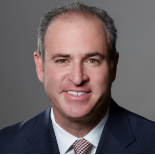

Joshua Paul Groban
Non-Partisan | California

Candidate Profile*

Activist

BIOGRAPHY
EDUCATION
Candidate did not provide
WORK & MILITARY
Candidate did not provide
AFFILIATIONS
Candidate did not provide
POLITICAL OFFICES HELD
Candidate did not provide
POLITICAL OFFICES SOUGHT
Candidate did not provide
ENDORSEMENTS*
LIBERAL (3)
*The League SF
*San Francisco League of Pissed Off Voters
*Bay Rising Action
OTHER INFORMATION
Justice Joshua Groban was appointed to the California Supreme Court in 2018 by Governor Jerry Brown (D). Prior he served as a senior advisor to Governor Jerry Brown (D).
Article "Associate Justice Groban Opens Up About His First 2 Years on California's Supreme Court"
[Reporter's Question] "The court issued a statement about racial justice and the need for reflection in light of what is going on nationally. Can you tell me how that came about and how you as justices weighed writing that statement while being leaders of a court and court system?"
[Groban's Response] "It was a need to recognize the moment, acknowledged by each of us that in many ways compelled that action. We went about it with caution. Each of us recognized that we are not a court that either previously or going forward intends to issue statements on any issue of the day. Far from it.
But this was a uniquely original moment in our history and we felt that there was a need for some recognition of that. We also understood that people were in pain. Our colleagues, our staff, lawyers, judges on the appellate and trial courts, litigants. And that there was some import in really recognizing the pain of the moment."
Notable Cases:
Justice Groban signed Justice Cuellar's majority opinion in In re Humphrey (2021). The court held “[t]he common practice of conditioning freedom solely on whether an arrestee can afford bail is unconstitutional,” Additionally, “where a financial condition is nonetheless necessary, the court must consider the arrestee’s ability to pay the stated amount of bail—and may not effectively detain the arrestee ‘solely because’ the arrestee ‘lacked the resources’ to post bail.” (2) Citing Bearden v. Georgia court “perceive[d] a theme.” (12) Court must have made an “individualized determination that (1) the arrestee has the financial ability to pay, but nonetheless failed to pay, the amount of bail the court finds reasonably necessary to protect compelling government interests; or (2) detention is necessary to protect victim or public safety, or ensure the defendant's appearance, and there is clear and convincing evidence that no less restrictive alternative will reasonably vindicate those interests” (24). issue– “whether it is constitutional to incarcerate a defendant solely because he lacks financial resources.” (12)
Justice Groban signed Justice Cantil-Sakauye's majority opinion in Smith v. LoanMe, Inc (2021). The court held section 632.7 applied to intentional recordings of communications by both parties and non-parties. Issue–”whether section 632.7 applies to the parties to a communication, prohibiting them from recording a covered communication without the consent of all participants, or whether the section is concerned only with recording by persons other than parties (sometimes hereinafter referred to as “nonparties” to the communication), such as an individual who covertly intercepts a phone call and eavesdrops upon it” (1). Facts–LoanMe recorded a call between Smith and LoanMe. Smith alleges they did not consent and LoanMe argues that the beep tone was indication of the start of recording and the continued conversation “acquiences.” Smith brought class action on behalf of “‘[a]ll persons in California whose inbound and outbound telephone conversations involving their cellular or cordless telephones were recorded without their consent by [LoanMe] or its agent/s within the one year prior to the filing of this action.’ The complaint alleged that the recording of these calls violated section 632.7.” (1)
Justice Groban signed Justice Kruger’s majority in In re A.R. (2020) Court held the untimely filing of an appeal by defendant's counsel after a dependency hearing does not prevent an appeal because the defendant is entitled to relief from her statutory right to competent counsel which affected her right to appeal. (Relied on In Re Kristin.) Found the appropriate procedure is a petition for habeas corpus. Also finding the judge had discretion in determining what procedures to follow of the petition. The court found to show incompetence the parent must show prejudice which could be shown through evidence that the appeal would have been filed timely without counsel’s failure. Further, found they must show they requested relief from the incompetent attorney within a reasonable time. The court rejects the argument that the parent would have to show potential success of the appeal as well. Facts—After a court terminated M.B. 's parental rights she requested that her attorney appeal the case prior to the 60 day deadline but the attorney did not file the motion until 4 days after the deadline was over. Issue—”(1) whether a parent has the right to challenge her counsel’s failure to file a timely notice of appeal from an order terminating her parental rights, and (2) if she has such a right, the proper procedures for raising such a claim.” (3-4) Reverse judgment of the Court of Appeals and remand for further proceedings.
Judge Voter Guide gave 1 Stars and voted to "replace".
QUESTIONNAIRE
VALUES
I agree with Critical Race Theory (CRT) which asserts that the institutions in the United States are fundamentally racist.
Did not answer
Judeo-Christian values established a framework of morality that is necessary for our system of limited government.
Did not answer
Briefly describe your spiritual beliefs and values.
Did not answer
What types of pro bono work have you done?
Did not answer
ABOUT YOU
Have you ever been convicted of a felony or been penalized in either civil or criminal court for sexual misconduct? If so, please explain.
Did not answer
What education or experience qualifies you to hold the office for which you seek election?
Did not answer
Why should the voters choose you?
Did not answer
I voted in these elections:
Did not answer
JUDICIAL PHILOSOPHY
Justices should not interpret the federal and state constitutions as living documents, but should use a textualist and originalist approach to interpretation.
Did not answer
What is the proper use of legislative history in interpreting statutory law?
Did not answer
Which current or past U.S. Supreme Court justice best reflects your judicial philosophy?
Did not answer
How should a court address the balance between public health and individual freedoms in the time of a pandemic?
Did not answer
In light of the case Bostock v. Clayton County, in which the U.S. Supreme Court interpreted the 1964 Civil Rights Act to include a prohibition on sexual-orientation discrimination, which justice’s opinion most closely aligns with your own opinion?
Did not answer
What role (if any) does a judge have in maintaining the separation of church and state?
Did not answer
Religious liberty is at risk in the United States and deserves the highest level of protection in the law.
Did not answer
When should a judge overturn past court decisions?
Did not answer
How should a judge determine which rights are protected by the Constitution even though they are not specifically mentioned?
Did not answer
What legal principles should a court consider when evaluating parents’ objection to their child obtaining medical procedures or drugs designed to affirm the child’s desired gender?
Did not answer
What principles should guide a court’s analysis of whether your state’s constitution gives terminally ill patients a right to assisted suicide?
Did not answer
Would you describe your judicial philosophy as originalist, living constitutionalist, or something else?
Did not answer