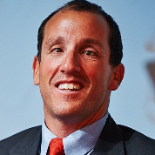

Richard Bernstein
Non-Partisan | Michigan

Candidate Profile*

Proven Activist

BIOGRAPHY
EDUCATION
Candidate did not provide
WORK & MILITARY
Candidate did not provide
AFFILIATIONS
Candidate did not provide
POLITICAL OFFICES HELD
Candidate did not provide
POLITICAL OFFICES SOUGHT
Candidate did not provide
ENDORSEMENTS*
LIBERAL (12)
*Michigan League of Conservation Voters
*United Auto Workers
Michigan AFL-CIO
Daily Kos
American Federation of Teachers AFT Michigan
OTHER (8)
*Michigan Professional Fire Fighters Union
Michigan Education Association (MEA)
*United Auto Workers Region 1
LiUNA 1076
*Michigan Asian American Progressives
SELECTED CONTRIBUTIONS
CONSERVATIVE
GIVEN BY CANDIDATE (1)
David Lee Camp (2006)
RECEIVED BY CANDIDATE (1)
Mike Behm (2010)
LIBERAL
GIVEN BY CANDIDATE (17)
Amy Klobuchar (2006)
Bernstein Family PAC (2011)
Carl Levin (2008)
Debbie Stabenow (2012)
Eliot Engel (2008)
RECEIVED BY CANDIDATE (23)
American Federation of Labor and Congress of Industrial Organizations (2022)
Andy Schor (2014)
Bernstein Family PAC (2014)
Cavanagh Leadership Fund (2014)
Debbie Dingell (2010)
OTHER INFORMATION
Justice Bernstein has served on the Michigan Supreme Court since 2015. Prior to that, he headed the the public service division for The Sam Bernstein Law Firm in Farmington Hills, Michigan.
On his campaign website, Justice Bernstein said, "I was born legally blind and my unique life challenge has helped fuel my passion for fairness and driven my professional, legal, and public service work. I believe in justice that is blind to ideology, blind to special interests, and blind to partisan politics. We need to ensure equal treatment under the law for everyone. Not just justice for those who can speak the loudest. As a Justice on the Michigan Supreme Court, I listen, make sure all sides are heard, and that the rule of law is always served."
Notable Cases:
- Rouch World, LLC v Department of Civil Rights (2022): Signed Justice Clement's majority opinion. (from Syllabus) "Discrimination on the basis of sexual orientation necessarily constitutes discrimination because of sex. Accordingly, the denial of “the full and equal enjoyment of the goods, services, facilities, privileges, advantages, or accommodations of a place of public accommodation or public service” on the basis of sexual orientation constitutes discrimination “because of . . . sex” and, therefore, constitutes a violation of the ELCRA [passed in 1976] under MCL 37.2302(a). The Court of Appeals’ decision in Barbour was overruled, and the Court of Claims’ decision with respect to Rouch World was reversed."
-
Rafaeli, LLC v. Oakland County (2020): Signed Justice Zahra's majority opinion. Two plaintiffs were delinquent on their property taxes, so the state sold their properties and kept all the proceeds (6-7). The court held that it was unconstitutional for the state to keep all the proceeds instead of reimbursing the state for the delinquent taxes and giving the surplus proceeds back the plaintiffs (7). The primary purpose of constitutional interpretation is “to determine the text’s original meaning to the ratifiers, the people, at the time of ratification” (26). Said that the plaintiffs’ claimed property right to the surplus proceeds was recognized in the Magna Carta and elsewhere in English common law (33-4).
- Midwest Institute of Health, PLLC v. Governor of Michigan (2020): Signed Justice McCormack's concurrence/dissent. Joined the majority opinion’s holding that the Emergency Management Act of 1976 did not authorize the governor to continue the state of emergency beyond April 30 (90). “Because our precedent does not support the majority’s decision, because I would not make new rules to address a once-in-a-century global pandemic, and because there are many other remedies available to curb executive overreach, I respectfully dissent” (90). Argued that the Emergency Powers of the Governor Act of 1945 was constitutional because its “particular standards…are as reasonably precise as the statute’s subject matter permits” (94; see 91 for an explanation of where McCormack got her standard).
Info from Other Sources:
- In accepting the Democrat nomination for MI Supreme Court Justice, Justice Bernstein noted that the Court would have the final word on abortion, though he clarified that he was not stating a position on the matter. A case over the constitutionality of the state's 1931 abortion ban is pending
Judge Voter Guide gave 2 stars.
QUESTIONNAIRE
VALUES
I agree with Critical Race Theory (CRT) which asserts that the institutions in the United States are fundamentally racist.
Did not answer
Judeo-Christian values established a framework of morality that is necessary for our system of limited government.
Did not answer
Briefly describe your spiritual beliefs and values.
Did not answer
What types of pro bono work have you done?
Did not answer
ABOUT YOU
Have you ever been convicted of a felony or been penalized in either civil or criminal court for sexual misconduct? If so, please explain.
Did not answer
What education or experience qualifies you to hold the office for which you seek election?
Did not answer
Why should the voters choose you?
Did not answer
I voted in these primaries and general elections:
Did not answer
JUDICIAL PHILOSOPHY
Justices should not interpret the federal and state constitutions as living documents, but should use a textualist and originalist approach to interpretation.
Did not answer
What is the proper use of legislative history in interpreting statutory law?
Did not answer
Which current or past U.S. Supreme Court justice best reflects your judicial philosophy?
Did not answer
How should a court address the balance between public health and individual freedoms in the time of a pandemic?
Did not answer
In light of the case Bostock v. Clayton County, in which the U.S. Supreme Court interpreted the 1964 Civil Rights Act to include a prohibition on sexual-orientation discrimination, which justice’s opinion most closely aligns with your own opinion?
Did not answer
What role (if any) does a judge have in maintaining the separation of church and state?
Did not answer
Religious liberty is at risk in the United States and deserves the highest level of protection in the law.
Did not answer
When should a judge overturn past court decisions?
Did not answer
How should a judge determine which rights are protected by the Constitution even though they are not specifically mentioned?
Did not answer
What legal principles should a court consider when evaluating parents’ objection to their child obtaining medical procedures or drugs designed to affirm the child’s desired gender?
Did not answer
What principles should guide a court’s analysis of whether your state’s constitution gives terminally ill patients a right to assisted suicide?
Did not answer
Would you describe your judicial philosophy as originalist, living constitutionalist, or something else?
Did not answer