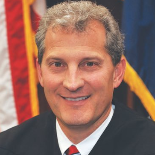

Brian Zahra
Non-Partisan | Michigan


Candidate Profile*

Proven Originalist

BIOGRAPHY
EDUCATION
Candidate did not provide
WORK & MILITARY
Candidate did not provide
AFFILIATIONS
Candidate did not provide
POLITICAL OFFICES HELD
Candidate did not provide
POLITICAL OFFICES SOUGHT
Candidate did not provide
ENDORSEMENTS*
CONSERVATIVE (4)
*Citizens for Traditional Values-Michigan
*Michigan Coalition for Responsible Gun Owners
*Detroit Regional Chamber PAC
*Patriot Approved
OTHER (1)
*Michigan Farm Bureau AgriPAC
SELECTED CONTRIBUTIONS
CONSERVATIVE
GIVEN BY CANDIDATE (9)
Bill Schuette (2018)
Brad Hantler (2012)
Decider PAC (2007)
Jason M Sheppard (2014)
Local, County, and District Republican Organizations (2022)
RECEIVED BY CANDIDATE (32)
Alan Sanborn (2012)
Bisham Singh (2012)
Brad Benzing (2012)
Compete Michigan PAC (2014)
Dale Zorn (2014)
LIBERAL
GIVEN BY CANDIDATE (1)
Fannie Lou Hamer PAC (2007)
RECEIVED BY CANDIDATE (5)
Dana Nessel (2006)
International Union of Operating Engineers (2006)
Jeffery Pepper (2014)
United Association of Journeymen and Apprentices of the Plumbing and Pipe Fitting Industry (2006)
United Brotherhood of Carpenters and Joiners of America (2006)
OTHER INFORMATION
Justice Zahra has served on the Michigan Supreme Court since 2011, after being appointed by Governor Rick Snyder (R). He previously served on the Michigan Court of Appeals for 12 years. Justice Zahra said on his campaign website that "My role as a judge is to determine what the law is, not what the law should be
Notable Cases:
- Rouch World, LLC v Department of Civil Rights (2022): Wrote dissent in a case where the majority held that discrimination on the basis of "sex" included discrimination on the basis of "sexual orientation" in places of public accommodation. (From syllabus) Justice Zahra "took no issue with the merits of the policy adopted by the majority, but stated that under the Michigan Constitution and its separation of powers, it is the ultimate responsibility of the Legislature or the people to write, amend, or repeal the laws, while the Supreme Court’s duty is to say what the law is rather than what it ought to be. He stated that the majority’s conclusion that the ELCRA prohibits discrimination based on sexual orientation construed 'because of . . . sex' to mean something that nobody in 1976 thought it meant, according to lay dictionaries and linguistic evidence of the period, and he noted that none of the entities charged with enforcing the ELCRA understood it to prohibit sexual-orientation discrimination until 2018. The fact that the Legislature specifically and explicitly considered adding sexual orientation to the ELCRA but ultimately chose not to do so materially distinguished this case from Bostock, thereby requiring a different outcome. Justice ZAHRA concluded that the ELCRA’s use of “sex” refers to whether one is a biological male or a biological female and that defendants did not prevail under that narrower definition. For these reasons, he would have affirmed the Court of Claims’ conclusion that sexual orientation is not a protected class under the ELCRA."
-
Midwest Institute of Health, PLLC v. Governor of Michigan (2020): Signed Justice Markman's majority opinion. Held that Emergency Management Act (EMA) did not give the governor authority to declare a state of emergency after April 30, 2020, and Emergency Power of the Governor Act (EPGA) was unconstitutional (6). Said that EMA required the governor to terminate the state of emergency after 28 days (which was April 30), and this requirement would be “a nullity” if the governor could immediately redeclare a state of emergency (which is what the governor attempted to do). Said that “historical context and rationale, while often helpful in giving reasonable meaning to a statute, cannot ultimately take priority over its actual language” (20). Defined public safety to include public health, since COVID-19 threatens lives (22). Borrowed principles from the federal courts about how to decide when a delegation of power violates the separation of powers (27-31). Held that the EPGA gave broad powers to the governor with constitutionally insufficient limitations on how the governor was to use that power (39-40). Struck down the entire EPGA instead of part of it (41).
Rafaeli, LLC v. Oakland County (2022): Wrote the majority opinion. Two plaintiffs were delinquent on their property taxes, so the state sold their properties and kept all the proceeds (6-7). The court held that it was unconstitutional for the state to keep all the proceeds instead of reimbursing the state for the delinquent taxes and giving the surplus proceeds back the plaintiffs (7). The primary purpose of constitutional interpretation is “to determine the text’s original meaning to the ratifiers, the people, at the time of ratification” (26). Said that the plaintiffs’ claimed property right to the surplus proceeds was recognized in the Magna Carta and elsewhere in English common law (33-4).
In re Sanders (2014): Signed Justice McCormack's majority opinion. Held that MI’s one-parent doctrine was unconstitutional under the 14th Amendment’s Due Process Clause for violating Laird’s fundamental right as a fit parent to direct the care of his children without a trial finding him unfit (7). The one parent doctrine said that if one parent were adjudicated to be unfit, then it would not be necessary that the State prove the other to be unfit as well prior to proceeding with a dispositional hearing (14). Cited SCOTUS’ Matthews v. Eldridge for guidance on when a fundamental right could be burdened (16). Cited SCOTUS’ Stanley v. Illinois precedent, which held that “all parents ‘are constitutionally entitled to a hearing on their fitness before their children are removed from their custody’” (17-18) Cited that temporary deprivation of custody is an “intrusion into the family sphere,” and held that such deprivation plainly infringed on Laird’s parental rights per Troxel (footnote on 19). Rejected State’s argument that the subsequent dispositional hearing was a sufficient fitness hearing process for Laird under Eldridge because due process requires that every parent receive an adjudication hearing before the court can interfere with his/her parental rights (20-21). Held that the “when applicable” phrase in MCR 3.973(A) (governing dispositional hearings) included affording proper respect to the rights of fit parents (20). Held that the State gained no benefit from separating a child from a fit parent (23). Noted that children facing imminent threats of harm may face an expedited procedure for removal (footnote on 22). Noted that there is no presumption of fitness for non-adjudicated parents at dispositional hearings (23). Held case was not moot because incarcerated parents can still exercise their rights (26).
Info from Other Sources:
- Justice Zahra posted a photo of his son wearing a Reagan Bush '84 shirt and standing next to a statute of Ronald Reagan
Judge Voter Guide gave 1 star.
QUESTIONNAIRE
VALUES
I agree with Critical Race Theory (CRT) which asserts that the institutions in the United States are fundamentally racist.
Did not answer
Judeo-Christian values established a framework of morality that is necessary for our system of limited government.
Did not answer
Briefly describe your spiritual beliefs and values.
Did not answer
What types of pro bono work have you done?
Did not answer
ABOUT YOU
Have you ever been convicted of a felony or been penalized in either civil or criminal court for sexual misconduct? If so, please explain.
Did not answer
What education or experience qualifies you to hold the office for which you seek election?
Did not answer
Why should the voters choose you?
Did not answer
I voted in these primaries and general elections:
Did not answer
JUDICIAL PHILOSOPHY
Justices should not interpret the federal and state constitutions as living documents, but should use a textualist and originalist approach to interpretation.
Did not answer
What is the proper use of legislative history in interpreting statutory law?
Did not answer
Which current or past U.S. Supreme Court justice best reflects your judicial philosophy?
Did not answer
How should a court address the balance between public health and individual freedoms in the time of a pandemic?
Did not answer
In light of the case Bostock v. Clayton County, in which the U.S. Supreme Court interpreted the 1964 Civil Rights Act to include a prohibition on sexual-orientation discrimination, which justice’s opinion most closely aligns with your own opinion?
Did not answer
What role (if any) does a judge have in maintaining the separation of church and state?
Did not answer
Religious liberty is at risk in the United States and deserves the highest level of protection in the law.
Did not answer
When should a judge overturn past court decisions?
Did not answer
How should a judge determine which rights are protected by the Constitution even though they are not specifically mentioned?
Did not answer
What legal principles should a court consider when evaluating parents’ objection to their child obtaining medical procedures or drugs designed to affirm the child’s desired gender?
Did not answer
What principles should guide a court’s analysis of whether your state’s constitution gives terminally ill patients a right to assisted suicide?
Did not answer
Would you describe your judicial philosophy as originalist, living constitutionalist, or something else?
Did not answer