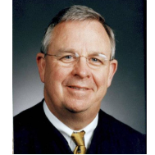
James R. Winchester
Non-Partisan | Oklahoma

Candidate Profile

Moderate

BIOGRAPHY
EDUCATION
Candidate did not provide
WORK & MILITARY
Candidate did not provide
AFFILIATIONS
Candidate did not provide
POLITICAL OFFICES HELD
Candidate did not provide
POLITICAL OFFICES SOUGHT
Candidate did not provide
ENDORSEMENTS
CONSERVATIVE (1)
Judge Voter Guide
OTHER INFORMATION
Judge Voting Guide gave Justice Winchester 4/5 stars and voted to retain.
Justice James R. Winchester was appointed to the Oklahoma Supreme Court in 2000 by Governor Frank Keating.
Notable Cases:
State ex rel. Hunter v. Johnson & Johnson (2021) Wrote majority opinion. The majority held the marketing and selling of prescription drugs is not a public nuisance. The court found the district court expanded public nuisance law and concluded that “the district court stepping into the shoes of the Legislature by creating and funding government programs designed to address social and health issues goes too far.”
Institute For Responsible Alcohol Policy v. Oklahoma ex rel. Alcohol Beverage Laws Enforcement Comm. (2020) Wrote majority. Held SB 608 which was unconstitutional as it ‘clearly, palpably and plainly’ inconsistent with the Constitution. The Article 28A of Oklahoma’s Constitution provides that manufacturers may sell to licensed wholesale distributors. SB 608 stated; however, that manufactures “shall [] offer” top brands to licensed wholesalers. The court interpreted the constitutional provisions according to its “clear and ordinary language” finding it inconsistent with the ordinary meaning of the Article 28A.
Treat v. Stitt (2020) Wrote majority. Held that the governor did not have the authority to enter into the gaming compact that bound the State. After a vote of the people, the state legislature enacted the State-Tribal Gaming Act which authorizes the governor to enter into gaming contract as long as they agree with the terms of the Act. The terms specifically prohibited the type of gaming included in the governor’s compact; thus, the court found the governor acted outside his authority and the compact invalid.
In re: State Question No. 807, Initiative Petition No. 423 (2020). The Court majority wrote, “The petition [Initiative Petition No. 423] seeks to create a new article to the Oklahoma Constitution, Article 31, for the purpose of legalizing, regulating, and taxing the use of marijuana by Oklahoma adults…we hold Petitioner has not met his burden to show clear or manifest facial constitutional infirmities because he has not shown State Question No. 807 is preempted by federal law. On the grounds alleged, the petition is legally sufficient for submission to the people of Oklahoma.”
Hunsucker v. Fallin (2017) Wrote dissent. Argued that the plaintiff defense attorneys did not have standing and that the majority's decision "strays far from our traditional standing authority, stretching the public juris standing doctrine well beyond the intent of the rule's exception. As a result, the majority opinion will allow back-door lawsuits brought by attorneys to challenge any legislation that might potentially impact their bottom dollar, all under the guise of a public interest controversy. The majority fails to recognize that the plaintiffs in this case have no directly traceable interest to the rights alleged to be violated by the proposed statutes. Indeed, the plaintiffs' own, admitted personal interest in the case is a hypothetical, monetary loss reliant on the retention of future, potential clients who illegally drive while impaired in this State. In my opinion, this is insufficient to constitute the necessary, directly traceable interest to confer standing" (para. 1-2). Argued that the majority's decision was out of step with U.S. Supreme Court precedent (7-10). Specifically, Kowalski v. Tesmer held that attorneys lacked standing to bring suit on behalf of future hypothetical clients (para. 9). Argued that, while public interest is a valid ground for standing under OK Supreme Court precedent, "we have held that this limited discretion is only properly exercised to grant standing where the party challenging the legality of the government action is the actual object of the action at issue" (para. 12). Concluded that "the plaintiffs, as third parties to the claimed constitutional violations of the proposed S.B. 643, have suffered no actual, present injury and it is unknown how, if at all, their income would be affected by the implementation of the proposed statutes. Enlarging public interest standing to allow attorneys to challenge a proposed law's possible application to a potential, future client flies in the face of U. S. Supreme Court case law, as well as our own, requiring strict adherence to the justiciability of a case" (para. 17). Signed Justice Wyrick's concurrence in part and dissent in part. Noted that the OK Constitution's limiting of the Court to hearing justiciable cases "is what keeps our non-political branch out of the business of resolving policy disputes" (para. 1). Argued that the cases were not justiciable because plaintiff's failed the Court's three-part test for standing (para. 2). Argued that the majority's opinion "disregards constitutional limits on its jurisdiction and does damage to the separation of powers between the co-equal branches of government" (para. 2). Referencing the majority's analysis of public interest standing, the dissent commented, "Let that sink in. The Court believes it can reduce to nil 'the irreducible constitutional minimum' of standing anytime it is presented with two parties disagreeing over important policy considerations. In other words, the Court can disregard constitutional limits on its jurisdiction anytime it is presented with precisely the type of policy dispute that those constitutional limits are designed to bar it from deciding. But nothing in our Constitution permits us to assume jurisdiction over a case merely because the issue it presents is 'important,' and the Court's invocation of the publici juris standard as a measure of justiciability is without precedent" (para. 9). Argued that the majority's cited cases did not compel its decision (para. 14). "When is a case 'important' enough to trigger this form of standing? When we tell you it is, of course. That isn't a power-confining legal standard, but rather a constitution-trumping card to be invoked at the will of five" (para. 15). Argued the majority was wrong to rule how it did on the one-subject rule (para. 26-31).
Coates v. Fallin (2013) Signed Justice Colbert's majority opinion. Held that Senate Bill 1062, 2013 Okla. Sess. Laws, Ch. 208 did not violate the single-subject rule and that "the Legislature has exercised proper authority in a matter over which it has the power to act" (para. 3). Found that the bill dealt with "workers' compensation or the manner in which employees may ensure protection against work-related injuries" (para. 2). Good elements: Laws are presumed constitutional (para. 2). Laws that are not unconstitutional must be put into effect, and not circumvented (para. 2). "We will not exercise authority not vested in this Court by rewriting statutes merely because the legislation does not comport with our concept of prudent public policy" (para. 2).
Oklahoma Coalition for Reproductive Justice v. Cline (2019) Concurred in result only. Majority held that SB 2684 was unconstitutional because it impose an undue burden on a womens ability to access abortion. The court granted the motion for summary judgment holding it was bound by Roe v. Wade and Casey v. Planned Parenthood. The test applied was “whether the statute has the effect of placing a substantial obstacle in the path of a woman’s choice and imposing an undue burden on the rights which is the issue here.” The legislation “outlawed ‘off-label’ use of a specific abortion drug. The court held that requiring the 2000’s protocol creates a undue burden because most doctors don’t follow it, there are more adverse effects, and the 2016 protocol is “evidence-based.” “ Held that The United States Supreme Court has been clear that ‘u]nnecessary health regulations that have the purpose or effect of presenting a substantial obstacle to a woman seeking an abortion impose an undue burden on that right.’ Hellerstedt requires the court to look to “expert evidence, presented in stipulations, depositions and testimony.” Findings showed the safest use of such drugs follows the FDA protocol. FDA protocol is consistent with 2016 protocol not 2000 .
Nova Health Systems v. Pruitt (2012) Signed majority concurring in result only. Held that a law requiring that an ultrasound be performed prior to an abortion violated Planned Parenthood v Casey (para. 3). Noted that the OK Supreme Court is bound by the Supreme Court's decisions (para. 2). Concerning elements: the court did not explain its reasoning aside from citing Casey. Fedsoc article says that the Fifth Circuit (no jurisdiction over OK) found a more restrictive TX law to be constitutional.
QUESTIONNAIRE
VALUES
I agree with Critical Race Theory (CRT) which asserts that the institutions in the United States are fundamentally racist.
Did not answer
Judeo-Christian values established a framework of morality that is necessary for our system of limited government.
Did not answer
Briefly describe your spiritual beliefs and values.
Did not answer
What types of pro bono work have you done?
Did not answer
ABOUT YOU
Have you ever been convicted of a felony or been penalized in either civil or criminal court for sexual misconduct? If so, please explain.
Did not answer
What education or experience qualifies you to hold the office for which you seek election?
Did not answer
Why should the voters choose you?
Did not answer
I voted in these primaries and general elections:
Did not answer
JUDICIAL PHILOSOPHY
Justices should not interpret the federal and state constitutions as living documents, but should use a textualist and originalist approach to interpretation.
Did not answer
What is the proper use of legislative history in interpreting statutory law?
Did not answer
Which current or past U.S. Supreme Court justice best reflects your judicial philosophy?
Did not answer
How should a court address the balance between public health and individual freedoms in the time of a pandemic?
Did not answer
In light of the case Bostock v. Clayton County, in which the U.S. Supreme Court interpreted the 1964 Civil Rights Act to include a prohibition on sexual-orientation discrimination, which justice’s opinion most closely aligns with your own opinion?
Did not answer
What role (if any) does a judge have in maintaining the separation of church and state?
Did not answer
Religious liberty is at risk in the United States and deserves the highest level of protection in the law.
Did not answer
When should a judge overturn past court decisions?
Did not answer
How should a judge determine which rights are protected by the Constitution even though they are not specifically mentioned?
Did not answer
What legal principles should a court consider when evaluating parents’ objection to their child obtaining medical procedures or drugs designed to affirm the child’s desired gender?
Did not answer
What principles should guide a court’s analysis of whether your state’s constitution gives terminally ill patients a right to assisted suicide?
Did not answer
Would you describe your judicial philosophy as originalist, living constitutionalist, or something else?
Did not answer