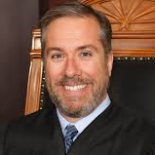

James Beene
Non-Partisan | Arizona

Candidate Profile

Originalist

BIOGRAPHY
EDUCATION
Candidate did not provide
WORK & MILITARY
Candidate did not provide
AFFILIATIONS
Candidate did not provide
POLITICAL OFFICES HELD
Candidate did not provide
POLITICAL OFFICES SOUGHT
Candidate did not provide
ENDORSEMENTS
CONSERVATIVE (2)
Arizona Free Enterprise Club
Judge Voter Guide
OTHER INFORMATION
Justice James Beene was appointed to Arizona Supreme Court in 2019 by Governor Ducey (R). From 2009-2017 Justice Been was a judge on the Maricopa County Superior Court in Arizona.
Judicial Philosophy “As a justice, my primary duty is to interpret the law carefully, consistently, and impartially to the facts in each case. When deciding a case, I put aside my thoughts of what I believe the law should be and give meaning to the text of the law as written. The best way to interpret the law, whether it to be a constitutional provision or a law passed by the legislature or the people, is to give the words in the text their normal, ordinary meaning. This approach assists me in reaching a conclusion that ultimately gives meaning to the intent of the lawmaker. . . . [I]nterpreting the law in this fashion aligns with the separation of powers doctrine that is found in both the U.S. and Arizona constitutions.”
Notable Cases:
- S. Point Energy Ctr. LLC v. Arizona Dep’t of Revenue (2022). Justice Timmer authored a majority in which Justices Montgomery and Beene joined. The property South Point Energy leased on Tribal Land did not fall under section 5 of Indian Reorganization Act of 1934 because it was not land owned by the federal government. Found the land was not owned by the federal government because the lease between the IndianTribe and South Point specified that “‘all [i]improvements and associated materials, supplies, and equipment’ are ‘owned and controlled’ by South Point.” (3) The Act did not define government ownership and the court deferred to the Bureau Indian Affairs which defined it as “any interests, benefits, and rights inherent in the ownership of the real property.” (7) The court found “such rights generally include ownership of permanent improvements constructed by a tenant on leased property.” (7) The Act states land “taken in the name of the United States in trust for the Indian tribe or individual Indian for which the land is acquired, and such lands or rights shall be exempt from State and local taxation.” (6) Courts’ “primary goal in interpreting § 5 is to determine and give effect to Congress's intent.[] We read words in context and effectuate the plain meaning of § 5 unless doing so would be absurd.[] If the language is ambiguous, we consider secondary interpretive principles, such as the Act's subject matter, history, and purpose, and the consequences of differing interpretations.” (6)
- Garcia v. State (2021) Authored by Beene. Timmer and Montgomery joined opinion. Held (1) that the trial court did have the discretion of order a sexually violent person (SVP) screening of the defendant he was deemed incompetent to stand trial and the statue uses the word “may” indicating discretion and “if” indicating pre-condition. Additionally later sections used “shall '' thus the court found that the legislature used restrictive language to give discretion not language that is mandatory. Held (2) the trial court abused its discretion; however, in ordering the SVP “[b]ecause the court erroneously concluded it lacked discretion to deny the State's request, its failure to exercise discretion constitutes legal error and is an abuse of discretion.” (9) Analysis–“We look first to § 13-4518’s language to determine whether it gives trial courts discretion to order an SVP screening. When interpreting a statute, we aim ‘to give effect to the legislature’s intent.’ . . . ‘A statute’s plain language best indicates legislative intent, and when the language is clear, we apply it unless an absurd or unconstitutional result would follow.” We must ‘give meaning, if possible, to every word and provision so that no word or provision is rendered superfluous.’” (6) Background–The defendant charged with enganging in sexual conduct of a minor under age 15 and the state requested a SVP after he was deemed non-competent to stand trial. He argued that the court abused its discretion.
- State ex rel. Adel v. Hannah (2020): Justice Beene wrote the majority opinion, which held that an Enmund/Tison verdict in a murder case could not be vacated under Arizona Rule of Criminal Procedure 24.2 because it did not qualify as a “judgement” or “sentence” pursuant to the definitions provided in Rule 26.1 (5). The court rejected arguments to reinterpret rule 24.2 because it was allegedly inefficient, arguing that the inefficiency was found in the law, not in its interpretation (6).
-
Saguaro Healing v. State (2020): Justice Beene wrote the majority opinion, which held that the Arizona Department of Health Services violated the law by not granting a marijuana dispensaries registration to Saguaro Healing in spite of Saguaro being the only qualified dispensary in its county (2). Found "the words 'if necessary to ensure' indicate that 'may' is not permissive in this context." Found the statute included both a maximum number of dispensaries as well as a minimum of one in each county. Found that "'may' when used in a statute, usually implies some degree of discretion,” [but] this principle “can be defeated by indications of legislative intent to the contrary or by obvious inferences from the structure and purpose of the statute.” Found such intent and held "may" to be interpreted as a mandate. Justice Montgomery's concurrence in part and dissent in part agrees with the majorities interpretation of the statue but disagrees with its application to the case because the he argued that the court may have created a responsibility for the Department to continually monitor dispensaries in each county throughout the year, which is not present in the statute (11). Emphasized on Separation of Powers.
- Arizonans for Second Chances, Rehabilitation, and Public Safety v. Hobbs (2020): Justice Beene signed Justice Gould’s majority opinion. The majority opinion held that an online signature alternative would not comply with Article 4, Part 1, Section 1(9) of the Arizona Constitution’s requirement for wet signatures when seeking to place an initiative on the ballot (3). Held that none of the petitioners’ rights were violated by Section 1(9)’s requirement (3-4). The court issued dicta that it is important to uphold the rule of law, especially in times of crisis (5). The court also interpreted a term according to its meaning at the time the provision was adopted (11-12). The dissent argued that the court did not have jurisdiction to hear the case because the petitioner did not clearly fulfill any of the requirements of Rule 3 of the Rules of Procedure for Special Action (46)
- State v. Soto-Fong (2020): Justice Beene signed Justice Lopez’s majority opinion, which held that separate sentences which accumulate to exceed a minor’s life expectancy do not violate the Eighth Amendment (3). The court rejected arguments to apply the precedent of Graham and Miller, holding that those cases were related to sentences for single crimes (12). The court also rejected arguments to make a ruling based on U.S. Supreme Court dictum, which had been used to make rulings in other courts (13). The court also upheld the separation of powers by holding that to establish its own criminal sentences was not within its authority (14).
- State v. Mixton (2020): Justice Beene signed Justice Lopez’s majority opinion, which held that neither the Fourth Amendment nor Article 2, Section 8 of the Arizona Constitution required the state to obtain search warrants to gather IP addresses and ISP subscriber information provided willingly to the provider (2). The opinion held that the court could look to legislative history in order to find the law’s intent, and the court considers factors such as the law’s consequences and purpose when construing ambiguous concepts (13). The dissent argued (33) that the majority ignored substantive differences when ruling that Article 2, Section 8 and the Fourth Amendment offer essentially the same privacy protections (40).
Judge Voter Guide gave 5 Stars and voted to "retain".
QUESTIONNAIRE
VALUES
I agree with Critical Race Theory (CRT) which asserts that the institutions in the United States are fundamentally racist.
Did not answer
I agree with Critical Race Theory (CRT) which asserts that the institutions in the United States are fundamentally racist.
Did not answer
Judeo-Christian values established a framework of morality that is necessary for our system of limited government.
Did not answer
Judeo-Christian values established a framework of morality that is necessary for our system of limited government.
Did not answer
Briefly describe your spiritual beliefs and values.
Did not answer
Briefly describe your spiritual beliefs and values.
Did not answer
What types of pro bono work have you done?
Did not answer
What types of pro bono work have you done?
Did not answer
ABOUT YOU
Have you ever been convicted of a felony or been penalized in either civil or criminal court for sexual misconduct? If so, please explain.
Did not answer
Have you ever been convicted of a felony or been penalized in either civil or criminal court for sexual misconduct? If so, please explain.
Did not answer
What education or experience qualifies you to hold the office for which you seek election?
Did not answer
What education or experience qualifies you to hold the office for which you seek election?
Did not answer
Why should the voters choose you?
Did not answer
Why should the voters choose you?
Did not answer
I voted in these primaries and general elections:
Did not answer
I voted in these primaries and general elections:
Did not answer
JUDICIAL PHILOSOPHY
Justices should not interpret the federal and state constitutions as living documents, but should use a textualist and originalist approach to interpretation.
Did not answer
Justices should not interpret the federal and state constitutions as living documents, but should use a textualist and originalist approach to interpretation.
Did not answer
What is the proper use of legislative history in interpreting statutory law?
Did not answer
What is the proper use of legislative history in interpreting statutory law?
Did not answer
Which current or past U.S. Supreme Court justice best reflects your judicial philosophy?
Did not answer
Which current or past U.S. Supreme Court justice best reflects your judicial philosophy?
Did not answer
How should a court address the balance between public health and individual freedoms in the time of a pandemic?
Did not answer
How should a court address the balance between public health and individual freedoms in the time of a pandemic?
Did not answer
In light of the case Bostock v. Clayton County, in which the U.S. Supreme Court interpreted the 1964 Civil Rights Act to include a prohibition on sexual-orientation discrimination, which justice’s opinion most closely aligns with your own opinion?
Did not answer
In light of the case Bostock v. Clayton County, in which the U.S. Supreme Court interpreted the 1964 Civil Rights Act to include a prohibition on sexual-orientation discrimination, which justice’s opinion most closely aligns with your own opinion?
Did not answer
What role (if any) does a judge have in maintaining the separation of church and state?
Did not answer
What role (if any) does a judge have in maintaining the separation of church and state?
Did not answer
Religious liberty is at risk in the United States and deserves the highest level of protection in the law.
Did not answer
Religious liberty is at risk in the United States and deserves the highest level of protection in the law.
Did not answer
When should a judge overturn past court decisions?
Did not answer
When should a judge overturn past court decisions?
Did not answer
How should a judge determine which rights are protected by the Constitution even though they are not specifically mentioned?
Did not answer
How should a judge determine which rights are protected by the Constitution even though they are not specifically mentioned?
Did not answer
What legal principles should a court consider when evaluating parents’ objection to their child obtaining medical procedures or drugs designed to affirm the child’s desired gender?
Did not answer
What legal principles should a court consider when evaluating parents’ objection to their child obtaining medical procedures or drugs designed to affirm the child’s desired gender?
Did not answer
What principles should guide a court’s analysis of whether your state’s constitution gives terminally ill patients a right to assisted suicide?
Did not answer
What principles should guide a court’s analysis of whether your state’s constitution gives terminally ill patients a right to assisted suicide?
Did not answer
Would you describe your judicial philosophy as originalist, living constitutionalist, or something else?
Did not answer
Would you describe your judicial philosophy as originalist, living constitutionalist, or something else?
Did not answer