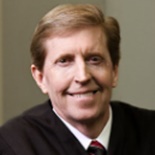

Matthew B Durrant
Non-Partisan | Utah

Candidate Profile

Uncontested

BIOGRAPHY
EDUCATION
Candidate did not provide
WORK & MILITARY
Candidate did not provide
AFFILIATIONS
Candidate did not provide
POLITICAL OFFICES HELD
Candidate did not provide
POLITICAL OFFICES SOUGHT
Candidate did not provide
OTHER INFORMATION
During the Utah Supreme Court State of the Judiciary on January 17, 2023, Justice Durrant stated:
- "Now, I'd like to talk about the relationship between our two branches of government. We all know that we're seeing extraordinary levels of polarization in our society, and we've seen an increase in distrust of our institutions, including yours and mine. Please just know this: I personally, and our judges, have enormous respect for you, our state's elected policymakers, for you and for your constitutional role."
- "Now, there's a natural tension in our relationship because we are called upon to review [policymakers'] work. Our guiding principle is always your intent. You pass policy that is most often reflected in statute. We review those statutes to ascertain your intent. Usually, they are crystal clear. You have fine lawyers. You review them yourselves. But on occasion, an ambiguity slips in. That's not a criticism; it could be said of our opinions as well. We often get the chance to go back and clarify something that we did not make clear initially. When there is an ambiguity, it is not an open door for us to jump in and substitute our own policy preference for yours. You are elected by the people to be the policymakers for this state, not us. And so, in interpreting that ambiguity, our goal is to find your most likely intent."
- "Now, on occasion—though not that often—statutes are challenged as unconstitutional. In other words, they are challenged on the ground that in passing them you have exceeded the limits of your authority as set by the people through the constitution. Here again, a constitutional challenge is not an excuse for us to substitute our own personal preference over yours; it is merely to make our best judgment as to the statute's constitutionality. Now, we know you are doing your best to pass constitutional statutes. You, like us, have taken an oath to support, obey, and defend the constitution. But on occasion, we will disagree. That's our role, and we cannot shirk it. It doesn't mean that we think the policy reflected in the statute is a bad one; we might completely agree with it, even if we find it unconstitutional, or we might disagree on a personal level with the statute that we find constitutional."
During the Utah Supreme Court 2022 State of the Judiciary, Justice Durrant stated:
- "The mission of the judiciary is to provide the people an open, fair, efficient, and independent system for the advancement of justice under the law. This mission is the focus and foundation for every decision we make."
During the Utah Supreme Court 2021 State of the Judiciary, Justice Durrant stated:
- "During this past year, we have all had occasion to think deeply about the critical need for fairness in our society. I commend those responsible for preparing and supporting the Utah Compact on Racial Equity, Diversity, and Inclusion, which has been endorsed by many government and community leaders. The judiciary shares this commitment. We are devoted to ensuring that all who seek justice in our judicial system are treated with respect, fairness, and impartiality. We recognize that many Utahans are intimidated by the judicial process. In fact, many feel they have been left behind by the government generally. And they lack confidence in governmental institutions. This is especially true of those from marginalized communities. Many worry they will be disadvantaged in the court system by their race, gender, socioeconomic status, or some combination of these or other inappropriate factors. We feel a compelling need to communicate to those who feel they have been left behind by society that they will not be left behind by our court system. We want them to know that a court is a sanctuary, a place where they can go to seek remedy for wrongs done them, to seek vindication of their rights, and to seek justice; a place where they will be on equal footing with every other Utah citizen; a place where they will find a judge who is committed to treating them with dignity and respect, and to ensuring that their basic rights are protected."
- "But we have come to understand as judges that bias can work its way into our decision-making even at a subconscious level. We are, after all, the product of our own lived experiences and environments. We must have the humility as judges to acknowledge this and endeavor to identify any potential biases, even subliminal or implicit ones, so that we might root them out of our judgment process. The same is true for all employees of the judicial branch, from judicial assistants, to juvenile probation officers, to administrators. Each of us, no matter our position with the courts, must recognize the need to eliminate potential bias as we strive, consistent with our mission statement, to deliver 'an open, fair, efficient, and independent system for the advancement of justice under the law.'"
Justice Durrant said, "'We all owe an enormous debt of gratitude to our country’s founders. In a clear-eyed way, they saw the critical importance of a three-branch system of government with each branch playing a distinct and different role, with each branch serving as a check-up log and a balance to the other branches,' he said. 'They also saw the critical importance of each branch being in the community.'"
Matter of Childers-Gray, 2021 UT 13, 487 P.3d 96. Durrant filed an opinion concurring in part, dissenting in part, and concurring in the judgment.
Holding(s):The Court held that the district court erred in denying Childers-Gray and Rice's petitions to change their legal sex designations. The Court found that individuals have a common-law right to alter aspects of their personal legal status, including sex designations, which the Court found was supported by Utah statutory law. The Court stated that it "provide a plain-meaning interpretation of the duly enacted law allowing individuals to change their sex designations. In the process, [it] explain[ed] that Mr. Childers-Gray and Ms. Rice met the requirements—articulated by us today butrooted in common law and applied by Utah district courts and other authorities—for their sex-change petitions to be approved." (3) The Court reversed and remanded with instructions to enter orders granting their sex-change petitions. The Court first "concluded that district courts have the jurisdiction and authority to adjudicate sex-change petitions[.]" Next the Court held "that Utah Code section 26-2-11 and the district courts‘ adjudication of sex-change petitions violate[d] neither the political question doctrine nor any separation-of-powers principles. Hence, Utah courts do not violate the Utah Constitution when adjudicating sex-change petitions." (35) Next the Court held that the statute "presupposes a district court‘s authority to adjudicate a?sex change[]" but found "a clear and deliberate omission of any legislative standard by which a court should do so." (47) Thus the Court concluded, "Accordingly, we exercise our ?judicial power? to effect the intent of the legislature by fulfilling that statutory gap with our established common law, which is precisely what the statute, properly read, calls for." (47)
Concurrence and Dissent in Part: Justice Durrant concurred and dissented in part. He wrote, "[o]ur task with this statute, as with any, is to endeavor to discern legislative intent. We have traditionally employed a number of tools in conducting this inquiry. We begin with the words of the statute themselves and, where appropriate, look to the structure of the statute, both internally and in relation to other relevant statutes. A central focus of the debate between the majority and the minority here is whether in using the term 'sex change' the legislature intended to set a substantive standard for when a birth certificate may be amended to reflect a different sex, or rather, whether the legislature intended only to establish the procedural mechanism for effecting a birth certificate amendment, using the terms 'sex change' and 'name change' merely to identify the two types of amendments for which that mechanism may be employed." " I would not, as does the majority, invoke our common law authority in this case, except to the extent that I would look to our caselaw on the question of how we have interpreted the statutory standard of proper cause in the name change context. In other words, I do not think it necessary for us to rely upon the majority's argument that, by presupposing a district court's authority to order name and sex changes the legislature 'conferr[ed] on sex-change adjudication the common-law authority existing with respect to name-change adjudication.' I see the problem more as one of statutory interpretation." " In summary, my view of the appropriate interpretation of the statute proceeds as follows: (1) although the structure of section 26-2-11 indicates a legislative intent that name and sex change amendments to a birth certificate be subject to the same procedural mechanism and the same standard of proof, the statute does not provide that standard; (2) section 42-1-2 does, however, provide a standard for a name change – proper cause; (3) in light of the legislature's apparent intent that name and sex changes be treated uniformly, I would apply this same proper cause standard to those seeking to amend their birth certificate to reflect a sex change. In other words, rather than looking to the common law, I would look to section 42-1-2 for the appropriate standard. Although the majority does rely upon section 41-2-2 for the first part of its proposed standard, it relies solely upon the common law for the second part."
Background: Childers-Gray and Rice petitioned the district court to change their legal sex designations. The district court granted their name-change petitions but denied their sex-change petitions, citing a lack of legislative standards and concerns about affecting legal rights.
Vega v. Jordan Valley Med. Ctr., LP, 2019 UT 35, 449 P.3d 31. Signed Himonas' majority opinion.
Holding: The Court held that a portion of the Utah Health Care Malpractice Act was unconstitutional because it granted judicial authority to the Divison of Occupational and Professional Licensing in violation of Article VIII, Section I of the UT Const (2) the relevant section was severed. [12] The Court concluded that, "Without judicial review of the panel opinion—or the ability to file in court regardless of the panel’s determination—the panel has exercised the judicial power in violation of Article VIII, section I." (11) The Court concluded "Because the Malpractice Act remain[ed] operable without section 412(1)(b) and section 423(7), we leave intact and find constitutional the rest of the amended statute." (11) "However, all of section 423—the section that outlines the procedures for obtaining an affidavit of merit—and all language throughout the amended act that refers to affidavits of merit must also be found unconstitutional." (11)
Analysis: The Court found that Ms. Vega's challenge to the statutory regime involved two related constitutional issues: the separation of powers under Article V and the judicial power under Article VIII of the Utah Constitution. (included text of both provisions) The Court said that "Because we find that the Malpractice Act violates Article VIII’s grant of the judicial power, we need not examine Ms. Vega’s Article V arguments." The Court explained, "section 418 of the Malpractice Act mandates that plaintiffs participate in a prelitigation panel after filing their notice of intent. After a would-be plaintiff has compiled their case and brought it before the panel, the panel 'render[s] its opinion in writing . . . and determine[s] on the basis of the evidence whether . . . each claim against each health care provider has merit or has no merit.' UTAH CODE § 78B-3-418(2)(a). Based on this proceeding the panel renders an opinion on the claimant’s case. . . .[S]ection 418(2)(b) also provides that '[t]here is no judicial or other review or appeal of the panel’s decision or recommendations.'" (9) The Court explained that "because section 412(1)(b) makes it so that a malpractice action 'may not be initiated' without a certificate of compliance, and section 423(7) mandates that malpractice actions filed without a certificate of compliance 'shall be dismissed by the court,' DOPL’s discretion operates by design in complete insulation from the courts; the interplay between section 412(1)(b), section 423(7), and section 418(2)(b) vests DOPL with the power to hear and determine the final disposition of controversies between parties." (10) The Court held that "[t]he cumulative action of this statutory regime violates Article VIII, section I." (10) The Court concluded, "If there is no review or appeal to the courts, then the ruling of the panel is not a recommendation or an opinion—it is an authoritative and final ruling on whether a claim has merit." (10)
Background: In 2014, Gustavo Vega died after a surgery, leading his wife, Ms. Vega, to file a malpractice lawsuit. The district court denied her petition due to procedural issues and lack of legislative guidance. Ms. Vega appealed, claiming the Malpractice Act violated multiple Utah constitutional provisions.
Rules: "We presume that legislative enactments are constitutional and where possible will construe them as complying with our state and federal constitutions." "The presumption of constitutionality also means that we will seek to resolve doubts about a statute’s validity in favor of constitutionality, and will not declare a legislative enactment invalid unless it clearly violates a constitutional provision." "we will only overturn the will of the legislature when 'the statute is so constitutionally flawed that no set of circumstances exists under which the [statute] would be valid.'" "[I]f a portion of the statute might be saved by severing the part that is unconstitutional, such should be done.” (9) The Court "examine[s] legislative intent and ask whether the legislature would have intended to enact the statute with the stricken provision severed." (9) "If the remainder of the statute is operable and still furthers the intended legislative purpose, the statute will be allowed to stand.” (9)
Planned Parenthood Ass'n of Utah v. State, 2024 UT 28. Authored a dissenting opinion.
Dissent: Durrant dissented disagreeing with the majority’s analysis and conclusion. Durrant argued that PPAU could not establish third party standing under Shelledy. Durrant found, unlike the majority, that Shelledy “set out a three-factor test” and disagreed with the majority’s interpretation and application of the test. Specifically, Durrant disagreed with how the majority interpreted and applied the “impossibility” requirement. He wrote, “Shelledy requires a plaintiff seeking third-party standing to show ‘the impossibility of the [third parties] asserting their own constitutional rights.’ I would read this plainly: the plaintiff must show that it would be impossible for the relevant third parties to come to court themselves.” (79) “This straightforward interpretation of ‘impossibility’ also aligns with how the Shelledy court applied the test it had just created to the facts of that case.” (80) “In short, the word ‘impossibility’ has a plain meaning. That meaning is well understood, readily applicable to third-party standing cases, and in line with the word’s use in Shelledy. I don’t see a reason why we should craft a different definition.” Durrant also disagreed with the idea that Shelledy, by referring to the federal third-party test, interpreted “impossibility” to mean “some genuine obstacle” (82-83). He argued that the Shelledy court was aware of other third-party standing rules and could have chosen to adopt the federal test had it desired to to so. He stated, “And I do not believe we should presume that the Shelledy court made a mistake worthy of correction simply because they chose a different test than we might prefer.” (83-84) Durrant argued that the majority “lean[ed] on policy concerns[]” when it “deviated from a straightforward interpretation of Shelledy[.]” (84) Durrant concluded that the majority effectively overturned Shelledy arguing that “changing ‘impossibility’ to ‘substantial obstacle’” was more than “mere refinement.” (85) He argued the majority should “treat Shelledy’s language as controlling.” (85) Overall Durrant concluded that PPAU failed to show that it was impossible for the patients to bring suit, thus failing to meet the second prong of the third-party standing test and thus precluding PPAU from asserting third-party standing in this case.
Majority: The Court affirmed the district court “allow[ing] the preliminary injunction to remain in place while PPAU litigate[d] its claims.” [3] The Court held that “[t]he district court did not abuse its discretion when it reviewed the evidence the parties presented and concluded that PPAU would suffer irreparable harm if the law were not enjoined, that the balance of harms tips in favor of an injunction, and that an injunction would not be adverse to the public interest.” [3] The Court initially held that PPAU had standing having “statisfie[d] the requirements for traditional standing and possess[ed] the third-party standing that allow[ed] it to advance the claims of its patients.” [3] The Court “agree[d] with PPAU that the ‘impossibility’ requirement in Shelledy d[id] not require a plaintiff to show that a third party [wa]s absolutely prohibited from asserting its rights.” (22-23)
Background: “Planned Parenthood Association of Utah (PPAU) challenge[d] the law Senate Bill 174 enacted (SB 174).” [2] “SB 174 prohibits abortion at any stage of pregnancy in all but three circumstances. PPAU contend[ed] that SB 174 violate[s] rights the Utah Constitution guarantees.” [2] District court entered injunction. State appealed arguing (1) that PPAU lacked standing and (2) that the district court abused its discretion by granting the preliminary injunction.
Rules: The Court in Shelledy established a three-part test establish third-party standing. “In Shelledy, [the Court] looked to the federal standard to develop our third-party standing doctrine. [The Court] restated the general rule disfavoring third-party standing. Shelledy, 836 P.2d at 789 (citing Warth, 422 U.S. at 499). [The Court] then noted an exception to that rule if ‘certain factors are met’: (1) ‘the presence of some substantial relationship between the claimant and the third parties;’ (2) ‘the impossibility of the right holders asserting their own constitutional rights;’ and (3) ‘the need to avoid a dilution of third parties’ constitutional rights.’ Id. (quoting Note, Standing to Assert Constitutional Jus Tertii, 88 HARV. L. REV. 423, 425 (1974))” (19-20)
Majority Concerning elements: written in a manner clearly favoring PPAU, allowed for third party standing bc three patients wished to remain anonymous not because it was impossible for the to sue, did not apply plain language of impossibility, leans on policy arguments, said that “ordinarily one may not claim standing… to vindicate the constitutional rights of some third party” then stated, “like any general rule,… this one should not be applied where its underlying justification are absent.” Citing Singleton v Wulff (plurality). Cited a harvard law review article to explain the exception to the above general rule, cited Griswold (right of privacy case), found physicians are uniquely situated to litigate abortion issues on behalf of their patients, finding support in Singleton, “PPAU has a relationship with its patients [similar to] the relationships in Griswold and Eisenstadt.”
CJA 14-721. New rule. (2019) Per curiam.
Holding: The court issued a proposed rule extending Utah bar eligibility to undocumented immigrants receiving deferred action status who are also authorized to be employed in the U.S. The Court stated, "We have reviewed the question and the relevant materials, and we are confident that 8 U.S.C. § 1621(d) does not prevent this Court from adopting a rule under Article VIII, Section 4 of the Utah Constitution, which would allow individuals with DACA status to practice law in Utah." (2)
Proposed Rule: "Rule 14-721. Admission of undocumented immigrants. An applicant who is an undocumented immigrant; and (a) a recipient of: (i) deferred action status pursuant to the United States’ Policy of Deferred Action for Childhood Arrivals, or (ii) deferred action status, whether granted on an individualized, case-by-case basis or pursuant to national policy, based in part upon such applicant having arrived in the United States as a minor; and (b) authorized by the United States to accept employment at the time of application; will be eligible for admission to the Utah Bar if they meet all other requirements for admission." (1)
Supreme Court's Statement: Two individuals with Deferred Action for Childhood Arrivals (DACA) status petitioned the Utah Supreme Court to allow them to practice law in Utah. The Court found that while the Utah Bar does not restrict admission based on citizenship, it requires proof of legal presence in the U.S., which the petitioners cannot provide. Federal law prohibits certain unauthorized aliens from receiving state benefits, including professional licenses, but allows states to opt out through legislation. The petitioners asked the Court to adopt a rule enabling DACA recipients to obtain law licenses under this opt-out provision.
The Court found it had the constitutional authority to regulate legal practice in Utah and considered whether adopting such a rule would qualify as a state law under federal opt-out provisions. The Court concluded that federal law does not prevent it from enacting a rule to license qualified DACA recipients. The Court decided to proceed with the petition and seek public comments on the proposed rule.
In re Gestational Agreement. Authored opinion.
Holding(s): The Court concluded that, "[u]nder a plain reading of the statute, a gestational agreement is unenforceable unless at least one of the intended parents is female. This requirement precludes married same-sex male couples from obtaining a valid agreement. As required by Obergefell and Pavan, we hold that section 78B-15-803(2)(b) is severable from the remainder of the Act. We accordingly reverse and remand for further proceedings consistent with this opinion." (24-25) The Court found that interpreting "mother" as gender-neutral would contradict the statute's intended meaning and legislative intent. The Court agreed with Petitioners who argued that "recent United States Supreme Court precedent precludes states from denying similarly situated same-sex couples marital benefits afforded to couples of the opposite sex[.] Accordingly, [the Court] h[e]ld section 78B-15-803(2)(b) unconstitutional." (4) The Court "h[d]ld the statute violate[d] the Equal Protection and Due Process Clauses of the Fourteenth Amendment, under the analysis set forth in Obergefell." (6) The Court held that "the unconstitutional subsection should be severed, leaving the remainder of the statute intact, because doing so would not disrupt the overall operation of the Act or undermine the legislature’s intent in enacting the statute." (4)
Background: A same-sex married couple sought to become parents through a gestational agreement. Utah law requires such agreements to be validated by a court, which must ensure certain conditions are met, including medical evidence showing the intended mother’s inability to bear a child. The district court denied their petition, stating the law's use of "mother" implied a woman and thus excludes same-sex male couples. The couple appealed, arguing that this interpretation violates their constitutional rights to equal protection and due process. They contended that the term "mother" should be interpreted in a gender-neutral way. The State of Utah agreed with this interpretation.
QUESTIONNAIRE
RIGHT TO LIFE
Was Dobbs v. Jackson rightly decided according to the text of the Constitution? Please explain.
Did not answer
I support a right to accelerate ending a human life.
Did not answer
Human life deserves legal protection from conception until natural death.
Did not answer
RELIGIOUS LIBERTY
Religious liberty is at risk in the United States.
Did not answer
VALUES
Briefly describe your spiritual beliefs and values.
Did not answer
What is your view of parental rights regarding the upbringing of children, specifically education and sexual "identity"?
Did not answer
I support "gender identity" as a specially protected class. Please explain.
Did not answer
What do you believe to be true about the human condition?
Did not answer
EQUALITY
I agree with Critical Race Theory (CRT).
Did not answer
ABOUT YOU
What, if any, church or organizations do you belong to?
Did not answer
I voted in these primaries and general elections:
Did not answer
Have you ever been convicted of a felony? If so, please explain.
Did not answer
Have you ever been penalized for sexual misconduct in either civil or criminal court? If so, please explain.
Did not answer
Would you describe your judicial philosophy as originalist, living constitutionalist, or something else? Please explain.
Did not answer
JUDICIAL PHILOSOPHY
Which current or past U.S. Supreme Court justice best reflects your judicial philosophy?
Did not answer
Is there a separation of church and state in the Constitution? Please explain.
Did not answer
Should courts address threats to religious liberty in the United States? If so, how?
Did not answer
Was Obergefell v. Hodges rightly decided according to the text of the Constitution? Please explain.
Did not answer
Was Bostock v. Clayton County rightly decided under the law? Please explain.
Did not answer
I agree that “the custody, care and nurture of the child reside first in the parents, whose primary function and freedom include preparation for obligations the state can neither supply nor hinder.” (Troxel v. Granville, 530 U.S. 57, 65-66 (2000); quoting Prince v. Massachusetts, 321 U.S. 158, 166 (1944).
Did not answer
What should a judge do when legislative texts and court precedents dictate different results?
Did not answer
When should a judge overturn past court decisions?
Did not answer
When, if ever, should a judge take popular opinion or the social views of the majority into consideration?
Did not answer
Do you believe the meaning of the Constitution changes over time, absent changes through the amendment process of Article V?
Did not answer
What do you believe is the single most important quality a judge should possess?
Did not answer
If you are an incumbent judge, describe a recent instance in which you acted to preserve your judicial independence. If you are an aspiring judge, how do you plan to remain independent if elected to the bench?
Did not answer
2ND AMENDMENT
The right to bear arms is fundamental and must be protected.
Did not answer
OTHER IMPORTANT ISSUES
Which branch of government do you believe was intended to wield the most authority?
Did not answer
How should the court address public health and individual freedoms in the time of a public health emergency?
Did not answer