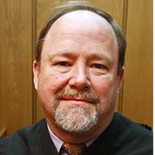

Scott Myren
Non-Partisan | South Dakota



Candidate Profile

Uncontested

BIOGRAPHY
EDUCATION
Candidate did not provide
WORK & MILITARY
Candidate did not provide
AFFILIATIONS
Candidate did not provide
POLITICAL OFFICES HELD
Candidate did not provide
POLITICAL OFFICES SOUGHT
Candidate did not provide
OTHER INFORMATION
“Judge Myren is a highly-qualified, senior jurist who respects the separation of powers and the role of a judge to interpret the law as written,” Noem said.
Justice Myren presented to the South Dakota Federalist Society on October 26th "on ethics, leadership and the independent judiciary."
Notables Cases:
- State v. Osman, 2024 S.D. 15, 4 N.W.3d 558. Myren authored a dissenting opinion. Justice Myren found that the show up identification procedure used was both suggestive and unnecessary and thus “created a substantial likelihood of misidentification.” (12) He argued that "the real reason for the rushed identification was law enforcement's desire to establish Osman's blood alcohol content as soon as possible." (12) Justice Myren concluded that "this desire to establish Osman's blood alcohol content d[id] not make it necessary to use a suggestive identification procedure." (12) He notes that "[t]he witnesses briefly saw the suspect about a half block away, illuminated by a streetlight at night[,] and that only "[a]fter hearing Becky's account, Troy decided he also saw a male." (12) He further noted that "[d]uring the show-up, Becky initially expressed uncertainty in her identification....She then confirmed her identification of the handcuffed suspect, who was being spotlighted for her by an officer's flashlight." (12) Unlike Justice Myren the majority held that "the show-up identification procedure used was not unnecessarily suggestive," and held that "the circuit court did not err in denying Osman's motion to suppress." (9) The Court held that "... the circuit court erred by admitting Sergeant Treadway's hearsay testimony [but found] that there was not a reasonable probability that, but for the admission of this testimony, the result of the proceedings would have been different." (12)
- MRose Dev. Co., LLC v. Turner Cnty. Bd. of Cnty. Commissioners, 2024 S.D. 28. Myren concurred in Salter's opinion which reversed the circuit court’s decision. The Court held that the circuit court erroneously interpreted the 2008 Zoning Ordinance by not reviewing the County's decision under the arbitrariness standard and concluding that the developer failed to meet its burden. “Article 6 of the 2008 Zoning Ordinance states that the Lake Residential District “shall be permitted to be used” for residential development.” (7). The Court asked whether the County exercised its non-quasi-judicial policy-making authority when it denied the plaintiff’s rezoning application. The case arose after the plaintiff sought to develop farmland into 15 lakefront lots. The plaintiff applied to rezone the land from agricultural use to residential. The board of Commissioners denied the application. The Plaintiff alleged that one of the commissioners who voted to deny the application was doing it to please her deceased father’s wishes to keep the land undeveloped. The plaintiff also did not receive any official explanation for the vote. The plaintiff appealed to the circuit court who reversed the County’s decision. The County then appealed. The Court stated that the plaintiff “was not seeking an adjudication of its existing rights but, rather, it sought to change the land's zoning district.”(13). The court therefore used an arbitrary standard, which placed a heavy burden on the plaintiff to show that the County’s decision was “’not governed by any fixed rules or standard’ but, rather, is ‘based on personal, selfish, or fraudulent motives[.]’”(14)
- State v. Alexander, 2022 S.D. 31, 975 N.W.2d 592. Justice Myren concurred in Justice Kern’s opinion. The Court reversed “[b]ecause Blackwell mandate[d] that due process require[d] a higher standard than that stated in SDCL 40- 1-1(5) to prove the dangerousness of an animal in a criminal proceeding, and because the circuit court clarified that it would have acquitted but for the SDCL 40- 1-1(5) language[.]” (9) “The Court concluded that the circuit court erred by ‘merely review[ing] the animal control officer’s decision for its legality’ rather than making an ‘independent determination of dangerousness by a neutral judicial officer as part of the criminal proceeding.’” (8) The Court concluded that, “a neutral factfinder must conclude from the evidence presented at trial whether the animal is dangerous for purposes of satisfying the third element of SDCL 40-1-23.” (8) The case arose after the defendant was “convicted of violating SDCL 40-1-23 for having a ‘potentially dangerous animal.’” (1). In its analysis the Court relied on its decision in City of Pierre v. Blackwell where the Court found that, “Blackwell was not afforded due process when he was convicted based on the animal control officer’s determination of dangerousness.” (8) The Court asked whether evidence was sufficient to convicted defendant under SDCL 40-1-23. “To prove the charge of keeping a ‘potentially dangerous animal’ under SDCL 40-1-23, the State must prove, beyond a reasonable doubt, that (1) the defendant was the owner or caretaker of the animal, (2) the animal was not in a proper enclosure or confined or restrained, and (3) the animal was dangerous.” (5) “SDCL 40-1-1(5) defines a dangerous animal for purposes of element (3) as ‘any animal that, by itself or by environmental circumstances, at the determination of the board, any agent or officer of a humane society, or any law enforcement officer, is a threat to the physical well-being of other owned animals or humans[.]’” (6) “SDCL 40-1-1(5) provides in pertinent part that an animal is dangerous if ‘any law enforcement officer’ determines that the animal ‘is a threat to the physical well-being of other owned animals or humans[.]’” (6)
Notable Cases Continued:
- Avera St. Mary's Hosp. v. Sully Cnty., 2024 S.D. 25, 6 N.W.3d 865. Justive Myren authored the opinion. The Court affirmed the circuit court which affirmed the decision of the Sully County Board of Commissioners. The Court held that “Sully County had no statutory obligation to reimburse the Avera for J.R.’s emergency medical services.” (10) The Court concluded that “SDCL 28-13-37 impose[d] a duty on county commissioners to investigate complaints concerning nonresident poor persons who are ‘lying sick therein or in distress’ and to provide ‘such temporary relief as the case shall require.’ SDCL 28-13-37 did not require the Commission to act with respect to an indigent nonresident who had left Sully County before the Commission learned he was in distress.” (9) “SDCL 28-13-37 impose[d] a[n] … obligation on counties regarding nonresident indigent persons.” (3) It states that, “[i]t shall be the duty of the county commissioners, on complaint made to them that any person not an inhabitant of their county is lying sick therein or in distress, without friends or money, so that he is likely to suffer, to examine into the case of such person and grant such temporary relief as the nature of the case may require.” (3) The Court found that counties have “discretionary authority” under SDCL 28-13-38 to provide the “same relief as is customary in cases where persons have established residency in the state and county.” (4) The case arose after “J.R. a Mexican national …suffered appendicitis and required emergency medical services.” (1) After receiving medical services at Avera J.R. went back to Mexico without paying his medical bills. “Avera sought reimbursement from Sully County under SDCL chapter 28-13—the chapter on county poor relief. Avera made its application to Sully County while J.R. was still hospitalized.” (1) The Commissioner denied J.R.’s application finding that “J.R. was indigent by design under SDCL 28-13-27(6)(d).” (1) “The Commission also determined that “J.R. was not lying sick or in distress in Sully County at the time Sully County was notified 10 days later as shown by the Notice of Hospitalization[.]” (1) “The circuit court relied on Roane v. Hutchinson County, 40 S.D. 297, 167 N.W. 168 (1918), and denied Avera’s claim for reimbursement.” (2)
- Burgi v. E. Winds Ct., Inc., 2022 S.D. 6. Justice Myren concurred in Justice Salter's opinion. The Court held that the landlord was not liable for injury under the lease because no duty was created through language of lease. The Court found the general enforcement clause did not create a duty because no provision regarding the dog was breached. Additionally, the undisputed facts show the injury to B.K. occurred on Pasman’s leased property not in a common areas and even had the injury occurred in a common area the landlord was not liable because the injury was not “caused by a dangerous condition upon” the land thus the case still falls under restatement 355 which holds the landlord is not liable for the negligent actions of a third party upon a tenant. (12) The Court also held that the dangerous propensity rule (i.e. foreseeability) did not apply because Theresa did not demonstrate a duty between the landlord and tenant. Either the landlord and tenant needed a special relationship such as created between a business and an invitee or that the landlord “retained control over the leased premises.” (16)
- Harwood v. Chamley, 2023 S.D. 35, 993 N.W.2d 594. Justice Myren concurred in Salter's opinion. The Court affirmed the trial court which “granted Sarah primary physical custody” of Sarah’s and Cody’s two children. (1) The Court found that the trial court did not overlook the presumption against awarding custody to an abusive parent. The Court found that “the [trial] court acknowledged the statutory presumption and found that it had been rebutted by ‘the totality of the evidence presented in this matter[.]’’’ (8) The Court found that “Cody ha[d] not identified specific support from the record to establish his argument that the circuit court considered the primary caretaker factor to be preeminent.” (9) Thus, the Court rejected Cody’s argument that trial court “gave too much weight to its primary caretaker determination.” (9) The Court “f[oun]d no support for the argument that the court abdicated its independent adjudicative role.” (11) The Court concluded that based on its “review, the circuit court’s findings [were] sourced to evidence contained in the record, and it appear[ed] the court carefully weighed all of the evidence in the exercise of its fact-finding role.” The Court reviewed the prior courts holding for abuse of discretion. The Court looked to “The text of SDCL 25-4-45 [which] provide[d] that ‘[i]n awarding the custody of a child, the court shall be guided by consideration of what appears to be for the best interests of the child in respect to the child’s temporal and mental and moral welfare.’” (6-7) The Court found that “[t]he seven Fuerstenberg factors…ha[d] become an accepted means of determining child custody disputes, [but noted that] a court is not, strictly speaking, required to examine them in its best interests determination.’” (7) “[T]he Court discussed the effect of [SDCL 25-4-45.5] in Shelstad v. Shelstad, 2019 S.D. 24, ¶¶ 28– 30, 927 N.W.2d 129, 136, explaining that the presumption ceases upon a showing sufficient to rebut it.” (8)
Notable Cases Continued:
- Thom v. Barnett, 2021 S.D. 65, 967 N.W.2d 261. Justice Myren authored a concurrence and dissent in part. Justice Myren disagreed with majority that Amendment A violated single subject and separate votes requirements of South Dakota Constitution. Justice Myren held that “Amendment A contain[ed] a single subject and does not violate Article XXIII, § 1 of the South Dakota Constitution." (52) The majority found that, “[i]t is clear that Amendment A contain[ed] provisions embracing at least three separate subjects, each with distinct objects or purposes.” (27) The Court found the “three subjects [were]: (1) the development of a comprehensive plan for the legalization and regulation of marijuana for all individuals at least 21 years of age; (2) a mandate that the Legislature adopt laws ensuring a discrete group of qualifying persons, without regard to age, have access to medical marijuana; and (3) a mandate that the Legislature regulate the cultivation, processing, and sale of hemp.” (27) The majority argued that “because Amendment A plainly embraces multiple subjects, not dependent upon or connected with each other, South Dakota voters were ‘compelled either to reject all three on account of one’ they disapproved ‘or else to accept two provisions they disapprove to secure the adoption of one which meets their favor.’” (33) Justice Myren concluded that voters were well-informed of provisions of Amendment A noting that “[t]his Court is to presume the existence of an informed electorate.” (47) Justice Myren further argued that that “the propositions in Constitutional Amendment A are ‘incidental to and necessarily connected with’ the object of providing a comprehensive plan for all phases of legalization, regulation, use, production, and sale of marijuana and related substances.” (44) Justice Myren concluded after “[r]eviewing the contents of Amendment A along with its title and the Attorney General’s explanation, [that] it [wa]s plain that the Amendment was intended to provide a comprehensive plan for all phases of legalization, regulation, use, production, and sale of marijuana and related substances.” (49) He argued that the majority “look[ed] for what separate[ed] the propositions in the Amendment instead of what connect[ed] them—the comprehensive plan for all phases of legalization, regulation, use, production, and sale of marijuana and related substances.” (53) Justice Myren notd that “[A]n amendment ‘should be sustained unless it “plainly and palpably appear(s) to be invalid.”’” (43) Justice Myren further noted that the “Court [was] to apply ‘[t]he strong presumption of constitutionality after adoption by the people’ and that an amendment ‘should be sustained unless it ‘plainly and palpably appear(s) to be invalid.’”
- J & L Farms, Inc. v. Jackman Fla. Wagyu Beef, LLC, 2024 S.D. 29. Justice Myren joined Kern's dissent. The Court affirmed the holding that the court had personal jurisdiction over the Florida based bank. The Court asked whether a Florida bank had enough of a substantial connection to the state to give the court personal jurisdiction over it. The dissent appealing to Int’l Shoe Co. v. Washington, would reverse and remand the case, asserting that the exercise of jurisdiction does not comport with federal due process requirements. Using a similar framework to the majority, the dissent argued that “while the guaranties were a contract between two nonresidents, this Court has made clear that a contract does not vest a forum with personal jurisdiction over an out-of-state defendant ‘simply because the defendant is [a] party to the contract[.]’”(16). Further, the dissent stated that First Bank did not avail itself purposefully. The dissent argued that the majority went beyond the evidence in the record below by suggesting that the contract would not have been agreed upon without the guaranties. “But there is no evidence indicating that J&L would not have continued transacting business with Jackman but for the guaranty”(21). The dissent also argued that physical presence is still a factor and “At best, First Bank executed the guaranties and addressed them to J&L at Jackman’s request. It then forwarded the completed guaranties to Jackman, who, at that point, sent them to J&L. Any communication pertaining to the purchase of cattle or the guaranties was exclusively between Jackman and J&L.”(25). The dissent wrote that “[t]he most J&L has shown is that the conduct of a third-party, Jackman, established a contractual relationship between First Bank and J&L”(26).
QUESTIONNAIRE
RIGHT TO LIFE
Was Dobbs v. Jackson rightly decided according to the text of the Constitution? Please explain.
Did not answer
I support a right to accelerate ending a human life.
Did not answer
Human life deserves legal protection from conception until natural death.
Did not answer
RELIGIOUS LIBERTY
Religious liberty is at risk in the United States.
Did not answer
VALUES
Briefly describe your spiritual beliefs and values.
Did not answer
What is your view of parental rights regarding the upbringing of children, specifically education and sexual "identity"?
Did not answer
I support "gender identity" as a specially protected class. Please explain.
Did not answer
What do you believe to be true about the human condition?
Did not answer
EQUALITY
I agree with Critical Race Theory (CRT).
Did not answer
ABOUT YOU
What, if any, church or organizations do you belong to?
Did not answer
I voted in these primaries and general elections:
Did not answer
Have you ever been convicted of a felony? If so, please explain.
Did not answer
Have you ever been penalized for sexual misconduct in either civil or criminal court? If so, please explain.
Did not answer
Would you describe your judicial philosophy as originalist, living constitutionalist, or something else? Please explain.
Did not answer
JUDICIAL PHILOSOPHY
Which current or past U.S. Supreme Court justice best reflects your judicial philosophy?
Did not answer
Is there a separation of church and state in the Constitution? Please explain.
Did not answer
Should courts address threats to religious liberty in the United States? If so, how?
Did not answer
Was Obergefell v. Hodges rightly decided according to the text of the Constitution? Please explain.
Did not answer
Was Bostock v. Clayton County rightly decided under the law? Please explain.
Did not answer
I agree that “the custody, care and nurture of the child reside first in the parents, whose primary function and freedom include preparation for obligations the state can neither supply nor hinder.” (Troxel v. Granville, 530 U.S. 57, 65-66 (2000); quoting Prince v. Massachusetts, 321 U.S. 158, 166 (1944).
Did not answer
What should a judge do when legislative texts and court precedents dictate different results?
Did not answer
When should a judge overturn past court decisions?
Did not answer
When, if ever, should a judge take popular opinion or the social views of the majority into consideration?
Did not answer
Do you believe the meaning of the Constitution changes over time, absent changes through the amendment process of Article V?
Did not answer
What do you believe is the single most important quality a judge should possess?
Did not answer
If you are an incumbent judge, describe a recent instance in which you acted to preserve your judicial independence. If you are an aspiring judge, how do you plan to remain independent if elected to the bench?
Did not answer
2ND AMENDMENT
The right to bear arms is fundamental and must be protected.
Did not answer
OTHER IMPORTANT ISSUES
Which branch of government do you believe was intended to wield the most authority?
Did not answer
How should the court address public health and individual freedoms in the time of a public health emergency?
Did not answer