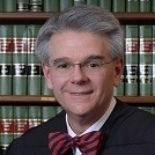

Jay McCallum
Republican | Louisiana




Candidate Profile

Originalist

BIOGRAPHY
EDUCATION
LSU Law Center, Baton Rouge, JD, 1985
Northeast Louisiana University (ULM), Monroe, BBA, 1982
WORK & MILITARY
Rabun, McCallum & Dozier, Attorney, 1985-2002
3rd JDC District Attorney's Office, Asst. District Attorney, 1991
LA House of Representatives, State Representative, 1992-2002
AFFILIATIONS
FBC Farmerville, Deacon; Treasurer; Trustee; SS teacher, Grand Lodge of the State of Louisiana
Grand Senior Warden, Bernice Lodge #239 F&AM, Past Master
Union-Concord Baptist Association, Supply preaching, Cedar Creek School
Past President and Board Member, Farmerville Lions Club, Past President and Board Member
NRA, Life Member, Union Parish Chamber of Commerce
POLITICAL OFFICES HELD
2nd Circuit Court of Appeal, 2018-Present
3rd JDC District Court Judge, 2003 - 2018
POLITICAL OFFICES SOUGHT
(Candidate did not provide)
ENDORSEMENTS
REPORTED BY CANDIDATE (5)
Louisiana Assoc. of Business & Industry (LABI)
Associated General Contractors
Associated Builders & Contractors
Louisiana Oil & Gas Association
Law Enforcement in 15 of the 20 parishes
SELECTED CONTRIBUTIONS
LIBERAL
GIVEN BY CANDIDATE (1)
National Association for the Advancement of Colored People (2018)
RECEIVED BY CANDIDATE (0)
OTHER INFORMATION
QUESTIONNAIRE
RELIGIOUS LIBERTY
Religious liberty is at risk in the United States and deserves the highest level of protection in the law.
Strongly Agree
The Ten Commandments should not be displayed in public school buildings or court houses.
Strongly Disagree
What does "separation of church and state" mean to you?
Separation of church and state is not a phrase found in the U.S. Constitution. The phrase "separation of church and state" is found in a personal letter of Thomas Jefferson. The First Amendment of the U.S. Constitution, concerning religion, states as follows: "Congress shall make no law respecting an establishment of religion, or prohibiting the free exercise thereof." Our application of the First Amendment should be determined by the clear language of the writers of the Constitution.
VALUES
Judeo-Christian values established a framework of morality which is necessary for our system of limited government.
Strongly Agree
George Washington's comment that “Religion and morality are the essential pillars of civil society” is still true today.
Strongly Agree
Briefly describe your spiritual beliefs and values.
I am a sinner saved by the Grace of God through faith in Jesus Christ. I believe that the Holy Bible is the inerrant word of God. I believe in one God in three persons; the Father, the Son and the Holy Spirit.
In light of the U.S. Supreme Court decision Bostock v. Clayton County, which justice’s opinion most closely aligns with your opinion of whether the protections of the Civil Rights Act of 1964 should be extended to the LGBTQ community?
Justice Samuel Alito
What types of pro bono work have you done?
I did much pro bono work for individuals and non-profit organizations. This included adoptions, incorporating churches, incorporating hunting clubs and estate planning for individuals leaving assets to various Christian organizations. I also defended pro-bono some individuals who were defendants in civil law suits.
ABOUT YOU
I voted in these primaries and general elections:
2012 General Election, 2014 General Election, 2016 General Election, 2018 General Election
When you consider your views on a wide range of issues from economic and social matters to foreign policy and immigration, which of the following best describes you overall?
Very Conservative
Please provide publicly available information validating your answer to the previous question.
My eleven year voting record in the Louisiana House of Representatives demonstrates my conservative positions. My record indicates that I was Pro-Life, Pro-Law Enforcement, Pro-Family, and Pro Second Amendment. The NRA sent representatives to testify on behalf of Pro Second Amendment legislation that I co-authored. I authored the "Baby Callie" legislation that strengthened the rights of adopted families in Louisiana. I consistently voted against legislation that legalized or expanded gambling.
What education or experience qualifies you to hold the office for which you seek election?
I have 35 years of legal experience as a practicing lawyer, public defender, prosecutor,trial judge and court of appeal judge. I have been a frequent instructor at various law enforcement cadet academies including for the Louisiana State Police, the Louisiana Department of Wildlife and Fisheries, and various Sheriffs' departments around the state. I was also appointed to serve on the Louisiana State Law Institute and the Louisiana Sentencing Commission. As a state representative, I was vice-chairman of the Judiciary Committee.
In what areas of law have you practiced?
I had a general civil practice representing and defending individuals and small businesses.I also did some criminal defense and then served as a prosecutor. As a lawyer I appeared before both trial courts and appellate courts.
Have you ever been convicted of a felony or been penalized for sexual misconduct? If so, please explain.
No.
Why should the voters choose you?
I am the only candidate who has experience as a prosecutor, a State Representative, District Court Judge and Court of Appeal Judge. My conservative credentials are not campaign promises but a matter of record. Since appellate courts and the Supreme Court review what trial courts have done, it essential that a Supreme Court Justice have trial court experience. Otherwise, you are reviewing work that you have never done yourself.
Is there anything else you would like voters to know about you?
I am the only candidate who has ever presided over a trial. As District Court judge I presided over hundreds of civil and criminal trials of all types. These range from major jury trials to bench trials where I alone made the decisions. I am nine hours from having my Master of Divinity from New Orleans Baptist Theological Seminary. I am amazed that God can use someone like me in such a way.
JUDICIAL PHILOSOPHY
The U.S. Constitution and my state constitution should be interpreted as living documents, rather than using a strict constructionist or originalist approach in judicial decisions.
Strongly Disagree
There are times when American judges should alter U.S. case law in order to comply with foreign case law.
Strongly Disagree
Which current U.S. Supreme Court justice best reflects your judicial philosophy?
Justice Samuel Alito
What is the proper use of legislative history in interpreting statutory law?
Courts should resort to legislative history only when the legislative intent is not ascertainable from the clear language of the statute. A court should never substitute its views in place of the views of the people as expressed through their elected representatives.
What possibilities should a judge exhaust before departing from precedent?
Louisiana is a Civil law state. Therefore I would suggest that before looking at precedent a judge should first look at the clear language of the statute involved in the litigation. Statutes are the will of the people expressed through their elected representatives. Only when there is a gap in the law, or the legislative intent is not clear from the statute itself, should precedent even be consulted. When precedent clearly departs from the legislative declarations of the people, then the court may properly depart from precedent so far as it returns to the language of the statute.
How should a judge determine which rights are protected by the Constitution even though they are not specifically mentioned?
First, a judge should read the clear language of the Constitution to see whether a right was specifically protected by the Founding Fathers. If a right is not specifically enumerated, then the intentions of the writers of the Constitution must be ascertained. Courts and judges do not have the right to amend the Constitution; that right is vested in the citizens.