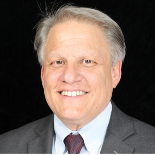
Ned Fuller
Republican | New Mexico




Candidate Profile*

Originalist

BIOGRAPHY
EDUCATION
Brigham Young University, Provo, UT, JD, 1993
Arizona State University, Tempe, AZ, BA, 1989
WORK & MILITARY
11th Judicial District Attorney, Deputy District Attorney, 2019-present
State of NM, Cabinet Secretary GSD, 2018
State of NM, Litigation Bureau Chief, 2013-2018
State of NM, District Court Judge, 2014
AFFILIATIONS
The Church of Jesus Christ of Latter-day Saints, Bishop, youth leader, prison ministry, AVID
Mentor - High School, Boy Scouts, Merit Badge Counselor
Youth Sports Programs, Coach/Manager, HOA
Board Member
POLITICAL OFFICES HELD
District Court Judge, 2014
Director Workers' Compensation, 2011-2013
POLITICAL OFFICES SOUGHT
NM Court of Appeals Judge, 2010
NM Supreme Court Justice, 2004
ENDORSEMENTS
REPORTED BY CANDIDATE (1)
Albuquerque Police Officer Association
SELECTED CONTRIBUTIONS
CONSERVATIVE
GIVEN BY CANDIDATE (3)
Heather Wilson (2013)
Mitt Romney (2013)
State Republican Party Organizations (2010)
RECEIVED BY CANDIDATE (0)
OTHER INFORMATION
QUESTIONNAIRE*
RELIGIOUS LIBERTY
Religious liberty is at risk in the United States and deserves the highest level of protection in the law.
Strongly Agree
The Ten Commandments should not be displayed in public school buildings or court houses.
No Answer
What does "separation of church and state" mean to you?
This is not a phrase that is found in the Constitution. The Constitution states that Congress shall make no law respecting an establishment of religion or prohibiting the free exercise thereof. This is the standard and as a Justice I will analyze any disputes regarding the infringement of religion by applying that language and the United States Supreme Court precedent.
VALUES
Judeo-Christian values established a framework of morality which is necessary for our system of limited government.
Strongly Agree
George Washington's comment that “Religion and morality are the essential pillars of civil society” is still true today.
Strongly Agree
Briefly describe your spiritual beliefs and values.
I believe that we are sons and daughters of God. I believe that I should love God and love my neighbor. I believe that God gave His Son, Jesus Christ to be our Savior. I believe that God saves us from spiritual and physical death. As regards public service I believe in the counsel of Jesus Christ that we should render unto Caesar the things that are Caesar's and unto God the things that are God's. Thus, I will uphold the law as written regardless of my personal beliefs.
In light of the U.S. Supreme Court decision Bostock v. Clayton County, which justice’s opinion most closely aligns with your opinion of whether the protections of the Civil Rights Act of 1964 should be extended to the LGBTQ community?
Alito and Kavanaugh
What types of pro bono work have you done?
I have helped neighbors and family members with guardianship, employment, contract and personal injury cases.
ABOUT YOU
I voted in these primaries and general elections:
2012 Republican Primary, 2012 General Election, 2014 Republican Primary, 2014 General Election, 2016 Republican Primary, 2016 General Election, 2018 Republican Primary, 2018 General Election
When you consider your views on a wide range of issues from economic and social matters to foreign policy and immigration, which of the following best describes you overall?
Conservative
Please provide publicly available information validating your answer to the previous question.
I do not believe that I have any relevant information.
What education or experience qualifies you to hold the office for which you seek election?
I currently serve as a deputy district attorney prosecuting criminal cases. I have been engaged in the private practice of law, served as an administrative law judge and as a district court judge, as director of the NM Workers' Compensation Administration overseeing their court system, as litigation bureau chief overseeing litigation involving the state and as a cabinet secretary overseeing the NM General Services Department. In my roles I have drafted statutes, testified as an expert before the legislature, applied the law as an advocate and as a judge and thus, seen the law from a variety of perspectives. What most qualifies me for this position however, is my philosophy that a judge should be a guardian of the Constitution and uphold the law not rewrite the law.
In what areas of law have you practiced?
Civil (contract, employment, workers' compensation, civil rights and tort litigation) and Criminal (felonies and misdemeanors).
Have you ever been convicted of a felony or been penalized for sexual misconduct? If so, please explain.
No.
Why should the voters choose you?
As mentioned elsewhere herein, I have a wide variety of experience, applying, drafting and analyzing the law. Additionally, I feel strongly that a judge's primary role is to apply not rewrite the law.
Is there anything else you would like voters to know about you?
As director of the NM Workers' Compensation Administration I oversaw a court system. While doing so I was able to reduce the delays in the system and expand access to the system through the use of technology, video conferencing and on-line scheduling. I would like to bring this approach to the NM courts and am hopeful I could make positive changes. Additionally, our pre-trial detention rules in criminal cases need to be reviewed and revised. We are trying to balance the rights of the accused with the safety of our community and having practiced as a prosecutor, there are certain changes that could help meet that balance.
JUDICIAL PHILOSOPHY
The U.S. Constitution and my state constitution should be interpreted as living documents, rather than using a strict constructionist or originalist approach in judicial decisions.
Strongly Disagree
There are times when American judges should alter U.S. case law in order to comply with foreign case law.
Strongly Disagree
Which current U.S. Supreme Court justice best reflects your judicial philosophy?
Clarence Thomas
What is the proper use of legislative history in interpreting statutory law?
There is no legislative history in New Mexico and so it plays no role. As for federal law, I would focus on the law as written and associated precedents. The comments and opinions of those drafting the law would be of little value.
What possibilities should a judge exhaust before departing from precedent?
There are principles articulated in the law for veering from the principle of stare decisis and I would follow those. These principles include whether the precedent is unworkable, whether parties justifiably relied on the precedent so that reversing it would create an undue hardship, whether the principles of law have developed such as to leave the old rule no more than a remnant of an abandoned doctrine and whether the facts have changed such as to render the old rule without justification. The rule of law requires stability and I would be cautious in overturning precedent. That being said there are certainly times when the legal principles cannot stand, see for example the Dred Scott decision.
How should a judge determine which rights are protected by the Constitution even though they are not specifically mentioned?
Someone once said that in the judge's discretion lie the seeds of tyranny. Thus, a judge must be careful in veering from the text of the Constitution or statute lest he or she undermine our ability to govern ourselves. The proper analysis may be not what rights are specifically mentioned but what powers are specifically granted to the government by the Constitution. In other words under Amendment IX, it is clear that rights exist which are not enumerated and under Amendment X it is clear that power not delegated to the United States by the Constitution are reserved to the States or to the people. Thus, rights are expansive and powers are limited. The Constitution protects our rights by limiting government's power. Therefore, I would first question where the government's authority derives.