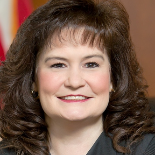
April Wood
Republican | North Carolina





Candidate Profile*

Originalist

BIOGRAPHY
EDUCATION
Campbell Law School and Nottingham School of Law, Raleigh, NC and Nottingham, England, LL.M. in Judicial Studies, 2021
Regent University School of Law, Virginia Beach, Virginia, Juris Doctor, 1997
Pensacola Christian College, Pensacola, Florida, B.A., 1994
WORK & MILITARY
District Court Judge, NC Judicial District 22b, District Court Judge, 2002-2020
National Business Institute, CLE Speaker/Faculty, 2015-
Law Office of April C. Wood, Attorney/Owner, 1997-99;2001-02
McQueen and Wood, Attorneys at Law, Attorney/Partner, 1999-2001
NC Court of Appeals, Court of Appeals Judge, 2021-present
AFFILIATIONS
NC Memorial Day Parade Committee, Legal Advisor, Committee Member, 2002 - present, Cancer Services of Davidson County
Board Member, 2010, 2016- 2021, Vice-President, 2021 - present, Salvation Army of Davidson County, Advisory Board Member, 2018 - 2020
National Theological College and Graduate School, Board of Trustees, 2018 - present, Davidson County Sheriff Department DARE Program
Guest Speaker, 2003 - present, Wesleyan Christian Patrons of the Performing Arts, Leadership Advisory Board, 2015 - 2019
Marine Corps League, Davidson County Detachment, Associate Member (until dissolved), Rich Fork Baptist Church
Member, YMCA of Northwest North Carolina, Board Member, 2021 - present
POLITICAL OFFICES HELD
NC District Court Judge, 2002 - 2020
NC Court of Appeals Judge, 2021 - present
POLITICAL OFFICES SOUGHT
(Candidate did not provide)
ENDORSEMENTS*
CONSERVATIVE (4)
Conservative Coalition of North Carolina
*Durham County Republican Party
Education First Alliance NC
*Stand For Health Freedom
OTHER (2)
Catawba Valley Tea Party
North Carolina Grassroots Government PAC
REPORTED BY CANDIDATE (6)
Conservative Coalition of North Carolina
Liberty First Grassroots
Education First Alliance of North Carolina
Justice Mark Martin, Former Chief Justice of the NC Supreme Court and current Dean of Regent University School of Law
Justice Barbara Jackson, former Justice of NC Supreme Court
SELECTED CONTRIBUTIONS
CONSERVATIVE
GIVEN BY CANDIDATE (2)
Local, County, and District Republican Organizations (2021)
State Republican Party Organizations (2021)
RECEIVED BY CANDIDATE (9)
Arthur C. Odom (2020)
Franklin S. Clark (2020)
George Cleveland (2020)
Larry Potts (2020)
Local, County, and District Republican Organizations (2020)
OTHER INFORMATION
Judge Wood has served on the North Carolina Court of Appeals since 2021. She served as a District Judge for 18 years prior to that.
Notable Cases:
- State v. Lance (2021): Signed Judge Dietz's majority opinion. Rejected defendant’s argument that State could not prove that she burned down the “dwelling of another person” because, despite Lance’s mother’s alleged conspiracy with her to burn the house down, there was no evidence that Lance’s mother knew the time or the method Lance was starting the fire (1-2). Held that the trial court did not err in admitting the State’s fire investigation expert’s testimony or in providing jury instructions (2). Vacated the trial court’s award of restitution and remanded in accordance with State v. Shelton (2004) because the prosecutor did not provide sufficient testimony or documents to support its requested amount (2). Noted that the courts had never determined whether a fellow conspirator qualified as “another person,” and held there was sufficient evidence that Lance’s mother did (7). Elements of the offense and existing precedent provided no exception for co-conspirators (7). State v. Eubanks held that a house is the “dwelling house of another” if someone other than the defendant lives there (8). Noted that in Eubanks, the defendant warned other inhabitants of the upcoming fire (8). Held that State v. Ward did not provide support for defendant because the other person had permanently abandoned the home (9).
- In re: J.M. & N.M. (2021): Wrote majority opinion. Reversed and remanded a permanency planning order eliminating reunification from two children’s permanent plan after it was appealed by respondent mother and father. A petition was filed by the Catawba County Department of Social Services (DSS) finding daughter Nellie to be abused, neglected, and dependent, and son Jon to be neglected and dependent (3).The trial court ordered a primary plan of reunification and a secondary plan of adoption (7). In subsequent appearances, neither respondent told the court under oath how Nellie’s injuries had happened (8). In 2020, the court abandoned reunification efforts, since “there can be no mitigation of risk of harm to the children” with neither respondent explaining how the injuries happened (9-10). The Supreme Court cited that its standard is whether the lower court’s findings were based on credible evidence, whether the facts supported the court’s conclusion, and whether the lower court abused its discretion. (10). Held that the trial court erred when it ceased reunification efforts (11, 17). Reunification wherever possible is the rule of juvenile court (12). Held that the evidence in the record indicated that respondents were complying with their case plans, which they had undertaken prior to adjudication (13). The trial court made no findings that the mother could not take care of her children, and respondent mother stated under oath that she did not know how Nellie had been injured because she had not seen what happened (14-16). As a result, a finding that reunification efforts would be unsuccessful with regard to the mother was contrary to the evidence presented (15). Held that no evidence supported the conclusion that father continued to act inappropriately after the children left his care; instead, the father completed all of his abuser program and domestic violence classes (17-18). Held that the evidence in the record did not support that either of the parents were “protecting” the other (19). Rejected respondents’ claim that the trial court erred by failing to advise them of their right to file a motion to review the visitation plan (20). Held that the trial court erred in concluding DSS made “reasonable efforts” to reunify and eliminate the need for placement of the children because DSS did not investigate potential causes of Nellie’s injuries by interviewing respondents’ two older children (21-22). Held that trial court failed to make findings regarding respondent-father’s constitutionally protected parental status, and cited that any severance of parents rights must be supported by “clear and convincing evidence” according to In re D.A. (2016) (25).
- In re: R.B. (2021): Wrote majority opinion. Held that trial court erred in adjudicating respondent-mother's son neglected and dependent (1-2). Held that the court found insufficient facts to declare Riley neglected. It only listed mother's mental state-- not any previous or likely future harm (11-14). Held that mother's emotional texts to another woman threatening to kill Riley were insufficient to find him neglected under In re O.W. (2004).
- State v. Pettiford (2022): Wrote majority opinion. Held that the State had presented sufficient evidence that defendant had violated his probation and that there was no abuse of discretion in revoking his probation (9). Defendant appealed his revocation of parole after he was found to have committed misdemeanor breaking and entering (1-2). Cited State v. Murchison (2014), which held that a defendant in a probation proceeding had more limited due process rights, therefore the "alleged violation need not be proven beyond a reasonable doubt" according to State v. Duncan (1967). Held that competent evidence was present for the judge to conclude that defendant had violated his probation. As the state relied on competent evidence to find that defendant had violated his parole, its decision to revoke his probation was not an abuse of discretion (8).
- State v. Bowen (2022): Held that the trial court did not err in not construing the word "threat" in an extortion statute in accordance with the term "true threat." (1,7). Defendant argued that this was required due to the NC Supreme Court's interpretation of the First Amendment in State v. Taylor (2020) (7). Cited that the State bore the burden to show that defendant's speech was not protected (8). Cited United States v. Quinn that courts have hesitated to apply the "true threat" exception to extortion (12). Held and cited that extortion is unprotected speech (13). Held that, since extortion was unprotected speech, the "true threat" exception did not apply to N.C. Gen. Stat. § 14-118.4 (13). Held that the statute was narrowly tailored to only restrict extortionate speech (16).
- State v. Flanagan (2021): Granted defendant's petition for a writ of certiorari because the trial court failed to find good cause to revoke his probation (1). Vacated the judgement of the Stokes County Superior Court in this case because it lacked jurisdiction to hear defendant's appeal (1). Cited that "Where jurisdiction is statutory and the Legislature requires the Court to exercise its jurisdiction in a certain manner, to follow a certain procedure, or otherwise subjects the Court to certain limitations, an act of the Court beyond these limits is in excess of its jurisdiction" (8). Noted that the ability of a court to review a probationer's compliance with the terms of his probation was limited by statute (8). Held that the plain language of N.C. Gen. Stat. § 15A-1347 prohibited a superior court from hearing an appeal of a district court judge's activation of a sentence or imposition of a special probation, given that the defendant waived the revocation hearing (8-9). In other words, "[i]f a defendant chooses to waive his revocation hearing, then the natural consequence proscribed by Section 15A-1347(b) is that the defendant may not thereafter appeal his special probation imposition, sentence activation, or finding of violation of probation by the district court to the superior court. To accept such an appeal would cause the superior court to act in excess of its jurisdictional boundaries imposed by the General Assembly in Section 15A-1347(b)" (9). Noted that the defendant waived his revocation hearing in this case (9). Therefore, "the Stokes County Superior Court lacked jurisdiction to hear Defendant’s appeal. To hold otherwise would permit the Superior Court to exceed its jurisdiction and operate beyond the jurisdictional boundaries established by our General Assembly" (9-10). "Naturally flowing from our Supreme Court cases is the proposition that when a defendant assents during a conviction, he generally may not later appeal on the basis of that to which he previously assented" (10).
- Duke Energy Carolinas, LLC v. Kiser (2021): Wrote majority opinion. The case involved a family who granted a power company an easement to flood their land and create a lake; however, the family still retained ownership of the underlying ground. The dispute was over whether 1) the company could permit third parties who lived on the lake to build docks which dug into the underlying land 2) the family could build a sea wall out from their property. Held that the trial court erred in granting summary judgement to plaintiff Duke and Third Parties based on its cloud-upon-title theory. Noted that to hold otherwise would authorize the taking of the Kiser's property without just compensation (24). Held that cloud-upon-title was improper because the land belonged to the Kisers and Duke was only permitted use through an easement. The Third Parties were not parties to the easement (9). Cited Davis v. Robinson (1925) that an easement is "privilege, service, or convenience which one neighbor has of another" (9). An easement is a contract. Contracts are interpreted as a matter of law by the Court if plain and unambiguous, but an ambiguous contract will be left for a jury to decide according to precedent (9-10). Cited that ambiguity does not arise from a mere disagreement over the meaning a contract's language (10). Cited Lane v. Scarborough (1973) that "Whenever a court is called upon to interpret a contract[,] its primary purpose is to ascertain the intention of the parties at the moment of its execution" (10). Held that the language of the easement was unambiguous and the Flowage Easement controlled the rights of strangers to the agreement (12). Held in accordance with Lovin v. Crisp (1978) that "unless an easement explicitly states otherwise, an easement holder may not permit strangers to the easement agreement to make use of the land, other than for the use and benefit of the easement holder, without the consent of the landowner where such use would constitute additional burdens upon the servient tenement" (14). Since the Third Parties were not parties to the easement, Duke exceeded its authority by permitting them to construct and maintain structures over and into the Kisers' land (15). Held that Duke could not assign its easement rights to the Third Parties (16). Held that Duke's FERC license did not "beget nor provide delegated authority to overburden or deprive others of their property" (17). Held that "Duke had the authority and opportunity to seize in fee the property of the Kisers’ predecessors through eminent domain but, instead, elected to negotiate an easement with the Kiser Grandparents. In so doing, Duke never acquired fee title to the submerged land and cannot now assert its authority under its FERC license as if it possessed the land in fee simple. As a result, Duke is limited to the uses and exercise of dominion over the Kiser Lake Parcel to those expressly granted in the easements" (18). Held that Duke had the authority to prohibit the Kisers' maintenance of a structure within the area subject to the easement because the easement granted Duke the authority to "clear, and keep clear . . . all . . . structures” upon the land" (20). Held that the Court could not rule on whether the public trust doctrine and riparian rights applied because it would require a finding of fact. The Court held that it was barred from making findings of fact, and could only hear issues of law under the precedent of Weaver v. Dedmon (2017). Remanded the case back to the lower court (24).
QUESTIONNAIRE
VALUES
I agree with Critical Race Theory (CRT) which asserts that the institutions in the United States are fundamentally racist.
Strongly Disagree
I agree with Critical Race Theory (CRT) which asserts that the institutions in the United States are fundamentally racist.
Strongly Disagree
Judeo-Christian values established a framework of morality that is necessary for our system of limited government.
Strongly Agree
Judeo-Christian values established a framework of morality that is necessary for our system of limited government.
Strongly Agree
Briefly describe your spiritual beliefs and values.
That God created the heavens and the earth is a universal truth. God created man in order to have fellowship, but sin entered into this world, tainted God's creation, and interrupted man’s perfect fellowship with the Creator. As a result, death on earth became a reality. God sent His only Son to be born of a virgin in order to be the perfect sacrifice, so that all who believe may have eternal life and fellowship with God forever. Jesus is the Way, the Truth, and the Life. I believe the only way to Heaven is to accept Jesus as your personal Lord and Savior. I placed my faith and trust in Jesus, accepting Him as my personal Lord and Savior as a young child. I have and nurture a personal relationship with the Lord. I strive daily to live a life pleasing to Him. I believe He also calls us to be witnesses for Him. Although I have not been called to serve on foreign missions, I strongly consider myself to be one in my field. I strive to be a shining light so that others can see Jesus through me. When people recognize and ask me about the difference in me, I am happy to share the Gospel and how Jesus transforms my life. I memorized the Roman's Road to Salvation when I was a child so that I could lead others to the Lord. My values are based on the teachings of the Word of God, including but not limited to the Ten Commandments.
Briefly describe your spiritual beliefs and values.
That God created the heavens and the earth is a universal truth. God created man in order to have fellowship, but sin entered into this world, tainted God's creation, and interrupted man’s perfect fellowship with the Creator. As a result, death on earth became a reality. God sent His only Son to be born of a virgin in order to be the perfect sacrifice, so that all who believe may have eternal life and fellowship with God forever. Jesus is the Way, the Truth, and the Life. I believe the only way to Heaven is to accept Jesus as your personal Lord and Savior. I placed my faith and trust in Jesus, accepting Him as my personal Lord and Savior as a young child. I have and nurture a personal relationship with the Lord. I strive daily to live a life pleasing to Him. I believe He also calls us to be witnesses for Him. Although I have not been called to serve on foreign missions, I strongly consider myself to be one in my field. I strive to be a shining light so that others can see Jesus through me. When people recognize and ask me about the difference in me, I am happy to share the Gospel and how Jesus transforms my life. I memorized the Roman's Road to Salvation when I was a child so that I could lead others to the Lord. My values are based on the teachings of the Word of God, including but not limited to the Ten Commandments.
What types of pro bono work have you done?
Judges are prohibited from engaging in the practice of law, and I have served as one for the last twenty years. However, when I was in private practice and owned my own law firm, I frequently represented individuals and organizations on a pro bono basis. I volunteered my services to the local Legal Aid agency. where I provided pro bono representation to numerous clients who were in difficult or abusive domestic situations and desperately in need of help but unable to afford to hire an attorney. I also provided pro bono legal advice and assistance to a variety of nonprofit organizations: the Salvation Army, Cancer Services, N.C. Memorial Day Parade Committee, and church groups.
What types of pro bono work have you done?
Judges are prohibited from engaging in the practice of law, and I have served as one for the last twenty years. However, when I was in private practice and owned my own law firm, I frequently represented individuals and organizations on a pro bono basis. I volunteered my services to the local Legal Aid agency. where I provided pro bono representation to numerous clients who were in difficult or abusive domestic situations and desperately in need of help but unable to afford to hire an attorney. I also provided pro bono legal advice and assistance to a variety of nonprofit organizations: the Salvation Army, Cancer Services, N.C. Memorial Day Parade Committee, and church groups.
ABOUT YOU
What education or experience qualifies you to hold the office for which you seek election?
All lawyers are required to attend law school. I do not believe, however, that a law degree alone qualifies one to sit as a Justice on the Supreme Court. To sit on the Supreme Court, an individual must be experienced in the practical interpretation and application of the law. I graduated summa cum laude from Pensacola Christian College with a B.A. in Prelaw and from Regent University School of Law with a Juris Doctor. Believing judges should continue to be students of the law, I enrolled in the Master of Laws program that is offered to judges jointly by Campbell Law School and England's Nottingham School of Law. I obtained my LL.M. in Legal Studies with distinction in 2021. It is my experience, both as a trial court judge and as a judge on the Court of Appeals, however, that uniquely qualifies me to hold a seat on the North Carolina Supreme Court. As a District Court Judge, I presided over countless domestic violence cases, juvenile cases involving the Department of Social Services, juvenile delinquency cases, child custody and support cases, equitable distribution of marital property cases, criminal cases, traffic matters, involuntary commitment proceedings and a variety of civil law disputes. This means that I am the only candidate in this race who has ever had the enormous responsibility of sentencing someone to prison, ordering a child to be removed from an unfit parent, or entering a monetary judgment resolving a civil case. After my election to the District Court bench, I successfully completed the requisite training and put in numerous hours to become a Certified Juvenile Court Judge. I also served as the Truancy Judge in Davie County, where I was committed to doing what is necessary to resolve the issues that are causing children to be unlawfully absent from school. In diligent partnership with the local county social workers, we achieved a reduction of the dropout rate in the community. Before being elected as a District Court Judge in 2002, I owned a law office in Thomasville, North Carolina where I practiced before the District and Superior courts and administrative agencies. I also handled will, trusts, and estates, as well as real estate law matters, and taught “Wills, Trusts, and Estates” for Davidson County Community College’s Paralegal Program. In 2001, I became a Certified Family Financial Mediator. Thereafter, I practiced law and mediated cases until being elected to the bench. As a current Judge on the Court of Appeals, I review the decisions of District Courts, Superior Courts, and administrative agencies from across the state. The Court of Appeals sits in three judge panels, with each judge assigned to author opinions, involving great amounts of reading and research. As a result, I have a wide breadth of experience and knowledge in every area of the law. Significantly, having been a trial court judge especially is helpful to understanding the issues presented in appeals and in understanding the mechanics of what happened in the trial court below. Because I have been a trial court judge, I have a first-hand understanding of the real-life implications and consequences of the decisions I render and the necessity of making the right decisions. I am the only Supreme Court candidate with this depth of knowledge and judicial experience.
What education or experience qualifies you to hold the office for which you seek election?
All lawyers are required to attend law school. I do not believe, however, that a law degree alone qualifies one to sit as a Justice on the Supreme Court. To sit on the Supreme Court, an individual must be experienced in the practical interpretation and application of the law. I graduated summa cum laude from Pensacola Christian College with a B.A. in Prelaw and from Regent University School of Law with a Juris Doctor. Believing judges should continue to be students of the law, I enrolled in the Master of Laws program that is offered to judges jointly by Campbell Law School and England's Nottingham School of Law. I obtained my LL.M. in Legal Studies with distinction in 2021. It is my experience, both as a trial court judge and as a judge on the Court of Appeals, however, that uniquely qualifies me to hold a seat on the North Carolina Supreme Court. As a District Court Judge, I presided over countless domestic violence cases, juvenile cases involving the Department of Social Services, juvenile delinquency cases, child custody and support cases, equitable distribution of marital property cases, criminal cases, traffic matters, involuntary commitment proceedings and a variety of civil law disputes. This means that I am the only candidate in this race who has ever had the enormous responsibility of sentencing someone to prison, ordering a child to be removed from an unfit parent, or entering a monetary judgment resolving a civil case. After my election to the District Court bench, I successfully completed the requisite training and put in numerous hours to become a Certified Juvenile Court Judge. I also served as the Truancy Judge in Davie County, where I was committed to doing what is necessary to resolve the issues that are causing children to be unlawfully absent from school. In diligent partnership with the local county social workers, we achieved a reduction of the dropout rate in the community. Before being elected as a District Court Judge in 2002, I owned a law office in Thomasville, North Carolina where I practiced before the District and Superior courts and administrative agencies. I also handled will, trusts, and estates, as well as real estate law matters, and taught “Wills, Trusts, and Estates” for Davidson County Community College’s Paralegal Program. In 2001, I became a Certified Family Financial Mediator. Thereafter, I practiced law and mediated cases until being elected to the bench. As a current Judge on the Court of Appeals, I review the decisions of District Courts, Superior Courts, and administrative agencies from across the state. The Court of Appeals sits in three judge panels, with each judge assigned to author opinions, involving great amounts of reading and research. As a result, I have a wide breadth of experience and knowledge in every area of the law. Significantly, having been a trial court judge especially is helpful to understanding the issues presented in appeals and in understanding the mechanics of what happened in the trial court below. Because I have been a trial court judge, I have a first-hand understanding of the real-life implications and consequences of the decisions I render and the necessity of making the right decisions. I am the only Supreme Court candidate with this depth of knowledge and judicial experience.
Why should the voters choose you?
After twenty years of serving as a judge in the trial and appellate courts, I am seeking election to Seat 5 on the North Carolina Supreme Court because I believe that we need constitutional, conservative judges who will uphold and protect the Constitution and because judges with experience in the trial courts are crucial assets missing from the Supreme Court. Currently, only one of our Supreme Court Justices has ever served as a Superior or District Court judge. That is a great disservice to the citizens of North Carolina. There simply is no substitute for having had the responsibly of making a ruling and seeing its immediate impact on the parties, victims, witnesses, and others in the court system. I am the only Republican candidate for Seat 5 with any judicial experience, and the only candidate, Republican or Democrat, for Seat 5 with any experience as a trial court judge. It is important to have justices on the Supreme Court who understand the consequences of the decisions they make first-hand and who will bring direct, hands-on experience with them to North Carolina’s court of last resort. Throughout my career, in private practice and from the bench, I have dedicated myself to the rule of law and have been steadfast in my conviction that no one is above the law, regardless of race, religion, or any other status. I understand that my role as a judge is to interpret and apply our state and federal constitutions and laws as written. It is NOT the role of the Judiciary to legislate from the bench. Judicial activism must be avoided at all costs. Additionally, justice requires that judges treat everyone impartially and apply the law equally. As someone with twenty years of judicial experience, I can be trusted to exercise my duties in a fair, impartial, and equal way.
Why should the voters choose you?
After twenty years of serving as a judge in the trial and appellate courts, I am seeking election to Seat 5 on the North Carolina Supreme Court because I believe that we need constitutional, conservative judges who will uphold and protect the Constitution and because judges with experience in the trial courts are crucial assets missing from the Supreme Court. Currently, only one of our Supreme Court Justices has ever served as a Superior or District Court judge. That is a great disservice to the citizens of North Carolina. There simply is no substitute for having had the responsibly of making a ruling and seeing its immediate impact on the parties, victims, witnesses, and others in the court system. I am the only Republican candidate for Seat 5 with any judicial experience, and the only candidate, Republican or Democrat, for Seat 5 with any experience as a trial court judge. It is important to have justices on the Supreme Court who understand the consequences of the decisions they make first-hand and who will bring direct, hands-on experience with them to North Carolina’s court of last resort. Throughout my career, in private practice and from the bench, I have dedicated myself to the rule of law and have been steadfast in my conviction that no one is above the law, regardless of race, religion, or any other status. I understand that my role as a judge is to interpret and apply our state and federal constitutions and laws as written. It is NOT the role of the Judiciary to legislate from the bench. Judicial activism must be avoided at all costs. Additionally, justice requires that judges treat everyone impartially and apply the law equally. As someone with twenty years of judicial experience, I can be trusted to exercise my duties in a fair, impartial, and equal way.
I voted in these primaries and general elections:
Did not answer
Each citizen has a duty and responsibility to vote in every election. I have voted regularly in primary and general elections since I registered to vote at eighteen years of age.
I voted in these primaries and general elections:
Did not answer
Each citizen has a duty and responsibility to vote in every election. I have voted regularly in primary and general elections since I registered to vote at eighteen years of age.
JUDICIAL PHILOSOPHY
Justices should not interpret the federal and state constitutions as living documents, but should use a textualist and originalist approach to interpretation.
Strongly Agree
Justices should not interpret the federal and state constitutions as living documents, but should use a textualist and originalist approach to interpretation.
Strongly Agree
What is the proper use of legislative history in interpreting statutory law?
Laws are passed for any number of reasons, and individual legislators do not all share the same motivations or intentions in enacting a law. The idea that the members of a legislative body have each read every version of a bill and are familiar with every iteration that it goes through on its way to becoming a law is unrealistic. Moreover, the full list of reasons a legislative body passes a bill, and the reasons an executive signs or vetoes a particular bill, are rarely contained in any record, especially at the state level. Legislative history is therefore, at best, an unreliable guide for legal interpretation. Instead, statutory law should be interpreted as it is written. When judges operate with a belief that it is possible to divine the intent of the legislature apart from looking to the language that was enacted in the legislation, they risk acting more like legislators than members of the judiciary.
What is the proper use of legislative history in interpreting statutory law?
Laws are passed for any number of reasons, and individual legislators do not all share the same motivations or intentions in enacting a law. The idea that the members of a legislative body have each read every version of a bill and are familiar with every iteration that it goes through on its way to becoming a law is unrealistic. Moreover, the full list of reasons a legislative body passes a bill, and the reasons an executive signs or vetoes a particular bill, are rarely contained in any record, especially at the state level. Legislative history is therefore, at best, an unreliable guide for legal interpretation. Instead, statutory law should be interpreted as it is written. When judges operate with a belief that it is possible to divine the intent of the legislature apart from looking to the language that was enacted in the legislation, they risk acting more like legislators than members of the judiciary.
Which current or past U.S. Supreme Court justice best reflects your judicial philosophy?
Justice Antonin Scalia was right when he said, "The Constitution that I interpret and apply is not living but dead, or as I prefer to call it, enduring. It means today not what current society, much less the court, thinks it ought to mean, but what it meant when it was adopted." His philosophy, as is mine, is based in part on the idea that the Constitution would be an enduring document and that the development and modification of public policy should be undertaken through the democratic process. When judges substitute their will for that of the people, they undermine confidence in the court system, upset the separation of powers among the branches of government, and ultimately imperil individual rights.
Which current or past U.S. Supreme Court justice best reflects your judicial philosophy?
Justice Antonin Scalia was right when he said, "The Constitution that I interpret and apply is not living but dead, or as I prefer to call it, enduring. It means today not what current society, much less the court, thinks it ought to mean, but what it meant when it was adopted." His philosophy, as is mine, is based in part on the idea that the Constitution would be an enduring document and that the development and modification of public policy should be undertaken through the democratic process. When judges substitute their will for that of the people, they undermine confidence in the court system, upset the separation of powers among the branches of government, and ultimately imperil individual rights.
How should a court address the balance between public health and individual freedoms in the time of a pandemic?
There is no pandemic exception to the Constitution. Our constitutional rights cannot be put on hold, even in a pandemic, because to do so would start us down a slippery slope that would lead to the erosion of our fundamental liberties. History demonstrates that courts play a vital role in ensuring that the governmental response to any emergency, even a public health emergency, respects the rights of individuals— which naturally includes the rights of free speech, free exercise of religion, and due process of law.
How should a court address the balance between public health and individual freedoms in the time of a pandemic?
There is no pandemic exception to the Constitution. Our constitutional rights cannot be put on hold, even in a pandemic, because to do so would start us down a slippery slope that would lead to the erosion of our fundamental liberties. History demonstrates that courts play a vital role in ensuring that the governmental response to any emergency, even a public health emergency, respects the rights of individuals— which naturally includes the rights of free speech, free exercise of religion, and due process of law.
In light of the case Bostock v. Clayton County, in which the U.S. Supreme Court interpreted the 1964 Civil Rights Act to include a prohibition on sexual-orientation discrimination, which justice’s opinion most closely aligns with your own opinion?
Justice Alito's dissent correctly analyzed the issues presented, was eloquently written and most closely aligns with my view.
In light of the case Bostock v. Clayton County, in which the U.S. Supreme Court interpreted the 1964 Civil Rights Act to include a prohibition on sexual-orientation discrimination, which justice’s opinion most closely aligns with your own opinion?
Justice Alito's dissent correctly analyzed the issues presented, was eloquently written and most closely aligns with my view.
What role (if any) does a judge have in maintaining the separation of church and state?
A judge's role should be to keep the government out of religion, not to keep religion out of the government. Just as the Constitution prohibits the creation of a state religion, it also bars the government from interfering with the free exercise of religion or from otherwise telling individuals how they must practice their faith. These constitutional limitations, however, do not require elected officials to set aside their individual religious beliefs while governing or creating government policies. Our nation was founded by people of faith, and our laws are grounded in Judeo-Christian morality. Only by honoring the principles upon which our legal traditions are founded, is it possible to protect and preserve our republican system of government.
What role (if any) does a judge have in maintaining the separation of church and state?
A judge's role should be to keep the government out of religion, not to keep religion out of the government. Just as the Constitution prohibits the creation of a state religion, it also bars the government from interfering with the free exercise of religion or from otherwise telling individuals how they must practice their faith. These constitutional limitations, however, do not require elected officials to set aside their individual religious beliefs while governing or creating government policies. Our nation was founded by people of faith, and our laws are grounded in Judeo-Christian morality. Only by honoring the principles upon which our legal traditions are founded, is it possible to protect and preserve our republican system of government.
Religious liberty is at risk in the United States and deserves the highest level of protection in the law.
Strongly Agree
Religious liberty is at risk in the United States and deserves the highest level of protection in the law.
Strongly Agree
When should a judge overturn past court decisions?
Adherence to prior court decisions creates predictability and stability. Without respect for precedent, individuals cannot reliably make important legal decisions. Nevertheless, some prior court decisions are wrong and should be overturned. I agree with Justice Scalia's analysis as to when judicial precedent should be overturned. He looked to three issues in deciding whether past decisions should be followed or rejected: First, he asked whether the decision was willfully wrong. Then he looked to whether the decision, though incorrect, has been generally accepted? (For example, Justice Scalia thought the doctrine of incorporation, which interprets the Fourteenth Amendment to apply most of the protections in the Bill of Rights against state governments, was mistaken, but he also believed the doctrine had become so widely accepted that the need for stability weighed in favor of not reversing it). Finally, he would look to whether existing case law places the judge in the position of a legislator rather than that of a judge. In addition to these questions, I would consider the presence or absence of an intervening constitutional amendment and any relevant change in statutory language. If such a change occurred, then the past court decision could be overturned. In comparison to the U.S. Constitution, the procedure for amending the North Carolina State Constitution is easier and capable of becoming completed more quickly.
When should a judge overturn past court decisions?
Adherence to prior court decisions creates predictability and stability. Without respect for precedent, individuals cannot reliably make important legal decisions. Nevertheless, some prior court decisions are wrong and should be overturned. I agree with Justice Scalia's analysis as to when judicial precedent should be overturned. He looked to three issues in deciding whether past decisions should be followed or rejected: First, he asked whether the decision was willfully wrong. Then he looked to whether the decision, though incorrect, has been generally accepted? (For example, Justice Scalia thought the doctrine of incorporation, which interprets the Fourteenth Amendment to apply most of the protections in the Bill of Rights against state governments, was mistaken, but he also believed the doctrine had become so widely accepted that the need for stability weighed in favor of not reversing it). Finally, he would look to whether existing case law places the judge in the position of a legislator rather than that of a judge. In addition to these questions, I would consider the presence or absence of an intervening constitutional amendment and any relevant change in statutory language. If such a change occurred, then the past court decision could be overturned. In comparison to the U.S. Constitution, the procedure for amending the North Carolina State Constitution is easier and capable of becoming completed more quickly.
How should a judge determine which rights are protected by the Constitution even though they are not specifically mentioned?
A constitution is not a restraint on the rights of individuals; rather a constitution is restraint on the power of governments. All rights are granted by God to man. Governments are created to protect these rights. Both the U.S. and North Carolina Constitutions make clear that the absence of language expressly granting a right does not mean that the right lacks constitutional protection. To determine whether a right is constitutionally protected, courts should look to the original meaning of the constitutional language at issue in conjunction with historical and traditional understandings of whether the right at issue is constitutionally protected.
How should a judge determine which rights are protected by the Constitution even though they are not specifically mentioned?
A constitution is not a restraint on the rights of individuals; rather a constitution is restraint on the power of governments. All rights are granted by God to man. Governments are created to protect these rights. Both the U.S. and North Carolina Constitutions make clear that the absence of language expressly granting a right does not mean that the right lacks constitutional protection. To determine whether a right is constitutionally protected, courts should look to the original meaning of the constitutional language at issue in conjunction with historical and traditional understandings of whether the right at issue is constitutionally protected.
What legal principles should a court consider when evaluating parents’ objection to their child obtaining medical procedures or drugs designed to affirm the child’s desired gender?
Parents have a constitutional right to the care, custody, and control of their children, unless they are found to have abused or neglected them. Therefore, parents have a right to decide to what medical procedures their children should be subjected, unless they are neglecting the basic medical needs of their children. The age of majority is eighteen, so until the child turns eighteen years old or is emancipated judicially, the parents have a constitutional right to make the decisions about their children's elective medical procedures and medicines.
What legal principles should a court consider when evaluating parents’ objection to their child obtaining medical procedures or drugs designed to affirm the child’s desired gender?
Parents have a constitutional right to the care, custody, and control of their children, unless they are found to have abused or neglected them. Therefore, parents have a right to decide to what medical procedures their children should be subjected, unless they are neglecting the basic medical needs of their children. The age of majority is eighteen, so until the child turns eighteen years old or is emancipated judicially, the parents have a constitutional right to make the decisions about their children's elective medical procedures and medicines.
What principles should guide a court’s analysis of whether your state’s constitution gives terminally ill patients a right to assisted suicide?
The North Carolina Constitution contains no express provision granting a right to assisted suicide, and historically, there has been no recognized right to assisted suicide under either federal or state constitutional law. At the same time, legal prohibitions against murder (i.e., the taking of an innocent human life) and by extension assisting in a murder, have existed from time immemorial. Additionally, as previously stated, the North Carolina Constitution is relatively easy to amend should the citizens of the state wish to gain the expressed constitutional right to assisted suicide.
What principles should guide a court’s analysis of whether your state’s constitution gives terminally ill patients a right to assisted suicide?
The North Carolina Constitution contains no express provision granting a right to assisted suicide, and historically, there has been no recognized right to assisted suicide under either federal or state constitutional law. At the same time, legal prohibitions against murder (i.e., the taking of an innocent human life) and by extension assisting in a murder, have existed from time immemorial. Additionally, as previously stated, the North Carolina Constitution is relatively easy to amend should the citizens of the state wish to gain the expressed constitutional right to assisted suicide.
Would you describe your judicial philosophy as originalist, living constitutionalist, or something else?
Judges are required to uphold the Constitution and to impartially apply the laws as they are written, not as they wish they were written. The Constitution, including its amendments, should be interpreted as its language would have been originally understood at the time of enactment. When drafting our Constitution, our founding fathers gave us a strong foundation upon which to base our government and to protect our freedoms. Activist judges who write into law their own personal views as to what the Constitution should mean fail to adhere to their oaths, by imposing their will on the cases before them. Such actions threaten both our freedoms and the integrity of the judicial process itself.
Would you describe your judicial philosophy as originalist, living constitutionalist, or something else?
Judges are required to uphold the Constitution and to impartially apply the laws as they are written, not as they wish they were written. The Constitution, including its amendments, should be interpreted as its language would have been originally understood at the time of enactment. When drafting our Constitution, our founding fathers gave us a strong foundation upon which to base our government and to protect our freedoms. Activist judges who write into law their own personal views as to what the Constitution should mean fail to adhere to their oaths, by imposing their will on the cases before them. Such actions threaten both our freedoms and the integrity of the judicial process itself.