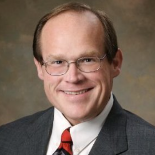

Christopher "Shea" Nickell
Non-Partisan | Kentucky

Candidate Profile*

Originalist

BIOGRAPHY
EDUCATION
Candidate did not provide
WORK & MILITARY
Candidate did not provide
AFFILIATIONS
Candidate did not provide
POLITICAL OFFICES HELD
Candidate did not provide
POLITICAL OFFICES SOUGHT
Candidate did not provide
ENDORSEMENTS*
LIBERAL (2)
Kentucky AFL-CIO
*United Mine Workers Kentucky COMPAC
SELECTED CONTRIBUTIONS
CONSERVATIVE
GIVEN BY CANDIDATE (0)
RECEIVED BY CANDIDATE (1)
Carroll Hubbard (2006)
LIBERAL
GIVEN BY CANDIDATE (0)
RECEIVED BY CANDIDATE (4)
Byron Hobgood (2019)
United Association of Journeymen and Apprentices of the Plumbing and Pipe Fitting Industry (2006)
United Brotherhood of Carpenters and Joiners of America (2006)
United Mine Workers of America (2019)
OTHER INFORMATION
Justice Nickell has served on the Kentucky Supreme Court since being elected in 2019 to finish out the remainder of retiring Justice Cunningham's term. Nickell served on the Kentucky Court of Appeals' 1st District for 13 years prior to that.
Notable Cases:
- University of Kentucky v. The Kernel Press (2021): Signed Justice Hughes' unanimous majority opinion. Held that the University of Kentucky failed to comply with the Opens Records Act (ORA) in refusing to provide information regarding a professor terminated on suspicion of sexual assault (para. 2--"Presented with the"). Noted that public agencies denying ORA requests must state the exception that applies to each denial (para. 30--"As noted, the General Assembly"). Cited that denials need not be document by document, but that general kinds of denials may also be given (para. 36--"Similarly, this court held that a police"). Held that the University's refusal was not sufficient because it a) covered 470 pages worth of evidence in one paragraph whereas City of Fort Thomas dealt with 30 boxes worth of evidence with that amount of description b) Kentucky law required that responses to requests be "detailed enough to permit the court to assess its claim and the opposing party to challenge it" (para. 36--"Similarly this court", "The University's initial"). Held that the trial court mistakenly accepted Family Education Right and Privacy Act information protections as an ORA exception under KRS 61.878(1)(k) (para. 42--"Although not cited in its initial"). Held that "education record" did not reasonably include all of the type of information the university withheld (e.g. "a camera user manual, the University's policies and procedures regarding sexual harassment and assault, and Harwood's curriculum vitae") (para. 50--"Turning to the case before us"). Held that the refusal was not completely covered under the KRS 61.878(1)(a) Privacy Exemption (para. 58--"So, although the public interest" and next paragraph). Held that the information was not protected under the KRS 61.878(1)(i) and (j) Preliminary Records Exemptions due to there never being a final finding of severance because the Harwood's resignation was in effect a final decision (para. 66--"Here, even though Harwood").
- Beshear v. Acree (2020): Signed Justice Hughes' unanimous opinion. Held that 1) the governor properly declared a state of emergency and invoked the powers granted to him 2) KRS Chapter 39A was not an unconstitutional delegation of legislative authority in violation of separation of powers 3) the governor was not required to only address the COVID-19 pandemic through emergency regulations adopted pursuant to KRS Chapter 13A 4) only one part of the challenged orders, which was no longer in effect, violated Sections 1 or 2 of the KY Const 5) the Boone Circuit Court did not properly issue injunctive relief (1-6). On the first point, the court noted that the text of KRS 39A.010 permitted states of emergency in the face of "biological...or etiological hazards" (33). Held that this permitted the governor's state of emergency declaration (33). Held that the governor had ultimate authority over local emergency management agencies, making the argument that local emergency management were required to have had admitted COVID-19 was beyond their capabilities prior to an emergency declaration irrelevant (36). On the second point, held that there was no evidence in the KY Const. that the powers the governor used must have been deemed legislative (47). Held that the structure of KY government made it almost impossible for the legislature to steer the state through an emergency (47). Held that KRS Chapter 39A reflected how emergencies were to be handled and rejected requests for it to be declared unconstitutional (48). Held that, to the extent the powers the governor exercised were legislative, Chapter 39A had safeguards to prevent abuse (52). On the third point, the Court held that Chapter 39A suspended Chapter 13A as far as it conflicted with the former, according to the plain text of KRS 39A.180 (57-58). On the fourth point, held that property was not a fundamental right that would be entitled to strict scrutiny (62). Held that public health regulations were judged based on their reasonableness (66). Held that all of the regulations were reasonable, except for one that was soon amended to become so (89). Finally, the Court held that injunctive relief was not justified because the greater interest lay with public health (90-91).
- Beshear v. Ridgeway Properties, LLC (2022): Signed Justice Hughes' unanimous majority opinion. Held that plaintiff Beans did not have standing to bring a suit affirming the constitutionality of three pieces of 2021 COVID-19 legislation and enjoining Governor Beshear from interfering with Beans' business operations (1-3). Held that the Boone Circuit Court had no jurisdiction to make its ruling because Beans' alleged injury resulted from the governor's prior 2020 executive orders, which had already been declared constitutional in Beshear v. Acree (2020). Held that Beans had displayed no concrete or imminent injury which would grant it standing (2). The three pieces of legislation were passed into law over the governor's veto on February 2, 2021, and limited the executive branch's ability to maintain COVID-19 restrictions without legislative support (4-5). Beans had been a party to Acree and filed its Third Amended Complaint on March 11, 2021. However, the governor had challenged the constitutionality of the laws in suits brought on February 2, 2021. These suits became Cameron v. Beshear and Beshear v. Goodwood Brewing Co. LLC, which were decided by the KY Supreme Court in August 2021. Held that the Governor took no action from February 2 until March 11 to interfere with Beans' decisions to operate its business according to its own plan (8). The Court noted that Boone Circuit Court's discussion of Beans' injury was limited to 2020 COVID-19 restrictions that predated the 2021 legislation. Held that Beans exhibited no had no "concrete and particularized injury" to qualify it for standing after February 2, 2021 (9). Cited that allegations of possible future injury are not sufficient to establish standing (9). Held that the court's "concurrent jurisdiction" doctrine prevented the Attorney General from saving the plaintiff's standing, since his justiciable cause against the governor was already pending in another court in Cameron v. Beshear (11-14)
Public statements:
- Justice Nickell told 89.3 WFPL in 2019 that his "constitutional vision" was the same as Justice Scalia's
- He told the 2019 Fancy Farm picnic that, "[I am proud of my record that has a] 98% record of being upheld. That is proof to you that I am committed to the rule of law and judicial restraint."
- Nickell told 91.3 FM WKMS that he was a conservative that would stick to the original intent of the Constitution of Kentucky
- "I hope I can win the respect of my colleagues, those who fill the other seven seats on the Supreme Court, that I can contribute to the sound analysis that applies to each controversy that appears before us," Nickell said in a phone interview. "For 35 years I've dedicated myself to serving others through the law. I hope as a justice as I can continue to follow the rule of law."
- Nickell's 2019 opponent accused him of legislating from the bench. Nickell responded that his 13 years on the Court of Appeals qualified him for service, and that it was easy for his opponent to attack his record, since his opponent had no judicial record
- “Activist courts around the nation? There may be some, but I can tell you this -- the Kentucky Supreme Court is not one of them.”
QUESTIONNAIRE
VALUES
I agree with Critical Race Theory (CRT) which asserts that the institutions in the United States are fundamentally racist.
Did not answer
Judeo-Christian values established a framework of morality that is necessary for our system of limited government.
Did not answer
Briefly describe your spiritual beliefs and values.
Did not answer
What types of pro bono work have you done?
Did not answer
ABOUT YOU
Have you ever been convicted of a felony or been penalized in either civil or criminal court for sexual misconduct? If so, please explain.
Did not answer
What education or experience qualifies you to hold the office for which you seek election?
Did not answer
Why should the voters choose you?
Did not answer
I voted in these primaries and general elections:
Did not answer
JUDICIAL PHILOSOPHY
Justices should not interpret the federal and state constitutions as living documents, but should use a textualist and originalist approach to interpretation.
Did not answer
What is the proper use of legislative history in interpreting statutory law?
Did not answer
Which current or past U.S. Supreme Court justice best reflects your judicial philosophy?
Did not answer
How should a court address the balance between public health and individual freedoms in the time of a pandemic?
Did not answer
In light of the case Bostock v. Clayton County, in which the U.S. Supreme Court interpreted the 1964 Civil Rights Act to include a prohibition on sexual-orientation discrimination, which justice’s opinion most closely aligns with your own opinion?
Did not answer
What role (if any) does a judge have in maintaining the separation of church and state?
Did not answer
Religious liberty is at risk in the United States and deserves the highest level of protection in the law.
Did not answer
When should a judge overturn past court decisions?
Did not answer
How should a judge determine which rights are protected by the Constitution even though they are not specifically mentioned?
Did not answer
What legal principles should a court consider when evaluating parents’ objection to their child obtaining medical procedures or drugs designed to affirm the child’s desired gender?
Did not answer
What principles should guide a court’s analysis of whether your state’s constitution gives terminally ill patients a right to assisted suicide?
Did not answer
Would you describe your judicial philosophy as originalist, living constitutionalist, or something else?
Did not answer