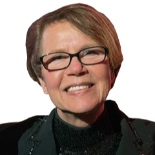

Sharon L. Kennedy
Republican | Ohio





Candidate Profile*

Proven Originalist

BIOGRAPHY
EDUCATION
University of Cincinnati, College of Law, Cincinnati, Juris Doctor, 1991
University of Cincinnati, School of Social Work, Cincinnati, Bachelor Degree of Social Work, 1984
WORK & MILITARY
(Candidate did not provide)
AFFILIATIONS
Butler County Bar Association, Member and Lecturer, Ohio Judicial Conference
Member, and Domestic Relations Law & Procedure Committee, Our Lady of Sorrow Catholic Church, Parishioner
Alcohol Drug Addiction Services Board, Member and later President, Little Sisters of the Poor
Contributor, Lakota East Mock Trial, Advisor
Volunteer Income Tax Assistance Program (VITA), Assisted people less fortunate with completing tax forms., Federalist Society
POLITICAL OFFICES HELD
Justice, Supreme Court of Ohio, 2012-Present
Judge, Butler County Court of Common Pleas, Domestic Relations Division, 1999-2012
POLITICAL OFFICES SOUGHT
(Candidate did not provide)
ENDORSEMENTS*
CONSERVATIVE (11)
*National Rifle Association (NRA) PVF
Ohio Right to Life PAC
Cincinnati Right to Life PAC
Buckeye Firearms Association-Ohio
Ohio Value Voters
OTHER (4)
Ohio Chamber of Commerce PAC
Ohio Manufacturers' Association (OMA- PAC)
Ohio Business Round Table - OBRT
Ohio FOP
REPORTED BY CANDIDATE (1)
Ohio Fraternal Order of Police, Toledo Police Command Officers' Association (T.P.C.O.A.), Toledo Police Patrolman's Association, Ohio Veterans United, NFIB Ohio PAC, Ohio Business Roundtable PAC, Ohio Chamber of Commerce PAC, Ohio Farm Bureau Federation Agriculture for Good Governess PAC, The Ohio Manufacturers' Association PAC, Ohio Value Voters, Ohio Bail Agents Association, Conservative Republican Leadership Committee, Cincinnati Right to Life, Ohio Right to Life, Right to Life Coalition of Ohio, Buckeye Firearms, Boilermakers Local #105, Cement Masons & Plasters Local #886, International Brotherhood of Electrical Workers Local #688, Iron Workers Local #44 IPAL, Roofers Local Union #134, Tristate Building and Construction Trades, Ohio Republican Party and the Republican Party of the following Counties: Brown, Butler, Clermont, Columbiana, Cuyahoga, Darke, Fairfield, Franklin, Lake, Lucas, Ottawa, and Preble.
SELECTED CONTRIBUTIONS
CONSERVATIVE
GIVEN BY CANDIDATE (22)
Andrew Brenner (2012)
Bob Peterson (2013)
Dave Yost (2012)
David Perdue (2020)
Frank Hoagland (2021)
RECEIVED BY CANDIDATE (136)
Adam Bird (2022)
Adam Holmes (2022)
Adam Mathews (2022)
Al Landis (2022)
Albert Haberstroh (2012)
LIBERAL
GIVEN BY CANDIDATE (1)
Argeri Lagos (2014)
RECEIVED BY CANDIDATE (11)
American Federation of Labor and Congress of Industrial Organizations (2022)
Anita Somani (2014)
Argeri Lagos (2020)
Building Trades Councils (2022)
International Association of Bridge, Structural, Ornamental and Reinforcing Iron Workers (2022)
OTHER INFORMATION
The Ohio State Bar Association rates Justice Kennedy as “Recommended” with a score of 23 out of 30.
Justice Kennedy joined the Court majority in Capital Care Network of Toledo v. Ohio Department of Health, in which the Court chose to "reinstate the order of the Ohio Department of Health revoking and refusing to renew the license of Capital Care Network of Toledo [an abortion clinic].” Justice Kennedy also joined the Court majority in Preterm-Cleveland v. Governor Kasich, which held that "Preterm [an abortion clinic] lacks standing to raise the question whether certain provisions of H.B. 59 violate the Single Subject Clause of Article II, Section 15(D) of the Ohio Constitution." In both cases, Justices French, O’Donnell, Fischer, and DeWine also voted with the majority, while Justices O’Connor and O’Neill dissented.
A public school in Ohio fired John Freshwater, a science teacher, on the grounds that he was being insubordinate by inserting his faith into his teaching. Freshwater appealed his termination to the courts, and the Ohio Supreme Court held, "Freshwater is fully entitled to an ardent faith in Jesus Christ and to interpret Biblical passages according to his faith. But he was not entitled to ignore direct, lawful edicts of his superiors while in the workplace.” Justice Kennedy signed a dissenting opinion, arguing that the "record neither demonstrates that Freshwater defied direct orders from school administrators, nor reflects that he taught creationism or intelligent design, nor shows that he strayed from the established curriculum on evolution."
Justice Kennedy authored the Court’s majority opinion in In re Adoption of B.I., holding that Ohio’s laws do not allow the child “B.I.” to be adopted by his stepfather without his biological father’s consent, even though the biological father had not contributed to B.I.’s support for the past year. Justices French, DeWine, and Donnelly joined the Court majority. Justices O’Connor, Fischer, and Stewart dissented.
Justice Kennedy wrote a concurring opinion in Cleveland Metro. Bar Assn. v. Paris, in which the Court suspended Tasso Paris from the practice of law for misconduct. Justice Kennedy wrote that "the establishment of a presumption of an actual suspension would be antithetical to our rules."
Justice Kennedy authored the Ohio Supreme Court’s majority opinion in Lunsford v. Sterilite of Ohio, holding "that when an at-will employee consents, without objection, to the collection of his or her urine sample under the direct-observation method, the at-will employee has no cause of action for common-law invasion of privacy.” Justices French, Fischer, and DeWine concurred. Justices Stewart, O’Connor, and Donnelly dissented.
Justice Kennedy joined the Court majority in State v. Broom, holding that the state is not "barred by the Cruel and Unusual Punishments and Double Jeopardy Clauses of the United States and Ohio Constitutions from carrying out the death penalty against Romell Broom when attempts to insert an IV catheter were unsuccessful in an earlier scheduled execution.” Justices Lanzinger, O’Connor, and O’Donnell also joined the majority. Justices French, Pfeifer, and O’Neil dissented.
The Ohio State Bar Association rated Justice Kennedy as “Recommended” with a score of 23 out of 30 during the 2020 election.
Notable Cases that Justice Kennedy has ruled on include:
- Adams et al. v. DeWine (2022): Justice Kennedy co-wrote a dissent with Justices DeWine and Fischer, arguing the majority did not rely on a workable standard in its holding that the Ohio congressional-district plan "unduly" favored a political party and split governmental units (p. 43).
- Stated that the Ohio Constitution should be construed according to its original public meaning (p. 51).
- "We believe that our authority is limited by the text of Article XIX and the constitutional restraints on the judicial power. Because the majority strays well beyond both, we respectfully dissent" (p. 44).
- "No doubt, there are those who will be quite happy about the policy choices that the majority makes today. But no one should lose sight of the fact that what the majority does today is make policy, not apply the law. While none of us question that the majority sincerely believes that what it is crafting constitutes good policy, we have grave concerns about the majority’s untethered-by-law eagerness to wrest from the political branches of our government the authority that rightly belongs to them" (p. 44).
- Gabbard v. Madison Local School District Board of Education (2021): Justice Kennedy wrote a dissent in a case over whether a school board resolution could authorize teachers to carry firearms. She argued that the majority improperly read R.C. 2923.122(D)(1)(a) in pari materia with R.C. 109.78(D) in order to arrive at its conclusion, and that this was not proper because 1) R.C. 109.78(D) was not referred to in R.C. 2923.122 2) R.C. 2923.122(D)(1)(a) was not ambiguous 3) even if it were, R.C. 109.78(D) cannot be construed along with it because they did not deal with the same subject matter (p. 20-21, 24).
- Freshwater v. Mount Vernon City School District Board of Education (2013): Justice Kennedy signed Justice O'Donnell's dissent, which said that the majority had erred in its decision that a public school teacher "was not entitled to ignore direct, lawful edicts of his superiors while in the workplace" (p. 34). The dissent argued that "record neither demonstrates that Freshwater defied direct orders from school administrators, nor reflects that he taught creationism or intelligent design, nor shows that he strayed from the established curriculum on evolution" (p. 67).
- In re Adoption of B.I. (2019): Justice Kennedy wrote the majority opinion, holding that Ohio’s laws did not allow the child “B.I.” to be adopted by his stepfather without his biological father’s consent, even though the biological father had not contributed to B.I.’s support for the past year. Justices French, DeWine, and Donnelly joined the Court majority. Justices O’Connor, Fischer, and Stewart dissented.
QUESTIONNAIRE
VALUES
I agree with Critical Race Theory (CRT) which asserts that the institutions in the United States are fundamentally racist.
Strongly Disagree
I do not believe that institutions in the United State are fundamentally racist. But many Ohioans perceive that our government institutions are racist. As the Administrative Judge of the Domestic Relations Division, when faced with criticism regarding the process or procedures that the court required we considered those voices and worked to improve the process and procedures to achieve the work of the court, required by the General Assembly while addressing the concerns of the people we serve.
Judeo-Christian values established a framework of morality that is necessary for our system of limited government.
Strongly Agree
"Religion, morality, and knowledge being necessary to good government and the happiness of mankind, schools and the means of education shall forever be encouraged." Northwest Ordinance 1787.
Briefly describe your spiritual beliefs and values.
As a practicing Catholic my core religious values are shaped by the teachings of the church. From those teachings my beliefs and values are respecting the dignity of the human person, having a responsibility to support our family and community, especially the poor and vulnerable, and to make decisions through the lens of compassion and based on would it be better for the people we serve.
What types of pro bono work have you done?
Prior to serving as a police officer in the City of Hamilton I volunteered at the YWCA in Hamilton County answering the crisis line and providing coaching to women on job interview skills. During law school I assisted low income taxpayers in filing their taxes under the V.I.T.A. (Volunteer Income Tax Assistance) program. While in private practice I served on the YWCA Board which provided a place for women and children suffering from domestic violence and served on the Alcohol and Drug Addiction Services Board (ADAS) as both member and later President. During that time, I also worked with Juvenile Court to design and implement a life-skills program for juveniles in an attempt to break the cycle of recidivism. While serving at the trial court during the economic downturn, I partnered with Jobs and Family Services to provide services to people who could not pay their child support obligations to breakdown the barriers and obstacles to gainful employment that they faced, including those living the life restored - the formerly incarcerated. And today, while serving as a Justice at the Supreme Court of Ohio I serve the needs of our true American Heroes, our veterans, with my Lean Forward initiative which has helped educate judges, probation and parole officers, and sheriffs about the treatment services available to justice-involved veterans who are suffering from the invisible wounds of war. And I work with others to provide an annual summit to address the continuing issues our veterans face. The Veterans Summit in 2020 was "Lean Forward: Answering the Call of Veterans in Crisis," the Veterans Summit in 2021 was "Lean Forward: Housing and Employment Supports for Veterans" and this year we are focusing on holistic treatment. Moreover, I have helped Fred Ward, who runs a formerly incarcerated hub connect in Cleveland connect with services to help the men and women who contact him at the hub.
ABOUT YOU
Have you ever been convicted of a felony or been penalized in either civil or criminal court for sexual misconduct? If so, please explain.
No
What education or experience qualifies you to hold the office for which you seek election?
OHIO SUPREME COURT ASSOCIATE JUSTICE 2012–Present COMMON PLEAS COURT, DOMESTIC RELATIONS DIVISION 1999–2012 Administrative Judge/Judge PRIVATE PRACTICE 1991–1998 Attorney at Law – General Practice BUTLER COUNTY COURT OF COMMON PLEAS 1989–1991 Director, Victim/Witness Division Law Clerk for the Honorable Matthew J. Crehan, Judge HAMILTON POLICE DEPARTMENT 1985–1989 Police Officer Civil Assistant
Why should the voters choose you?
The role of the Chief Justice is unique. The Chief manages the daily operations of the Supreme Court while addressing the needs of Ohio's courts and setting the vision for the future. Given my 37 years of diverse service in the justice system, I am uniquely qualified to serve as Ohio's next Chief Justice. I have served Ohioans and their communities in the justice system - from police officer, to attorney, to trial court judge, and now a Justice on the Ohio Supreme Court. During the last eight years of service in the trial court I served as the administrative judge of the division performing the same executive tasks that a Chief Justice performs. Ensuring the timely resolution of cases, overseeing and managing the daily operation of the division and effectively resolving issues by working from the premise, "Would the people be better served?" Since joining the court as an associate justice in 2012, my body of work speaks for itself. I am a strict textualist. In other words, I use only the text of the constitutional provision, statute or contract to distill its meaning. And I exercise judicial restraint by deciding only the legal issue necessary to decide the case. I believe this helps guarantee that the law remains stable and predictable and ensures that the law is applied fairly and equally to every Ohioan. Beyond the bench, I travel Ohio educating people about our tripartite system of government, the inner-workings of the court, how judicial decisions affect our daily lives, and by sharing my personal story with young people. But, most importantly to me is growing specialty courts that give us the ability to treat the invisible wounds of war of our American heroes. Since launching the initiative: “Lean Forward: Advancing Veterans Treatment Across Ohio," many others have joined to ensure justice-involved veterans receive treatment. While I will continue the "Lean Forward" mission, as Ohio's next Chief Justice I will collaborate with local judges, community leaders and the people who access the courts to address the needs of the people we serve. Working from the premise "would the people be better served," we will seek to understand and resolve issues in a manner that puts the interests of the people first. Speaking with families, community leaders and judges, I have heard their concerns. Foremost, is the need to timely resolve cases in the aftermath of COVID-19. Moreover, because Ohio courts are problem solving courts, they see the necessity to strengthen and grow specialty courts and address criminal justice reforms while still protecting the safety of victims and communities. Lastly, they have all asked how can we learn more about the judges who serve us and about the work that they do. As Chief Justice, I will collaborate with others to resolve these issues that will strengthen Ohio.
I voted in these primaries and general elections:
2012 Republican Primary 2012 General Election 2014 Republican Primary 2014 General Election 2016 Republican Primary 2016 General Election 2018 Republican Primary 2018 General Election 2020 Republican Primary 2020 General Election
JUDICIAL PHILOSOPHY
Justices should not interpret the federal and state constitutions as living documents, but should use a textualist and originalist approach to interpretation.
Strongly Agree
Justices say what the law says, not what the law should be. And we resolve legal issues based on the U.S. Constitution and the Constitution of the State of Ohio, not our personal views or political beliefs.
What is the proper use of legislative history in interpreting statutory law?
In Ohio, to properly interpret a statute you do not use legislative history. Judges read the text of the statute and apply it to the facts of the case. Words cannot be added or subtracted from the text of the statute and the meaning of words used in older statutes are understood at the time of origin. When distilling the meaning of a statute you give effect to the grammar and the plain meaning of the words used, unless those words have specific technical meaning.
Which current or past U.S. Supreme Court justice best reflects your judicial philosophy?
Samuel Alito
How should a court address the balance between public health and individual freedoms in the time of a pandemic?
As I have written in a number of decisions this question presents "mighty constitutional issues that demand resolutions." Based on the Rules of Professional Conduct, I decline to comment further.
In light of the case Bostock v. Clayton County, in which the U.S. Supreme Court interpreted the 1964 Civil Rights Act to include a prohibition on sexual-orientation discrimination, which justice’s opinion most closely aligns with your own opinion?
Based on the Rules of Professional Conduct, I decline to comment.
What role (if any) does a judge have in maintaining the separation of church and state?
Judges say what the law says, not what it should be.
Religious liberty is at risk in the United States and deserves the highest level of protection in the law.
Strongly Agree
When should a judge overturn past court decisions?
If the legal issue presented involves the interpretation of a constitutional provision, the role of the judge is to say what the constitution says, not to uphold past court decisions which wrongly interpreted a constitutional provision. Our decisions should be based on the constitution, not personal feelings or political beliefs. As to a case interpreting a statute I would examine it in light of the Scalia factors: (1) Was it willfully wrong? (2) Has the wrong ruling been generally excepted? and (3) Does the wrong place the judge in the role of a legislator?
How should a judge determine which rights are protected by the Constitution even though they are not specifically mentioned?
The Constitution is interpreted based on the plain language of the provision as the words were understood at the time of its origin. The Constitution evinces enumerated rights.
What legal principles should a court consider when evaluating parents’ objection to their child obtaining medical procedures or drugs designed to affirm the child’s desired gender?
Based on the Rules of Professional Conduct, I decline to comment.
What principles should guide a court’s analysis of whether your state’s constitution gives terminally ill patients a right to assisted suicide?
The Constitution is interpreted based on the plain language of the provision as the words were understood at the time of its origin. The Constitution evinces enumerated rights.
Would you describe your judicial philosophy as originalist, living constitutionalist, or something else?
Originalist.