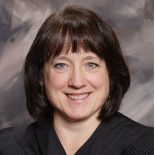

Barbara Madsen
Non-Partisan | Washington


Candidate Profile*

Proven Activist

BIOGRAPHY
EDUCATION
Candidate did not provide
WORK & MILITARY
Candidate did not provide
AFFILIATIONS
Candidate did not provide
POLITICAL OFFICES HELD
Candidate did not provide
POLITICAL OFFICES SOUGHT
Candidate did not provide
ENDORSEMENTS*
LIBERAL (14)
Washington State Labor Council AFL-CIO
King County Democrats
Washington Education Association
National Women's Political Caucus of Washington
Washington Federation of State Employees
OTHER (2)
*Retired Public Employees Council of Washington
*Washington Hospitality Association
SELECTED CONTRIBUTIONS
CONSERVATIVE
GIVEN BY CANDIDATE (0)
RECEIVED BY CANDIDATE (2)
Gun Owners Action League of Washington (2010)
Republican Women's Organizations (2016)
LIBERAL
GIVEN BY CANDIDATE (0)
RECEIVED BY CANDIDATE (17)
American Federation of Labor and Congress of Industrial Organizations (2022)
American Federation of State County and Municipal Employees (2022)
International Association of Firefighters (includes national, state & local affiliates) (2016)
International Brotherhood of Electrical Workers (2016)
International Brotherhood of Teamsters (2016)
OTHER INFORMATION
Justice Madsen signed a 2020 letter that said, "The legal community must recognize that we all bear responsibility for this on-going [racial] injustice, and that we are capable of taking steps to address it, if only we have the courage and the will."
Excerpt from Facebook post:
- 9/11/17, "Michelle, on my right, has just started her own civil rights practice, supported by her girlfriend, who is also working on systemic changes in aid of preserving civil rights for us all. I couldn't be more proud."
Excerpts from Justice Madsen's responses to a 2016 questionnnaire:
- "I was appalled at the Senate's treatment of Anita Hill, who worked for Clarence Thomas and had the courage to talk about the sexual harassment that she suffered in his office. I decided that I had to stand up...Since I could not expect to join the Congree or the U.S. Supreme Court, I decided to run for the state Supreme Court, ensuring that women in the legal profession would have a voice in shaping the profession."
- The most important qualifications for a judge include "an understanding of different cultural, racial, ethnic, gender, and ability perspectives" and "an understanding that the public must be the focus of the courts."
- "These 'reforms' [on drug-sentencing laws] have resulted in a 'war' mentality on the part of many law enforcement agencies. This has, in part, been the cause of unwarranted assaults and even deaths in the black communities, which are more heavily policed for drugs and who are more likely to be charged with crimes, serve longer jail sentences, and more likely to be stereotyped as criminals than their white counterparts."
- Justice Madsen was endorsed by NARAL and the Log Cabin Republicans in her 2016 run for Washington Supreme Court.
Notable court cases:
- Madsen signed the majority in Ingersoll v. Arlene's Flowers (2017), in which the Washington Supreme Court declared that not even a strict-scrutiny test would protect a florist's religious freedom to refuse service to gay weddings.
- Justice Madsen wrote the majority opinion in Woods v. Seattle's Union Gospel Mission (2021), arguing that a religious employer could only legally deny someone employment on the basis of sexual orientation if the job in question were ministerial. Justice Madsen wrote, "Meaning is discerned from the language itself, the context and related provisions in relation to the subject of the legislation, the nature of the act, the general object to be accomplished, and the consequences that would result from construing a statute in a particular way" (see p. 12).
- The Black v. Central Puget Sound Regional Transit Authority (2020) case concerned a law that failed to meet the Washington Constitution's requirements by amending another law without quoting it. Justice Madsen signed the majority opinion, which held that the law in question did not actually violate the Washington Constitution because anyone could understand the new law without conducting research on other laws.
- In State v. Gregory (2018), the Washington Supreme Court held that the death penalty as currently administered was unconstitutional. Justice Madsen signed a concurrence that agreed with the court's decision and added: "[R]eview of the constitutionality of the death penalty system must analyze the issue in contemporary terms and practices, and the constitutional analysis, at a minimum, must include a systemic determination of randomness, consensus, arbitrariness, frequency, reliability, trends, and penological justifications" (see p. 10 of Justice Johnson's concurrence).
- See also State v. Blake (2021), Leishman v. Ogden Murphy Wallace, PLLC (2020), Colvin v. Inslee (2020), In re Recall of Inslee (2019), Eyman v. Wyman (2018), Watson v. City of Seattle (2017), McCleary v. Washington (2012), and City of Seattle v. McKenna (2011).
QUESTIONNAIRE
VALUES
I agree with Critical Race Theory (CRT) which asserts that the institutions in the United States are fundamentally racist.
Did not answer
Judeo-Christian values established a framework of morality that is necessary for our system of limited government.
Did not answer
Briefly describe your spiritual beliefs and values.
Did not answer
What types of pro bono work have you done?
Did not answer
ABOUT YOU
Have you ever been convicted of a felony or been penalized in either civil or criminal court for sexual misconduct? If so, please explain.
Did not answer
What education or experience qualifies you to hold the office for which you seek election?
Did not answer
Why should the voters choose you?
Did not answer
I voted in these elections:
Did not answer
JUDICIAL PHILOSOPHY
Justices should not interpret the federal and state constitutions as living documents, but should use a textualist and originalist approach to interpretation.
Did not answer
What is the proper use of legislative history in interpreting statutory law?
Did not answer
Which current or past U.S. Supreme Court justice best reflects your judicial philosophy?
Did not answer
How should a court address the balance between public health and individual freedoms in the time of a pandemic?
Did not answer
In light of the case Bostock v. Clayton County, in which the U.S. Supreme Court interpreted the 1964 Civil Rights Act to include a prohibition on sexual-orientation discrimination, which justice’s opinion most closely aligns with your own opinion?
Did not answer
What role (if any) does a judge have in maintaining the separation of church and state?
Did not answer
Religious liberty is at risk in the United States and deserves the highest level of protection in the law.
Did not answer
When should a judge overturn past court decisions?
Did not answer
How should a judge determine which rights are protected by the Constitution even though they are not specifically mentioned?
Did not answer
What legal principles should a court consider when evaluating parents’ objection to their child obtaining medical procedures or drugs designed to affirm the child’s desired gender?
Did not answer
What principles should guide a court’s analysis of whether your state’s constitution gives terminally ill patients a right to assisted suicide?
Did not answer
Would you describe your judicial philosophy as originalist, living constitutionalist, or something else?
Did not answer