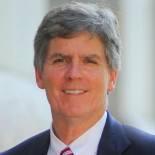

Bert Richardson
Republican | Texas





Candidate Profile

Conservative

BIOGRAPHY
EDUCATION
St. Mary's Law School, San Antonio, JD, 1987
Brigham Young Univ, Provo, BS, 82
WORK & MILITARY
State of Texas, Senior Judge, 5
State of Texas, 379th State Disrict Judge, 10
US Department of Justice, Asst. United States Attorney, 1
Bexar County DA's Office, Asst. DA & Intern, 12
AFFILIATIONS
Church of Jesus Christ of LDS, Teacher, Public Affairs, Volunteer., St. Mary's University
Adj. Prof., Mentor, Volunteer, Church of Jesus Christ of LDS, Two year full time missionary - Argentina
San Antonio College, Adjunct Prof., BYU
Associate Photo Editor Publications
POLITICAL OFFICES HELD
379th District Judge Bexar County, 10
Senior Visiting Judge Texas, 6
POLITICAL OFFICES SOUGHT
Place 3 Texas Court of Criminal Appeals, 2014
379th District Court , Bexar County, 200-2008
ENDORSEMENTS
CONSERVATIVE (7)
Ken Mercer
Llano Tea Party
Pastors PAC
Texas Family Action
Texas Home School Coalition
OTHER (5)
C Club of Houston
HRBC, Houston's Premier Business Coalition
Texans for Lawsuit Reform PAC
Texas Alliance for Life PAC (TAL)
Texas Civil Justice League
REPORTED BY CANDIDATE (6)
San Antonio & Houston Police Officer Associations
Texas Bipartisan Justice Committee
Retired TCCA Judge Cathy Cochran
Rusty Hardin- Rusty Hardin & Associates
Texas Homeschool Coalition
SELECTED CONTRIBUTIONS
CONSERVATIVE
GIVEN BY CANDIDATE (3)
Local, County, and District Republican Organizations (2017)
Republican Women's Organizations (2020)
State Republican Party Organizations (2014)
RECEIVED BY CANDIDATE (9)
Conservative Coalition of Harris County (2014)
Conservatives in Action (2014)
DFW Conservative Voters (2014)
Grassroots America - We the People PAC (2015)
Local, County, and District Republican Organizations (2020)
LIBERAL
GIVEN BY CANDIDATE (0)
RECEIVED BY CANDIDATE (1)
Roland Gutierrez (2009)
OTHER INFORMATION
QUESTIONNAIRE
RELIGIOUS LIBERTY
Religious liberty is at risk in the United States and deserves the highest level of protection in the law.
Strongly Agree
The Ten Commandments should not be displayed in public school buildings or court houses.
Disagree
What does "separation of church and state" mean to you?
Ideally, it stands for the proposition that the under the First Amendment, the government should not interfere in a citizen's right to practice the religion of their choice, as long as that religion's practices do not violate public morals or a compelling governmental interest; however, that has not always been the case in the early days of our country. The First Amendment prevents the government from forming a state religion, but I don't believe it prevents the government from recognizing certain religious practices or traditions in our society. Unfortunately, some of those rules have been ambiguous over the years.
VALUES
Judeo-Christian values established a framework of morality which is necessary for our system of limited government.
Strongly Agree
George Washington's comment that “Religion and morality are the essential pillars of civil society” is still true today.
Strongly Agree
Briefly describe your spiritual beliefs and values.
I am an active member of the Church of Jesus Christ of Latter-day Saints. I served a two year volunteer mission in Argentina at the age of nineteen. My faith believes in Jesus Christ and the values he taught in the scriptures.I attend church weekly and work in my church when time permits one night during the week in various capacities. I have been married for 35 years and have one son. My religious beliefs are an integral part of my life.
In light of the U.S. Supreme Court decision Bostock v. Clayton County, which justice’s opinion most closely aligns with your opinion of whether the protections of the Civil Rights Act of 1964 should be extended to the LGBTQ community?
Can't answer (SCJC)
What types of pro bono work have you done?
I have been a judge for the last twenty years, so my opportunities to represent anybody have been limited. However I did successfully represent a world class marathoner and mother of 4 against the New Zealand Olympic committee in 2004 and 2008 after they refused to place her on their Olympic team.
ABOUT YOU
I voted in these primaries and general elections:
2012 Republican Primary, 2012 General Election, 2014 Republican Primary, 2014 General Election, 2016 Republican Primary, 2016 General Election, 2018 Republican Primary, 2018 General Election
When you consider your views on a wide range of issues from economic and social matters to foreign policy and immigration, which of the following best describes you overall?
Very Conservative
Please provide publicly available information validating your answer to the previous question.
There are numerous articles on the internet that validate my conservative positions based on my career as a criminal judge, as well as legal opinions I have written, but none of the above subjects have anything to do with my legal specialty and career, so I am unsure if there is any public information available to validate that answer.
What education or experience qualifies you to hold the office for which you seek election?
I am running for reelection. I am a former State and Federal prosecutor, that is Board Certified in Criminal Law (less than 2% of lawyers) with a substantial amount of trial and appellate experience. I was appointed to bench in 1999 in Bexar County. From 2009-2014 I served as a Senior Visiting Judge across the State in over 50 counties. That diverse experience provided me the opportunity to handle every type of case the Texas Court of Criminal Appeals reviews. As a trial and appellate attorney and judge, I have participated in 12 actual innocence cases, hundreds of post conviction writs, I have written and participated in hundreds of appeals and over 50 capital cases. In 2015 I was named a Distinguished Law Graduate St. Mary's University School of Law.
In what areas of law have you practiced?
Criminal law full-time for over 32 years.
Have you ever been convicted of a felony or been penalized for sexual misconduct? If so, please explain.
NO
Why should the voters choose you?
My legal qualifications and judicial experience. 1)I have practiced criminal law full time for over 32 years. 2) Currently a Judge on Texas Court of Criminal Appeals. 3) Former State and Federal Prosecutor with significant trial and appellate experience. 4) State District Court Judge for over 15 years. 5) Board Certified in Criminal Law. 6) Adjunct Law Professor 10+ years. 7) As a trial and appellate judge I have participated in 12 actual innocence cases and hundreds of post conviction writs.
Is there anything else you would like voters to know about you?
I am running for reelection to the State high court for criminal cases. This Court reviews death penalty cases, post conviction writs including actual innocence claims and appeals from intermediate appellate courts. Simply put, we decide life, death and liberty issues. These are complex cases. I have the experience for the job. My experience includes hundreds of appeals and writs, over fifty death penalty cases and twelve actual innocence cases. I am a former State and Federal prosecutor, and was a trial judge for over 15 years. I am Board certified in Criminal Law, have taught at the university level for over 10 years and was named a Distinguished Law Graduate of my alma mater. I am qualified for this position.
JUDICIAL PHILOSOPHY
The U.S. Constitution and my state constitution should be interpreted as living documents, rather than using a strict constructionist or originalist approach in judicial decisions.
Strongly Disagree
There are times when American judges should alter U.S. case law in order to comply with foreign case law.
Strongly Disagree
Which current U.S. Supreme Court justice best reflects your judicial philosophy?
Several depending on the case.
What is the proper use of legislative history in interpreting statutory law?
I don't believe the legislative history should be used to interpret the law. Statutes should be interpreted literally. Having been involved in discussions on the legislative intent of a particular statute, and whether to include that intent in an opinion, there are just too many variables at play. As statutes make their way through the legislative process there are too many competing interests on and off the record discussions to accurately determine the legislative intent, other than the literal language of the statute. I am aware of published cases from my Court that allow for the use of it in limited circumstances.
What possibilities should a judge exhaust before departing from precedent?
In Ramos v. Louisiana the USSCT opinions pointed out several factors that have been considered in past opinions before departing from precedent, some of those include: 1) Does the current precedent work; 2) Is it inconsistent with other opinions since it was written; 3) Is it universally relied upon; 4) When the underlying precedent of the original opinion was not agreed upon by a majority of the justices. There are likely several other factors to consider that would be case specific.
How should a judge determine which rights are protected by the Constitution even though they are not specifically mentioned?
Individual States may grant greater protections to its citizens via their own constitution and statutes. A judge could refer to to either of those sources that might extend greater protections to its citizens, in addition to any legislation passed that might benefit a citizen. Furthermore the Ninth Amendment to the Constitution states, "The enumeration in the Constitution, of certain rights, shall not be construed to deny or disparage others retained by the people.” These rights are often referred to as non-enumerated rights that courts derive from the Constitution and other sources. Once found to be a right under the Constitution, they become rights of the citizens just like more specific rights enumerated in the Constitution. These non-enumerated rights granted by courts can be considered controversial at times.