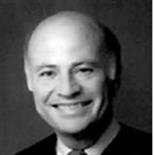

Michael Keasler
Republican | Texas

Candidate Profile

Leans Conservative

BIOGRAPHY
EDUCATION
University of Texas at Austin, Austin, TX, B.A., 1964
University of Texas School of Law, Austin, TX, L.L.B., 1967
WORK & MILITARY
Charles W. Grantham, Attorney at Law, Attorney, 1967-1969
Henry Wade, Dallas County District Attorney, Senior Felony Chief Prosecutor, 1969-1981
292nd District Court, Dallas County, Texas, District Judge, 1981-1998
Texas Court of Criminal Appeals, Judge, 1999-Present
AFFILIATIONS
The National Judicial College, Faculty Council, Faculty, The American Law Institute
Member, Episcopal Church of the Good Shepherd, Austin, Lay Reader, Mens Bible Study and Breakfast Group
St. Michael & All Angels Episcopal Church, Dallas, Sr. Hi. Sunday School Teacher, St. Andrew's Episcopal Church, Grand Prairie
Vestry, Lay Reader Chailce Bearer, S.S. Teacher, Rotary Club of Austin, Member
Grand Prairie Rotary Club, Member, Masonic Lodge, Scottish Rite
POLITICAL OFFICES HELD
District Judge, 17
Court of Criminal Appeals, 17
POLITICAL OFFICES SOUGHT
Assistant District Attorney, 12
ENDORSEMENTS
CONSERVATIVE (4)
C Club of Houston
Denton County Conservative Coalition
Pastors PAC
Texas Leadership Institute for Public Advocacy
REPORTED BY CANDIDATE (6)
8 former State Bar oif Texas Presidents
3 District Attorneys
4 former Texas Supreme Court Justices
Bryan A. Garner, co-author w/Justice Scalia
Conservative Republicans of Harris County
SELECTED CONTRIBUTIONS
CONSERVATIVE
GIVEN BY CANDIDATE (2)
Local, County, and District Republican Organizations
Republican Women's Organizations
RECEIVED BY CANDIDATE (3)
Local, County, and District Republican Organizations
Republican Women's Organizations
Texas Alliance for Life
OTHER INFORMATION
QUESTIONNAIRE
OTHER IMPORTANT ISSUES
Election of judges by the people for a definite term of office is the best way to select judges.
Neutral
Which U.S. Supreme Court justice best reflects your judicial philosophy?
Scalia
Which of the following U.S. presidents best reflects your political philosophy?
Reagan
The founders established pure democracy in the Constitution because they believed that it is the best form of government to ensure the safety and equitable treatment of all citizens.
Neutral
Free enterprise and the right to private property turn mankind's natural self-interest into the most productive economic system there is.
Strongly Agree
George Washington's comment that “Religion and morality are the essential pillars of civil society” is still true today.
Strongly Agree
Islamic law (Sharia) does not pose a threat to the United States and its Constitution.
Strongly Disagree
Based on the Declaration of Independence and the U.S. Constitution, please arrange the following entities, starting with the highest source of authority, and continue the list in descending order of authority, skipping any that do not apply: Academia, Congress, Constitution, God, Industry, Media, Professional Sports, Supreme Court, Voters.
God, Constitution, Voters, Supreme Court, Congress
What in the nature of mankind caused America’s Founders to carefully define, separate, and limit powers in the Constitution?
The fact that power corrupts, should be limited, and subject to checks and balances.
What is the proper use of legislative history in interpreting statutory law?
It should be resorted to only when the statute is clearly ambiguous and its plain meaning is not clear on its face. A lot of damage is done in the name of "legislative intent." Like Justice Scalia, I am a textualist.
What specific text in the Declaration of Independence provides the critical basis for individual rights and the form of government guaranteed in the United States Constitution?
"We hold these truths to be self-evident, that all men are created equal, that they are endowed by their Creator with certain unalienable Rights, that among these are Life, Liberty, and the pursuit of Happiness --- that to secure these rights, Governments are instituted among Men, deriving their just powers from the consent of the governed."
In which partisan primary election did you most recently vote (e.g. Democratic, Republican, etc.)?
Republican
The U.S. Constitution and my state constitution should be interpreted as living documents, rather than use a strict constructionist or originalist philosophy.
Strongly Disagree
In light of the U.S. Supreme Court decision in Obergefell v. Hodges allowing members of the same sex to marry, which justice’s opinion in that case most closely approximates your understanding of marriage?
Roberts's dissent
Briefly describe your spiritual beliefs and values.
I am a Christian and a faithful, active member of my church. Like everyone else, I am human, and my salvation is only through the grace of God by the merits of my Savior, Jesus Christ. My values are those set out by our Lord in the Gospels, and I do my best to live up to them. However, being human, I often fail in my attempts to do so.
Considering all issues (social, economic, national security, etc.), which of these best describes you?
Conservative
Please defend your answer to the previous question by referencing your publicly available track record.
My judicial opinions are available on the Court's website.
E-mail address and phone number for voters to reach you.
mekeasler@yahoo.com, (512)633-5508
Additional comment from candidate:
As to Question 1 above, there is no perfect way to select judges. Two desirable attributes of judges are independence and accountability. Life tenure has independence with less accountability, while partisan elections with relatively short terms strongly favors accountability over independence. I have had both, with initial appointment by Governor Clements to the trial court and numerous elections since. I gave the best answer I could to question 4 above because, as I understand it, a "pure democracy" is what existed in ancient Athens, not in the Constitution. What the founders established is a democracy within a republic, with some limits (examples: judicial review, the electoral college, and a bi-cameral legislature) on "pure democracy."