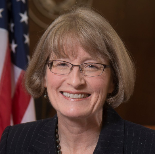

Mary Lou Keel
Republican | Texas


Candidate Profile

Uncontested

BIOGRAPHY
EDUCATION
University of Houston Law Center, Houston, JD, 1985
University of Texas, Austin, BA, 1982
WORK & MILITARY
(Candidate did not provide)
AFFILIATIONS
Village Republican Women, Member, Texas State Rifle Association
Member, National Rifle Association, Member
Federalist Society, Member, Red State Women
Member, contributor, Houston Volunteer Lawyer Project, Volunteer interpreter
Houston Bar Association, Member, contributor, Houston Read Commission
POLITICAL OFFICES HELD
Judge, 232nd District Court, 21
POLITICAL OFFICES SOUGHT
(Candidate did not provide)
ENDORSEMENTS
CONSERVATIVE (1)
Conservative Coalition of Harris County TX
OTHER (2)
Texas Alliance for Life PAC (TAL)
HRBC, Houston's Premier Business Coalition
SELECTED CONTRIBUTIONS
CONSERVATIVE
GIVEN BY CANDIDATE (8)
Local, County, and District Republican Organizations (2021)
Red State Women PAC (2014)
Republican Women's Organizations (2021)
State Republican Party Organizations (2021)
Ted Cruz (2013)
RECEIVED BY CANDIDATE (7)
Evan Young (2016)
Hank Hering (2016)
Houston Region Business Coalition (2010)
Local, County, and District Republican Organizations (2016)
Republican Women's Organizations (2016)
OTHER INFORMATION
Judge Mary Lou Keel has served on the Texas Court of Criminal Appeals since she was elected in 2016. Prior to that, she was a judge on the 232nd District Court in Harris County since 1995.
Notable Cases:
- Sims v. State (2019): Signed Judge Hervey's unanimous opinion. Case involved a suspect who was found by pinging his cell phone, which he argued violated his Fourth Amendment rights (4). Held that suppression of evidence was not an available remedy under the Stored Communications Act (SCA) unless the violation also violated the United States Constitution, and that it was not a remedy under Article 18.21 unless the US or TX Constitutions were infringed upon (3). Held that the defendant did not have an expectation of privacy in the real-time location stored on his phone (3). Noted that the SCA and Article 18.21 contain exclusivity provisions that are only waived in areas of conflict with federal/state constitutions (10). Rejected appellant's argument that the provisions were ambiguous, holding instead that the law did not need to be so specific as to exclude individual state and federal remedies (10-11). Held that the SCA and Article 18.21 were compatible with Article 38.23(a) by applying the “general versus the specific” canon (12). Held that the specific SCA and Article 18.21 prevailed over the general Article 38.23(a) (12-13). Held that SCOTUS' Carpenter precedent applied to both CSLI and real-time location information, and in such situations the precedents of Smith and Knotts were discredited (18-19). Held that whether a government had undertaken a search/seizure turned on whether the amount of information that was seized violated a reasonable expectation of privacy (19). Held that Carpenter indicated there was no bright line for when such an expectation was violated, and therefore it was determined case-by-case (19). Held that the defendant did not have a reasonable expectation of privacy in law enforcement pinging his phone fewer than 5 times (20).
State v. Stephens (2021): Signed Judge McClure's majority opinion. Held that Texas Election Code section 273.021 delegated a power properly held by the judicial branch to the Attorney General (AG) and was therefore unconstitutional (1-2). Cited precedent that the AG never had the authority to institute a criminal prosecution (5). Cited that the court had traditionally found a difference in powers between district attorneys and the Attorney General (8). Held that the court of appeals misconstrued the constitutional language empowering the AG to "perform such other duties as may be required by law," since ejusdem generis is limited to things of the same kind, and prosecution was not one of the powers granted to the AG (11-12). Argued that reading "other duties" sections so broadly greatly harms the separation of powers (13). Noted that prosecuting violations of election law was also not "required" as the constitution said, as the plain text said that the AG "may" prosecute violations (16). Held that the TX Const required county and district attorney consent (17).
Watkins v. State (2021): Signed Newell's majority opinion. Held that documents showing evidence of prior convictions in a criminal prosecution were "material" to the case for the sake of discovery and ought to have been turned over by the prosecution (3). Held that evidence is "material" if it bears “some logical connection to a consequential fact" (3). Found that under Article 39.14(h) the State had a duty to provide any "relevant" evidence that would tend to negate guilt or mitigate punishment (22). Held that the meaning of “material” was plain, unambiguous, and synonymous with “relevant” when considered in context (24). Held that the court lacked clear precedent on this issue (31). Held that, even if "material's" meaning were ambiguous, legislative history did not support any clear meaning (47-48).
Ex parte Charles Barton (2022): Signed Keller's dissent. Argued that the majority was incorrect to say that a law prohibiting electronic harassment was constitutional because it criminalized speech, rather than conduct, as the Court said it did (1-2). Said that the majority's argument that almost all actions can contain an element of speech was inapplicable because the statute was explicitly focused on communications (4). Argued that the statute was overbroad for criminalizing constitutional conduct (5). Provided examples where the law would be overbroad (6). Argued that this case was distinguishable from the Court's precedent of Scott because electronic communications were broader than mere phone calls (7).
State v. Doyal (2019): Signed Keller's majority opinion. Held that § 551.143(a) of the Texas Open Meetings Act was unconstitutionally vague on its face (1). TOMA definition of "meeting" (4). The main provision required there to be a quorum to be subject to TOMA, but the appellee was prosecuted under § 551.143(a), which did not (5). Held that the State's citation of Asgeirsson v. Abbott was an implicit admission that TOMA regulated protected speech because Asgeirsson upheld the law as a "content-neutral time, place, or manner restriction" (6). Held that "meeting" was communicative both under the statutory definition and the state's interpretation of the word (7). Cited SCOTUS' Johnson v. US case that a law being challenged for facial vagueness is not inherently constitutional if the law covers some forms of conduct (9). Cited that vagueness is defined as “indeterminacy of precisely what the prohibited conduct is" (12). Held that the law was vague because it contained no language to limit its scope (13). Held that the largest issue with the law was its provision against "“knowingly conspir[ing] to circumvent this chapter" because it was impossible to interpret the statute literally written in that way and it would be impossible to know what it actually meant to circumvent the law (15-16). Held that it is one thing to use extratextual factors to determine which of multiple possible meanings is correct, but completely another to create a meaning out of whole cloth based on such factors (17).
In 2016, iVoterGuide rated Judge Keel as Leans Conservative:
Info from Other Sources:
- Ballotpedia evaluated Keel's pre-judicial partisan affiliation as Mild Republican
QUESTIONNAIRE
VALUES
I agree with Critical Race Theory (CRT) which asserts that the institutions in the United States are fundamentally racist.
Did not answer
Judeo-Christian values established a framework of morality that is necessary for our system of limited government.
Did not answer
Briefly describe your spiritual beliefs and values.
Did not answer
What types of pro bono work have you done?
Did not answer
ABOUT YOU
Have you ever been convicted of a felony or been penalized in either civil or criminal court for sexual misconduct? If so, please explain.
Did not answer
What education or experience qualifies you to hold the office for which you seek election?
Did not answer
Why should the voters choose you?
Did not answer
JUDICIAL PHILOSOPHY
Justices should not interpret the federal and state constitutions as living documents, but should use a textualist and originalist approach to interpretation.
Did not answer
What is the proper use of legislative history in interpreting statutory law?
Did not answer
Which current or past U.S. Supreme Court justice best reflects your judicial philosophy?
Did not answer
How should a court address the balance between public health and individual freedoms in the time of a pandemic?
Did not answer
In light of the case Bostock v. Clayton County, in which the U.S. Supreme Court interpreted the 1964 Civil Rights Act to include a prohibition on sexual-orientation discrimination, which justice’s opinion most closely aligns with your own opinion?
Did not answer
What role (if any) does a judge have in maintaining the separation of church and state?
Did not answer
Religious liberty is at risk in the United States and deserves the highest level of protection in the law.
Did not answer
When should a judge overturn past court decisions?
Did not answer
How should a judge determine which rights are protected by the Constitution even though they are not specifically mentioned?
Did not answer
What legal principles should a court consider when evaluating parents’ objection to their child obtaining medical procedures or drugs designed to affirm the child’s desired gender?
Did not answer
What principles should guide a court’s analysis of whether your state’s constitution gives terminally ill patients a right to assisted suicide?
Did not answer
Would you describe your judicial philosophy as originalist, living constitutionalist, or something else?
Did not answer